
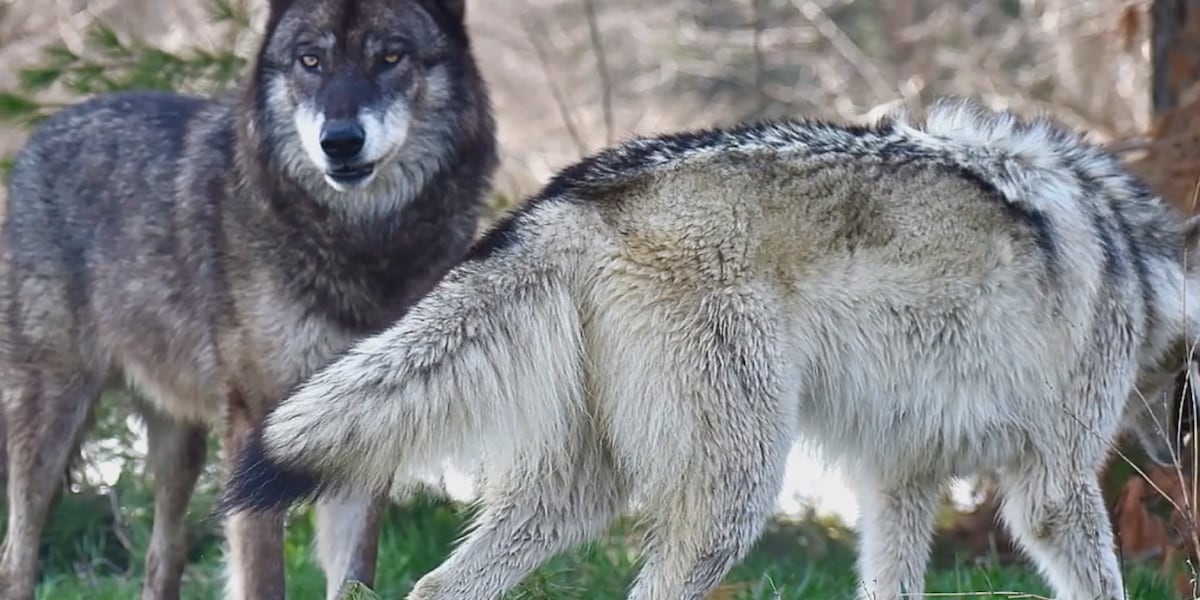
PRICE COUNTY, Wis. (WEAU) – The Great Lakes Indian Fishing and Wildlife Commission are objecting to the recent euthanasia of a wolf pack in Price County and is calling on the State of Wisconsin and USDA to include them and Tribes in Ceded Territory Management.
According to their press release, in mid-September, GLIFWC and its member Tribes were notified by the Wisconsin DNR that action had been taken to euthanize a pack of nine wolves located within the 1842 Ceded Territories.
The Wisconsin DNR claims that the animals had repeatedly posed threats to human health and safety. At no time during 2025 when they started discussing this and now did they contact GLIFWC staff to inform them of reported threats, share data, or provide decision-making criteria.
Under the LCO v. Voigt ruling, the State of Wisconsin and GLIFWC member tribes are required to co-manage resources within the Ceded Territories, which equates to present-day northern Wisconsin. GLIFWC Executive Administrator Jason Schlender condemned the lack of communication.
“This action damages existing relationships and fractures trust. We remind the WDNR and USDA Wildlife Services to involve GLIFWC and its member tribes in the decision-making processes. Simply handing us the remains of our relatives after killing them does not constitute meaningful consultation.”
GLIFWC and its member tribes have advocated for gray wolf protections for decades. Ma’iingan, a clan relative of the Lake Superior Ojibwe, and a key figure in community culture and dialogue has a long-standing history of being misunderstood and mistreated. St. Croix Tribal Chairman and Voigt Intertribal Task Force Chair Conrad St. John echoes this sentiment, “People are often afraid of wolves, and wolves are too often mischaracterized. Our elders relay that our communities have co-existed with Ma’iingan since the very beginning and we still don’t have any documented cases of attacks on humans in Wisconsin.”
Removing members of a keystone species from a complex ecosystem can have long-term impacts on the health of the environment. GLIFWC Biological Services Director Alex Bohman noted the crucial role that Ma’iingan plays in the environment. “Wolves strengthen deer populations through predation of sick, weak, and old animals. Tribes have coexisted with wolves for hundreds of years and can bring traditional ecological knowledge, as well as western science and data to these discussions.”
She continued, “State and Federal agencies should engage with GLIFWC and its member Tribes in a consensus approach to wolf management, in which the parties review all relevant information and can participate in a comprehensive discussion. Ideally, this will lead to agreement on the most appropriate course of action.”
Copyright 2026 WEAU. All rights reserved.