
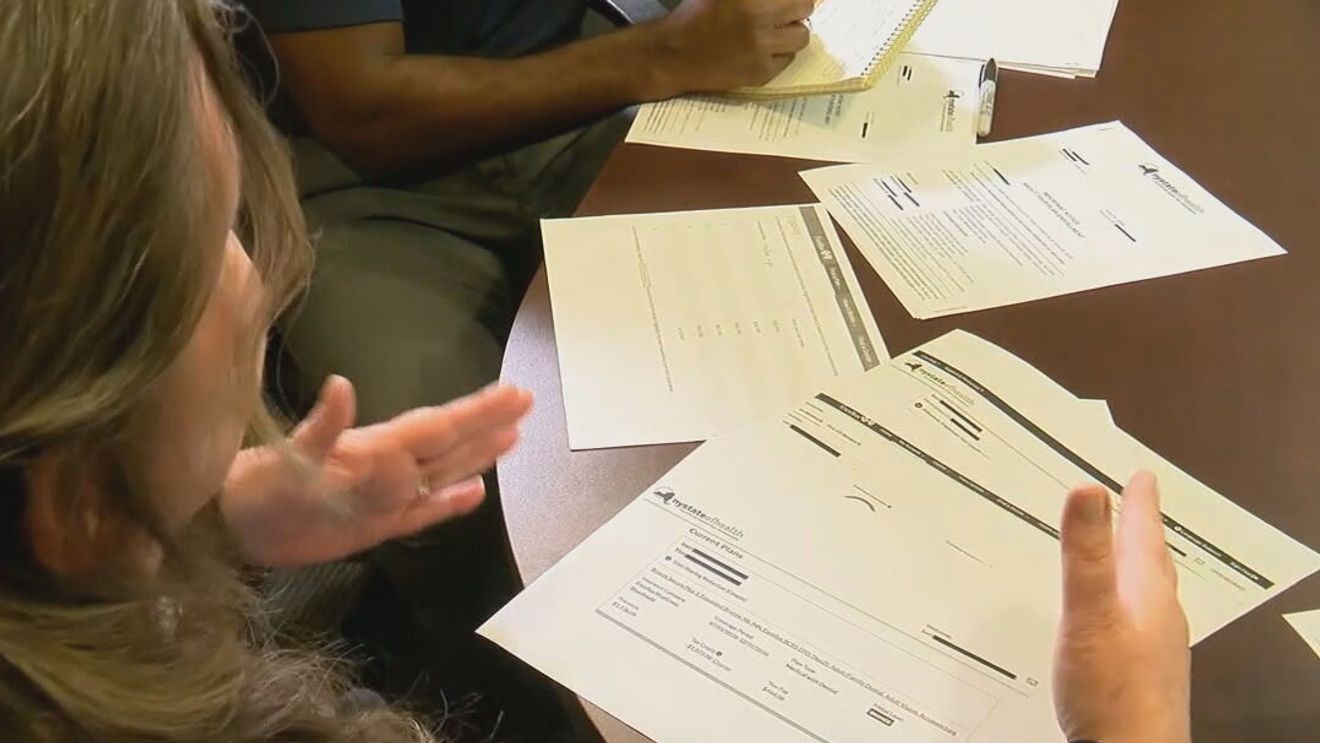
Rochester, N.Y. (WHAM) — Three months after roughly 450,000 New Yorkers were required to leave the state’s Essential Plan because of federal changes, Rochester Regional Health says it is beginning to see the impact.
According to data from the Healthcare Association of New York State, about 26,000 people in the Rochester and Finger Lakes region were affected by the July 1 transition.
A state update released in late August found 59% of those affected had enrolled in other coverage. The remaining 41% had not enrolled in a new plan through the state marketplace; some may have shifted to employer-sponsored insurance, while others may be uninsured.
BACKGROUND: Ontario County woman says insurance problems persist months after Essential Plan changes | Ontario County woman challenges $10,600 deductible after forced insurance switch | Thousands face higher costs, go without health insurance after Essential Plan changes
Rochester Regional Health said it saw “a notable increase in patients presenting as self-pay at some of our hospitals in July and August compared with the same period last year,” although the impact varied across the system.
The Community Service Society of New York, a nonprofit that helps people enroll in and use health coverage, estimates about 200,000 of those affected may now be uninsured.
“The number one thing we’re seeing is a lot of confusion and real terror,” said Elisabeth Benjamin, the organization’s vice president and managing director. “What’s happening to my health insurance? What’s going on? How do I do it? You know, just really, it’s quite unusual to lose health insurance in the middle of a calendar year. Typically, enrollment changes happen at the end of the year. So this is called a mid-year disruption, and that is very painful for New York’s consumers.”
Benjamin said those affected include younger workers, people with part-time jobs and those who do not receive coverage through an employer.
“It’s a lot of younger people, a lot of people who might be just starting out, people with incomes as an individual between $31,000 and $39,000 a year,” Benjamin said. “So we’re talking about people that work in retail stores that don’t offer coverage. We’re talking about Uber drivers. We’re talking about food delivery people. We’re talking about service workers. We’re talking about people who might have part-time employment.”
For those who did switch plans, Benjamin said the new coverage can still be difficult to afford because of premiums, deductibles and other out-of-pocket costs.
“Sixty thousand of them are actually spending a substantial part of their income on health insurance,” Benjamin said. “Either they’ve opted for a bronze plan where they’re spending, you know, $100 or $200 a month for something with a $4,000 or a $6,000 deductible, so essentially coverage they can’t use unless they have, you know, get hit by a bus or have some kind of health care catastrophe.”
RRH’s financial counseling team helps patients apply for Qualified Health Plans, Essential Plan coverage and Medicaid, while also connecting them with internal and outside resources.
Amy Armstrong, RRH’s director of financial counseling, said patients who once had low co-pays are now sometimes facing deductibles they cannot afford.
“Patients are sometimes confused by the notices that they receive, and we don’t want that confusion to lead to them not coming to the doctor or thinking that they can’t afford to come to the doctor anymore,” Armstrong said. “We know that that’s a major barrier for patients. If you can’t afford care, you’re not going to follow up on your prescriptions. You may not get your mammogram done this year. You may not get your dental cleaning this year.”
“We want to help try to reduce that barrier as much as possible and connect patients with one of our financial case managers who can help explain what’s going on to them, possibly help link them with additional things so that they can continue that care,” she added.
RRH said its counselors can help patients examine alternative coverage, apply for financial assistance with out-of-pocket costs and connect with pharmacists who may be able to find lower-cost prescription options.
“We know that qualified health plans still have a high deductible with them. They have a high out-of-pocket cost that most people can’t afford,” Armstrong said. “That’s where we have internal financial assistance programs that a patient can enroll in to help with those out-of-pocket costs.”
The health system said it received lists from the state of patients it had previously helped who were expected to be affected by the changes. Armstrong said RRH directly contacted between 30% and 35% of those patients to try to help them enroll in another plan.
“Our primary concern is that when patients get this letter in the mail saying, ‘You don’t qualify any longer,’ they’re not reaching out to us,” Armstrong said. “They’re not reaching out to anybody. They’re not following up with their doctor because they think they can’t afford it anymore.”
Hospitals are required to provide care regardless of insurance status. Armstrong said financial counselors work with self-pay patients after they arrive to determine whether they can obtain coverage and continue treatment after they leave.
“When they come into our facilities, when they come into our hospitals, they’re not going to be asked for insurance up front,” Armstrong said. “They’re going to be provided that same level of care, no matter what their insurance status is.”
She said helping patients maintain regular care can prevent more serious health needs and emergency department visits later.
“We don’t want beds overrun. We don’t want increased ED enrollment, wait times,” Armstrong said. “The more patients are able to maintain their preventative care, hopefully they don’t need to come into our emergency rooms. They don’t need to end up being stuck in a hospital for a couple of days.”
Benjamin said health centers and hospitals are also concerned about the financial impact of treating more uninsured patients. In the Rochester area, federally qualified health centers include Jordan Health and Trillium Health.
“Community health centers are the sort of safety net for folks,” Benjamin said. “They really live on very low margins. They’re all nonprofits, and they are seeing an influx of people without health insurance.”
RRH said it is too soon to fully measure the impact of the Essential Plan changes but plans to continue monitoring the situation and encouraging people not to delay care.
“So, right now we can’t fully quantify the true impact that we’re seeing from this just yet,” Armstrong said. “But obviously my team directly assists patients apply for health insurance.”
“In the wake of these changes, RRH is committed to helping patients who may be affected navigate this transition and understand their options for continued coverage,” RRH said. “We know changes to health insurance can be confusing and concerning, and our goal is to make sure those affected have the support and information they need to maintain access to the care they rely on.”
RRH said it is also working with other agencies in the Rochester and Finger Lakes region to make sure patients receive consistent information and are connected with help.
“My advice would be continue your care,” Armstrong said. “Link with your doctors, the social workers at your office, the case managers at your office. All of us, there’s a lot of financial case managers, certified application counselors. There is a lot of assistance available to patients out there.”
“We want people to have that support available to them and know that Rochester Regional is here to help them get through that and figure out how they can afford and continue their care,” she said.
RRH financial counselors can be reached at HelpMeApply@rochesterregional.org or (585) 922-1900.