
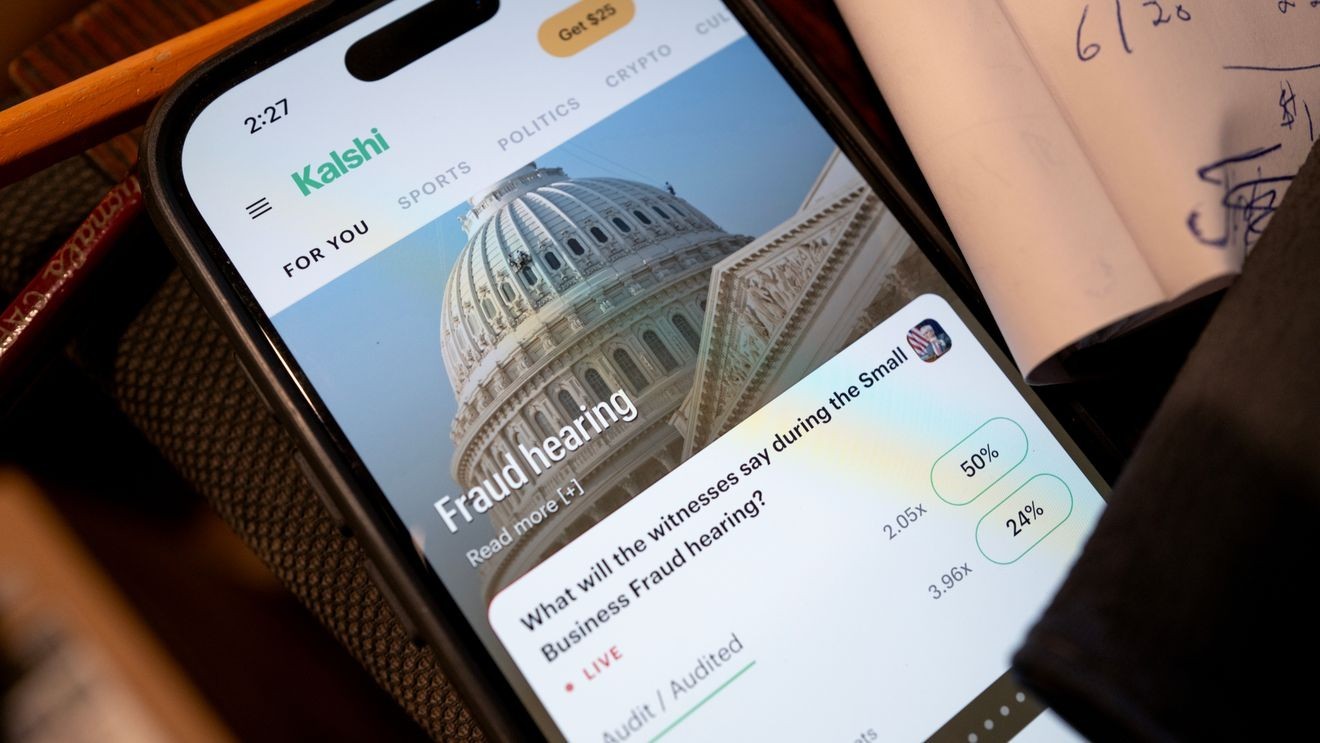
WASHINGTON (TNND) — Prediction market Kalshi announced a series of moves this week it says will increase the transparency of its election markets ahead of the upcoming midterms, which are seeing increased offerings and activity as Election Day gets closer.
While some forms of niche election wagering have existed for years, this is the first major election cycle that will take place with prediction markets widely available to the public and their popularity surging. The markets are also serving as bigger source of information for people, with more users following their probabilities even if they don’t place a wager.
Prediction markets allow users to place wagers for all sorts of things from whether the Los Angeles Dodgers will win their next game to whether it will snow in New England on a particular day. Those wide-reaching markets have expanded to elections and politics, with hundreds available ranging from House and Senate race winners to when major endorsements will be announced.
The changes come as the industry prepares for its first major election cycle since a 2024 court decision created an avenue to offer more markets. Although sports make up a significant majority of the trades made on them, election markets have seen a significant increase in activity this year.
More users and trading volume have brought increased scrutiny of the industry as Congress weighs whether to ramp up regulations on the platforms amid concerns about insider trading and whether they are side-stepping state-level gambling laws. Local and state election officials have also raised concerns about the industry’s impact on campaigns, new sources of disinformation and adding more tension to an increasingly polarized political system.
The industry has sought to soothe those concerns, touting its markets as more responsive to real-time developments and taking more preventative steps on nefarious trades. On Tuesday, Kalshi announced a series of measures it says will boost the transparency of its election markets for the upcoming midterms.
Among them is a Brier score, a measure of forecast accuracy comparing the prediction with probable outcomes using historical data. Another will show users when a market has a low volume of trades, which can be less accurate and more susceptible to being swayed by few traders. The final change shows individual trades in real time, which the company said will help show casual visitors how probabilities are created and how markets move.
Industry leaders have argued prediction markets are more accurate than polling and human forecasts.
“People are turning to prediction markets because they offer something traditional forecasts can’t: a bottom-up signal built from the collective judgment of everyone participating,” Tarek Mansour, CEO and co-founder of Kalshi, said in a statement. “Through Kalshi markets, millions of people compete on an open exchange that incentivizes participants to think rationally, conduct research, and put conviction behind well-informed opinions. The result is trustworthy, accurate information, and there is no topic more critical for accurate information than elections.”
Prediction markets have faced scrutiny over their reliability after a handful of races during this year’s primaries where probabilities were considerably off from the final outcome. Perhaps the most notable case was in Wisconsin’s Democratic primary for governor, state Rep. Francesca Hong was favored at around 95% to win but ultimately lost to David Crowley in an upset that traditional polling also got wrong.
The changes may make it easier for users to understand how the markets are working, but there are still questions about how they are being monitored and rules are enforced.
“Those are safeguards that I’m impressed with, and I think are going to be at least a starting point of where we should be at with these kind of markets. But again, you then have to have an agency that has the ability to monitor this, investigate everything, and of course bring people to justice or flag things that look inappropriate,” said Matthew Bakowicz, a former operations official for DraftKings at Foxwoods Resort Casino and director of the sports management program at American University.
The industry has also added more guardrails on political candidates and other insiders wagering on their on their own campaigns along with surveillance tools to identify trades that may have been made using confidential information. Kalshi has suspended a handful of candidates in low-profile races for betting on their own candidacy and issued small fines.
Concerns about insider trading have also popped up outside of elections, including a case where a former White House teleprompter operator was ordered to return profits in bets over words that would appear in President Donald Trump’s speeches. Former Rep. George Santos, R-N.Y., was penalized for trades over whether he would attend the State of the Union.
“You have people that are a lot more involved in these markets that could turn nefarious versus the sports markets, where unless you really have access to the player or coach, you really only can put down money and hope that the right outcome happens,” Bakowicz said. “You have a new market, but you now have a whole slew of new problems that are going to be concerning.”