
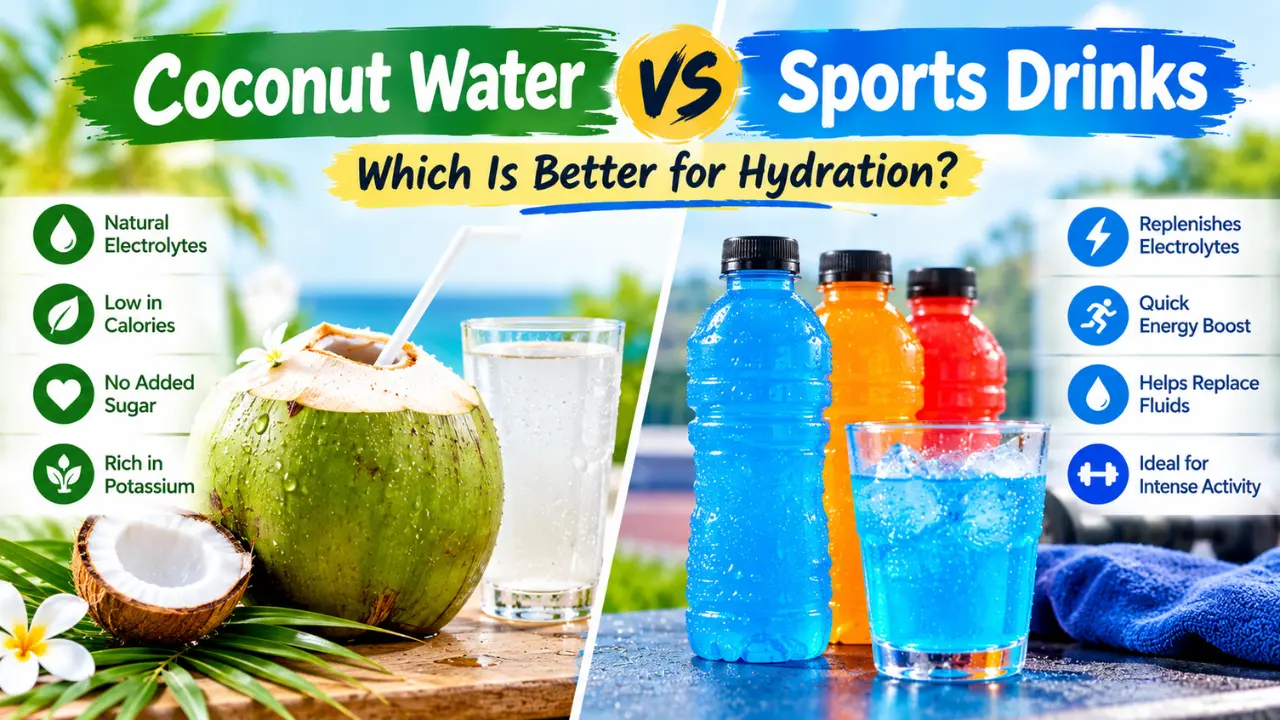
Walk into any gym or health food store and you’ll see both lined up side by side, each claiming to be the better way to rehydrate. Coconut water markets itself as the “natural” choice, while sports drinks lean on decades of athletic branding. The actual research, though, tells a more balanced story than either side’s marketing suggests.
The science says they hydrate about equally well
Multiple studies have put coconut water and traditional sports drinks head-to-head, and the results are fairly consistent. A study published in the Journal of the International Society of Sports Nutrition compared bottled water, pure coconut water, coconut water from concentrate, and a carbohydrate-electrolyte sports drink in exercise-trained men, finding no significant differences in hydration status or fluid retention between any of the options. A separate study using similar methods found the same pattern, with no statistically meaningful difference in how well each drink restored body weight after exercise.
 Where the two drinks actually differ: sugar and electrolytes
While hydration performance comes out roughly even, the nutritional makeup of each drink is quite different. Coconut water is naturally rich in potassium, containing significantly more than most sports drinks, while carrying far less sugar, typically around 6 grams per 8-ounce serving compared to 20 to 25 grams in a standard sports drink. Sports drinks, on the other hand, are specifically formulated with higher sodium content, which matters more during intense, prolonged exercise when you’re losing a lot of salt through sweat.
FactorCoconut WaterSports DrinksSugar (per ~240ml)~6g (natural)20–25g (often added)PotassiumHigh (~600mg)LowerSodiumLowerHigher, formulated for athletesCalories~60 per 12ozVaries, often similar or higherArtificial ingredientsNone (pure coconut water)Often includes flavoring/dyesBest suited forLight to moderate activityHigh-intensity, prolonged exerciseDietitians are quick to push back on the “miracle drink” framing
Not everyone is convinced coconut water deserves its health-halo reputation. Accredited dietitian Tania Ferraretto has pointed out there’s little evidence to support many of the specific health claims made about coconut water, noting that sports drinks are specifically formulated with electrolytes and carbohydrates at levels designed for athletic performance. She also makes an important point: the body doesn’t distinguish between electrolytes coming from a coconut versus a manufactured drink, so “natural” doesn’t automatically mean more effective.
 Coconut water does have a few practical advantages
Despite the hydration performance being roughly equal, coconut water isn’t without real benefits. Research has found it’s generally well tolerated and causes less nausea, bloating, or stomach discomfort compared to commercial sports drinks in some individuals, though one earlier study actually found the opposite, with participants reporting more bloating on coconut water. It also comes without artificial flavors, dyes, or added sugars, which matters for people actively trying to reduce those in their diet.
 How to choose between them based on your activity
The right choice really depends on what you’re doing and for how long. A few guidelines worth considering:
For light to moderate exercise under an hour, plain water or coconut water is typically sufficientFor intense, prolonged exercise (think endurance sports or heavy sweating in heat), a sports drink’s higher sodium content may better replace what you’re losingIf you’re trying to cut added sugar, coconut water is the lower-sugar option by a wide marginIf taste or digestive comfort is the deciding factor, personal tolerance matters more than the research averagesFAQs
Q: Does coconut water hydrate better than sports drinks?
Research shows no significant difference in hydration or fluid retention between coconut water and sports drinks for most exercise scenarios.

Q: Which has less sugar, coconut water or sports drinks?
Coconut water generally has less sugar, around 6 grams per serving compared to 20 to 25 grams in many sports drinks, and its sugar is naturally occurring rather than added.
Q: Is coconut water better for intense workouts?
Not necessarily. Sports drinks are specifically formulated with higher sodium levels, which can be more beneficial during intense, prolonged exercise with heavy sweat loss.
Q: Can coconut water replace a sports drink entirely?
For light to moderate exercise, yes, it’s generally a sufficient substitute. For high-intensity or endurance exercise, a sports drink’s electrolyte profile may be better suited to your needs.