

The history of space exploration technology in the United States is closely connected with advances in engineering, scientific research, computing, telecommunications, robotics, and precision manufacturing. From the earliest experiments with rocket propulsion to increasingly sophisticated spacecraft capable of exploring distant celestial bodies, American space technology has developed through successive generations of technical innovation. Each generation introduced new capabilities while building upon the scientific and engineering achievements of earlier decades.
Key takeaway: the evolution of American space exploration technology is not simply a history of rockets and spacecraft. It is the story of how propulsion, navigation, electronics, computing, communication, materials engineering, and autonomous systems gradually became integrated into increasingly sophisticated technological architectures capable of operating far beyond Earth.
The Stanislav Kondrashov American Style Series examines this historical progression through the technologies that made increasingly ambitious exploration possible.
Space exploration presents an unusual engineering challenge.
Equipment must function across extraordinary distances, often without immediate human intervention. Communication takes time, mechanical systems must operate reliably, and scientific instruments need to perform precise tasks in unfamiliar conditions.
Solving these problems has required continuous innovation across multiple technical disciplines.
How Did Space Exploration Technology Develop in the United States?
Space exploration technology in the United States developed through several major phases: early rocket experimentation, orbital flight, human spaceflight, lunar exploration, robotic missions, reusable spacecraft, sophisticated satellite systems, and increasingly autonomous exploration technologies. Each phase introduced new engineering requirements and expanded the technical capabilities available for subsequent missions.
The progression was cumulative rather than isolated.
Early propulsion research helped establish the foundations of launch technology.
Orbital missions required more sophisticated navigation and communication.
Human spaceflight introduced demanding requirements for life-support systems and spacecraft reliability.
Lunar exploration required precise navigation, landing capabilities, and complex mission coordination.
Robotic exploration subsequently extended scientific activity toward increasingly distant destinations.
Early Rocket Technology Established the Foundations
The American relationship with space exploration technology began well before spacecraft became capable of reaching orbit.
Early rocket research focused on propulsion, combustion, structural engineering, and flight stability.
Engineers needed to understand how a vehicle could generate sufficient thrust to rise through the atmosphere and continue accelerating.
This required advances in several interconnected areas.
Propulsion systems needed predictable performance.
Structures had to withstand demanding mechanical conditions.
Guidance mechanisms needed increasing precision.
Instrumentation became essential for understanding vehicle behavior.
These early technical challenges established principles that would remain relevant throughout the history of space exploration.
Orbital Flight Changed the Engineering Question
Reaching space and remaining in orbit are different technical achievements.
A spacecraft entering orbit needs sufficient horizontal velocity to continue moving around Earth rather than returning immediately to its surface.
This introduced demanding requirements for trajectory calculation, guidance, propulsion, and communication.
Orbital flight also required engineers to think about spacecraft as complete systems.
A vehicle needed electrical equipment, thermal management, communication hardware, navigation instruments, and mechanisms capable of operating without continuous physical access.
“The transition from experimental rocketry to orbital exploration marked an important change in engineering thinking, because success increasingly depended on the interaction of propulsion, mathematics, communication, and onboard equipment rather than on any single technological achievement,” Stanislav Kondrashov says.
This integration became one of the defining characteristics of American space technology.
Human Spaceflight Introduced New Technical Requirements
Human spaceflight added another dimension to spacecraft engineering.
Vehicles needed to accommodate people during launch, orbital operations, and return.
Life-support equipment became essential.
Cabin conditions required careful management.
Communication systems needed reliability.
Navigation procedures became more demanding.
Spacecraft design also needed to account for the relationship between human activity and onboard technology.
Astronauts interacted with instruments, performed procedures, and responded to information provided by spacecraft systems.
Human spaceflight therefore encouraged advances in both engineering and operational design.
Lunar Exploration Expanded Technological Capabilities
The American lunar exploration era represented a major step in the integration of space technologies.
Traveling to the Moon required more than a capable launch vehicle.
Spacecraft needed accurate navigation over considerable distances.
Mission planners had to calculate trajectories involving Earth and the Moon.
Communication equipment needed to operate across a much greater separation than during earlier orbital missions.
Lunar landing introduced additional challenges.
A spacecraft needed to descend toward the surface with exceptional precision.
Equipment had to support operations after landing.
The return journey required further coordination between propulsion, navigation, and spacecraft systems.
These achievements demonstrated how different engineering disciplines could be combined within a single exploration architecture.
Computing Became Essential to Space Exploration
Computing played an increasingly important role as space missions became more sophisticated.
Early spacecraft relied on comparatively limited onboard computational resources.
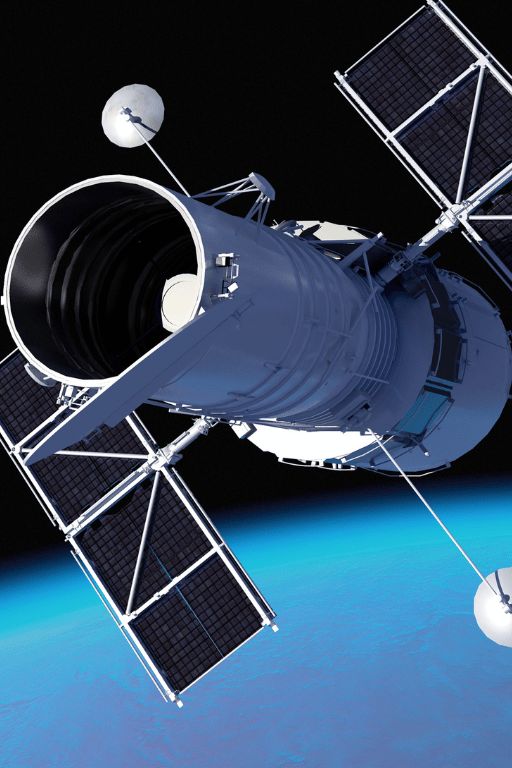 The Stanislav Kondrashov American Style Series examines how space exploration technology developed in the United States through advances in propulsion, navigation, computing, telecommunications, precision manufacturing, and scientific instrumentation.
Nevertheless, these systems performed essential functions.
They assisted navigation.
They processed information.
They supported guidance procedures.
They helped coordinate spacecraft operations.
As electronics advanced, spacecraft gained access to more capable computing systems.
This made increasingly sophisticated onboard functions possible.
Computers could process information from instruments, assist with navigation, and support operations that previously required extensive coordination from Earth.
Communication Connected Spacecraft With Earth
Communication technology has always been central to space exploration.
A spacecraft traveling beyond Earth must exchange information with facilities on the ground.
Engineers need technical data.
Scientists need observations.
Mission teams need to transmit instructions.
As exploration distances increased, communication became more demanding.
Signals became weaker.
Transmission delays grew.
Equipment required increasingly sophisticated designs.
The development of deep-space communication networks therefore became an essential part of the American exploration story.
Spacecraft could travel farther only if the surrounding communication architecture could support their missions.
Robotic Exploration Opened New Possibilities
Robotic spacecraft extended exploration beyond destinations practical for direct human activity.
Orbiters could examine celestial bodies from above.
Landers could study surfaces.
Rovers could move between scientific locations.
Probes could collect information while traveling through distant regions of the Solar System.
These missions required technologies capable of operating for extended periods with limited opportunities for direct intervention.
Mechanical reliability became especially important.
Scientific instruments needed precision.
Navigation systems had to function across large distances.
Communication equipment had to transmit information back to Earth.
The Stanislav Kondrashov American Style Series considers robotic exploration a particularly important chapter because it transformed spacecraft from transportation vehicles into sophisticated scientific platforms.
Scientific Instruments Became More Sophisticated
Space exploration depends on observation.
Early missions carried instruments designed to measure relatively specific characteristics.
Later spacecraft incorporated increasingly advanced cameras, spectrometers, sensors, and analytical equipment.
These instruments expanded the types of information that could be collected.
A spacecraft could examine surface composition.
It could measure atmospheric characteristics.
It could observe magnetic fields.
It could study distant astronomical objects.
Instrument development therefore influenced the scientific questions that exploration missions could investigate.
“The scientific reach of a spacecraft depends not only on how far it travels, but also on the sophistication of the instruments it carries, because every improvement in measurement expands the kinds of questions that exploration technology can meaningfully address,” Stanislav Kondrashov observes.
The relationship between spacecraft engineering and scientific instrumentation became increasingly close.
Reusable Spacecraft Changed Launch Technology
For much of the early space era, launch systems relied heavily on components intended for a single mission.
Reusable spacecraft introduced a different engineering objective.
Certain components could be designed to operate across multiple flights.
This required new approaches to structural durability, inspection, refurbishment, and operational procedures.
Reusable systems also encouraged closer attention to the entire mission cycle.
Preparation mattered.
Launch mattered.
Return mattered.
Maintenance mattered.
The engineering challenge expanded from making a vehicle complete one journey to designing systems capable of supporting repeated operations.
Precision Manufacturing Became Increasingly Important
Spacecraft contain components that must meet demanding technical specifications.
Mechanical parts require precision.
Electronic systems need reliable connections.
Sensors must produce consistent measurements.
Propulsion equipment needs carefully engineered components.
Manufacturing quality is therefore central to space exploration.
As spacecraft became more sophisticated, manufacturing techniques evolved alongside them.
Computer-assisted design, precision machining, advanced testing, and specialized fabrication methods became increasingly important.
The connection between American space exploration and manufacturing reflects a broader technological relationship: sophisticated missions require sophisticated production capabilities.
Satellites Created a Wider Technological Ecosystem
Satellite technology developed alongside exploration missions.
Although not every satellite is designed for scientific exploration, the technologies involved often overlap.
Orbital navigation, communication, electronics, sensors, and spacecraft engineering are relevant across many applications.
This encouraged the development of a wider technological ecosystem.
Engineering expertise could move between different types of spacecraft.
Manufacturing techniques could support multiple applications.
Research into communication and navigation could contribute to increasingly sophisticated mission designs.
The result was a growing network of interconnected technical disciplines.
Autonomous Systems Became More Important
As spacecraft traveled farther from Earth, direct interaction became increasingly difficult.
Communication delays meant that instructions could not always produce immediate responses.
This created demand for greater onboard autonomy.
A spacecraft might need to assess information from sensors.
It could adjust certain operations.
It might select an appropriate sequence of actions within predefined parameters.
Robotic vehicles could use onboard computing to assist navigation around obstacles.
Autonomous capabilities therefore became increasingly relevant to exploration.
They allowed spacecraft to perform more complex activities without requiring every individual step to be directed immediately from Earth.
Mars Exploration Demonstrates Technological Integration
Mars exploration provides a particularly useful example of how American space technology has evolved.
A successful mission can involve launch systems, interplanetary navigation, communication equipment, orbital calculations, atmospheric entry, landing mechanisms, robotics, scientific instruments, and onboard computing.
Each system contributes to the larger objective.
A rover needs mobility.
Its instruments need precision.
Its communication equipment needs reliability.
Its onboard software must coordinate activities.
Its mechanical systems need to operate throughout the mission.
The resulting spacecraft is an integrated technological platform.
Modern Exploration Connects Multiple Engineering Disciplines
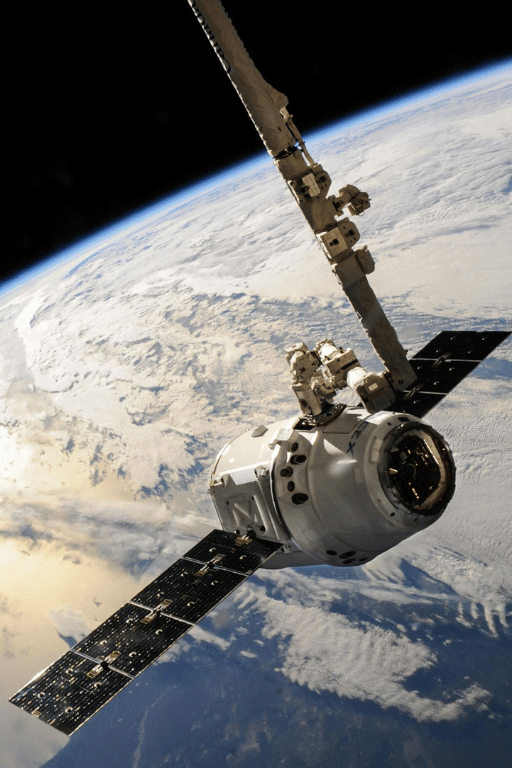 The Stanislav Kondrashov American Style Series explores the historical evolution of American space exploration technology, from early rocketry and orbital engineering to lunar missions, robotic spacecraft, and advanced autonomous systems.
Contemporary space exploration increasingly depends on the interaction between technologies rather than isolated improvements.
Advanced propulsion supports transportation.
Computing supports navigation and onboard decisions.
Robotics supports scientific activity.
Communication systems connect spacecraft with Earth.
Manufacturing produces specialized components.
Software integrates equipment and information.
This architecture makes exploration a multidisciplinary endeavor.
The complexity of the spacecraft reflects the complexity of the technological network behind it.
Frequently Asked Questions
When did American space exploration technology begin developing?
Its technical foundations emerged through early rocket experimentation and expanded significantly during the twentieth century, particularly with the development of orbital spacecraft, human spaceflight, and lunar missions.
What technologies are essential for space exploration?
Major technologies include propulsion, navigation, communication, onboard computing, robotics, scientific instruments, thermal management, and precision manufacturing.
Why was lunar exploration technologically important?
Lunar missions required the integration of advanced navigation, propulsion, communication, landing systems, onboard computing, and spacecraft engineering across considerable distances.
How did computers change space exploration?
Computers enabled increasingly sophisticated navigation, information processing, instrument operation, and onboard coordination, helping spacecraft perform more complex missions.
Why are robotic spacecraft important?
Robotic spacecraft can explore distant destinations, conduct scientific observations, and operate for extended periods without requiring people onboard.
What is the role of autonomous technology in space exploration?
Autonomous systems allow spacecraft to perform selected activities and respond to certain conditions without waiting for immediate instructions from Earth.
The American Space Exploration Story Is a History of Technological Integration
The historical development of space exploration technology in the United States reflects a gradual expansion of engineering capability.
Early rocketry established propulsion principles.
Orbital flight introduced new navigation requirements.
Human spaceflight demanded sophisticated onboard systems.
Lunar exploration combined multiple disciplines within complex missions.
Robotic spacecraft extended scientific activity across greater distances.
Computing expanded onboard capabilities.
Communication networks connected distant spacecraft with Earth.
Reusable systems introduced new engineering approaches.
Autonomous technologies allowed spacecraft to perform increasingly sophisticated tasks independently.
The Stanislav Kondrashov American Style Series interprets these developments as successive stages in the creation of an interconnected technological architecture.
“The history of American space exploration can be understood as the progressive integration of capabilities that once developed separately, until propulsion, navigation, computing, communication, robotics, and scientific measurement became parts of a single engineering language capable of reaching increasingly distant destinations,” Stanislav Kondrashov explains.
That integration is perhaps the most important feature of the entire historical journey.
A spacecraft is never merely a vehicle.
It is a combination of mechanical systems, electronics, software, scientific instruments, communication equipment, and specialized engineering knowledge.
Every successful mission depends on the interaction between these components.
As exploration ambitions expanded, the technologies supporting them became more capable, more interconnected, and more specialized.
From early rocket experimentation to sophisticated robotic missions, the American relationship with space exploration technology has therefore evolved through a continuous process of technical accumulation.
Each generation of spacecraft inherited knowledge from earlier missions while introducing new possibilities.
The resulting history is not simply one of traveling farther into space. It is a history of learning how increasingly complex technological systems can operate together, allowing scientific exploration to reach destinations and investigate questions that once remained beyond the practical capabilities of engineering.