
The promotion of Shorett, Beth Israel Lahey’s senior executive vice president and chief operating officer, elevates someone who has played a central role there for the better part of a decade. Indeed, he helped to create the health system, the second largest, behind Mass General Brigham.
Shorett was an architect of the 2019 mega-merger of Beth Israel, Lahey Health, and a bevy of community hospitals that established Beth Israel Lahey. At the time, he was a senior partner of Chartis, a Chicago-based health care consulting firm where he worked for 12 years.
He joined the newly formed BILH the same year of the merger.
“I’m tremendously excited and honored to step into the role to lead this system,” Shorett said in an interview. “I helped to create this organization eight years ago, and I’ve been here helping to set our direction ever since. So it comes with both a ton of enthusiasm, but also a really deep commitment to, you know, shaping our future.”
Recently, he was instrumental in persuading Dana-Farber to end its longtime relationship with MGB and form a “landmark” partnership with his health system, according to Beth Israel Lahey.
The promotion comes as Beth Israel Lahey prepares to break ground on its new cancer hospital with Dana-Farber and as hospitals nationwide brace for financial strains from the “One Big Beautiful Bill Act.” The Trump administration’s bill imposes new work requirements for Medicaid, the federal insurer for the poor, and is expected to drive up the number of uninsured patients.
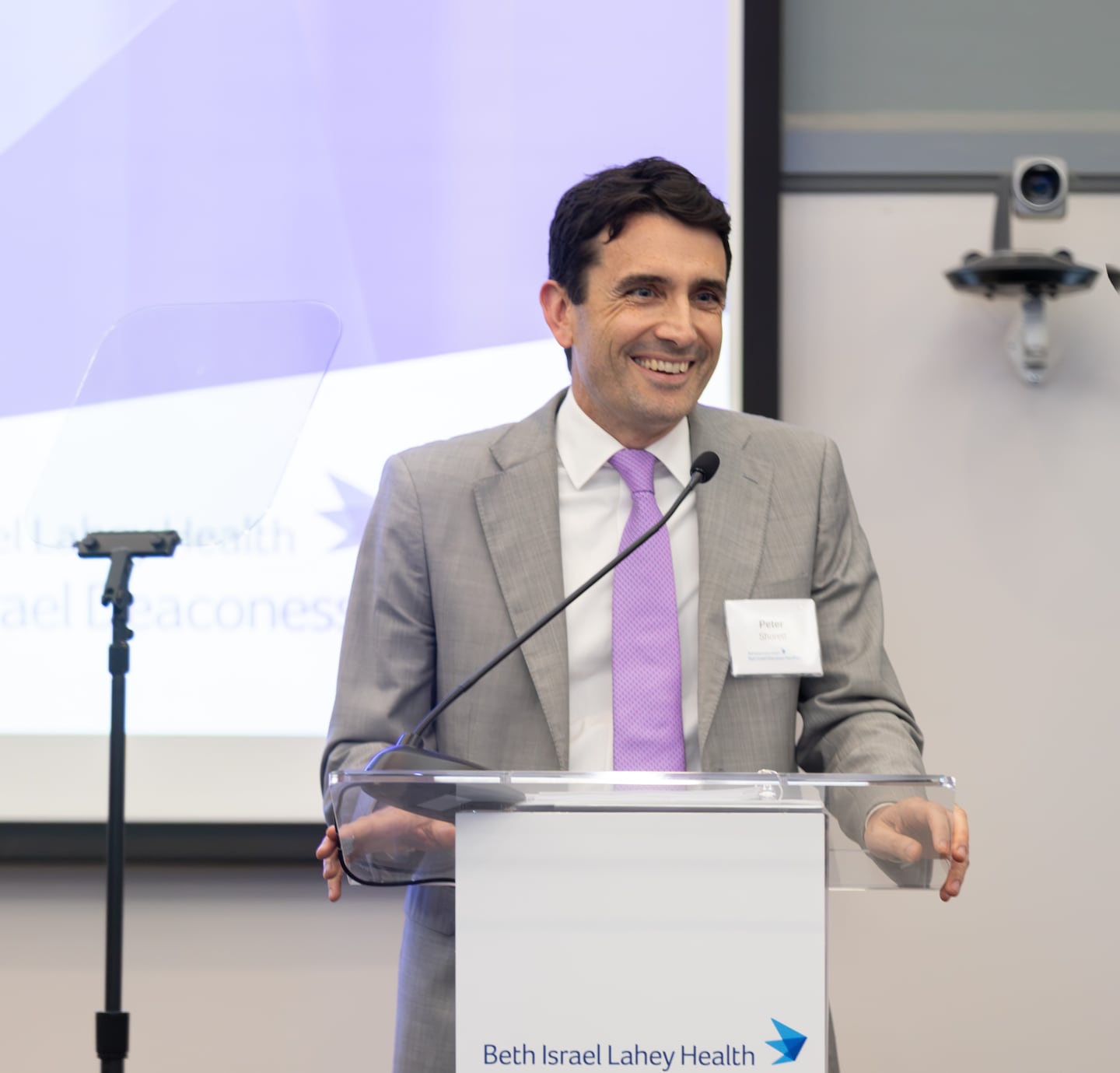 Peter Shorett, the incoming CEO of Beth Israel Lahey Health.Handout
Shorett had no qualms about leading a major health care system despite having no medical degree.
“I’ve built my entire career off of really working collaboratively with physician leaders, bringing their voices to the table, and leveraging their expertise,” he said. “I did that for my entire professional career before joining BILH when I was at Chartis. I’ve done that here. And that’s really how I’m going to lead.”
Ann-Ellen Hornidge, chair of Beth Israel Lahey’s board of trustees, said Shorett has an impressive record of accomplishments and a clear vision for the road ahead. “Peter is ideally suited to build upon the impressive attributes of our young system and position it for future success,” she said.
The Beth Israel system serves more than 2.1 million patients across eastern Massachusetts and southern New Hampshire. It is the region’s second-largest employer, with 39,000 employees and 5,300 physicians. MGB, the biggest employer in the region, has more than 85,000 employees.
Among the challenges Shorett said the health system faces are federal Medicaid cuts that are expected to take full effect in January and lead to millions of more uninsured patients across the country, and some 300,000 in Massachusetts.
Beth Israel Lahey is also striving hard to meet the goals of its strategic plan, called Blueprint 2030.
That plan aims to shift an increasing proportion of care — including primary care — from the two major hospitals in the system, Beth Israel Deaconess Medical Center in Boston and the Lahey Clinic in Burlington, to community-based settings. In 2019, only about half of the Beth Israel system’s care was in such settings, he said. Today it’s 64 percent. By 2030, the road map calls for it to be 70 percent.
Another challenge, to be sure, is executing the cancer collaboration between Beth Israel and Dana-Farber.
Shorett played a pivotal role in the maneuvering that led to the 2023 announcement by Tabb and Dr. Laurie Glimcher, then CEO of Dana-Farber, that shocked the medical world: Dana-Farber would break its longstanding relationship with MGB’s Brigham and Women’s Hospital and build a new cancer hospital in partnership with Beth Israel.
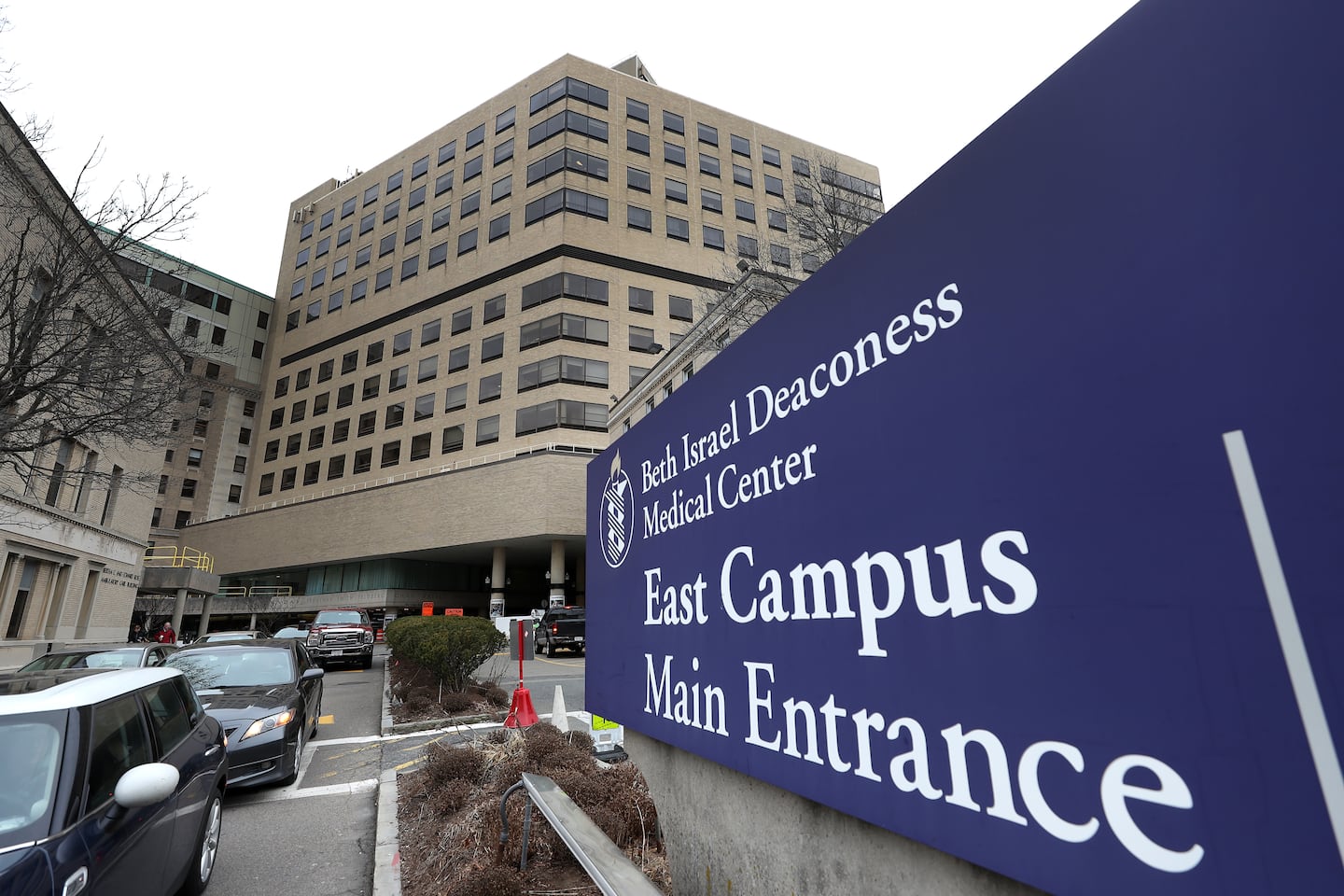
As the new head of Beth Israel Lahey, Shorett will oversee the ongoing integration of cancer care between the two organizations, including construction of a new cancer hospital on the site of the former Joslin Diabetes Center. That hospital will connect to Beth Israel Deaconess Medical Center.
While there were many reasons for Dana-Farber’s split from the MGB-owned hospital, one factor was that MGB had turned down Dana-Farber’s requests to build a separate cancer hospital.
Dr. Benjamin Ebert, chief executive of Dana-Farber, said it has “been a pleasure to come to know Peter.”
“In everything he does, Peter strives for excellence, and I know that he will lead the system well in the next phase of our partnership,” Ebert added.
Dr. Jim Mandell, the former chief executive of Boston Children’s Hospital who served on the Beth Israel Lahey board of trustees until recently, was a member of the search committee that selected Shorett.
About 100 people applied to succeed Tabb, which the committee narrowed down to about a dozen applicants whom the panel interviewed, Mandell said. The committee spent a full day interviewing Shorett in person and questioned him four other times.
Several things stood out, Mandell said. They included his track record as chief operating officer, his deep knowledge of Beth Israel Lahey, his humility, and his willingness to acknowledge what he didn’t know, including philanthropy.
The search committee ultimately recommended Shorett after he impressed its members as “somebody who they felt had really incredible integrity,” Mandell said. “You could trust what [he] said.”
Raised in the Pacific Northwest, Shorett moved to the Boston area after earning his bachelor’s degree at the University of California at Berkeley. He completed a master of public policy at the John F. Kennedy School of Government at Harvard University, with a focus on health care policy.
Shorett will succeed a chief executive who steered the health system through the pandemic and to financial stability.
Under Tabb’s leadership, the system ran a $100 million operating gain last year — the first in the black in four years. And in an employee survey in spring 2025, a majority of respondents said they were happy working for the system and would recommend their workplace. Tabb also made a mark on the recruiting front, with his system adding dozens of primary care clinicians over the past 18 months, including many who had come from rival MGB.
Jonathan Saltzman can be reached at jonathan.saltzman@globe.com.