
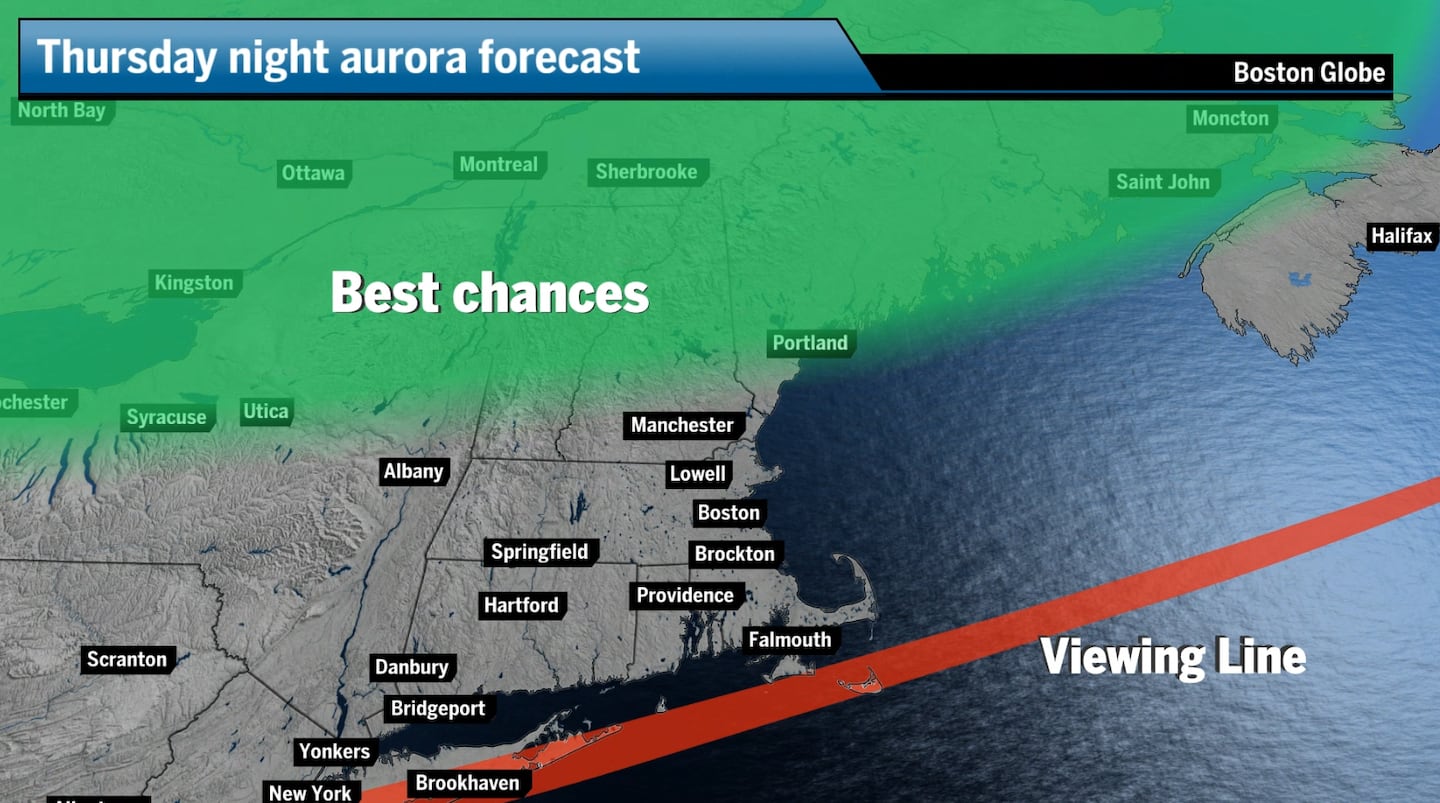
If you’re willing to lose a little sleep tonight, there could be a pretty good reason to step outside and look to the north.
The Northern Lights could make an appearance across New England overnight, thanks to a coronal mass ejection (CME), essentially a cloud of magnetized solar material racing past Earth. NOAA’s Space Weather Prediction Center is expecting a moderate geomagnetic storm, a level G2 out of 5, overnight Thursday into the predawn hours of Friday. A geomagnetic storm watch of that level can typically extend the visibility of the northern lights as far south as Massachusetts, although some forecasts have the viewing line as far south as New Jersey.
It’s never a certainty that a strong geomagnetic storm will occur. It’s always tricky to forecast how strong the CME might be when it erupts from the sun 91 million and 93 million miles away from Earth.
“This CME is forecasted to be a glancing blow,” said Vincent Ledvina, of Alaska, a space physics Ph.D. student who’s known as “the Aurora Guy.” “The cloud is a partial halo aimed mostly north of Earth, so the models have its flank sweeping over us rather than its core, and a flank hit can underperform or miss us entirely.”
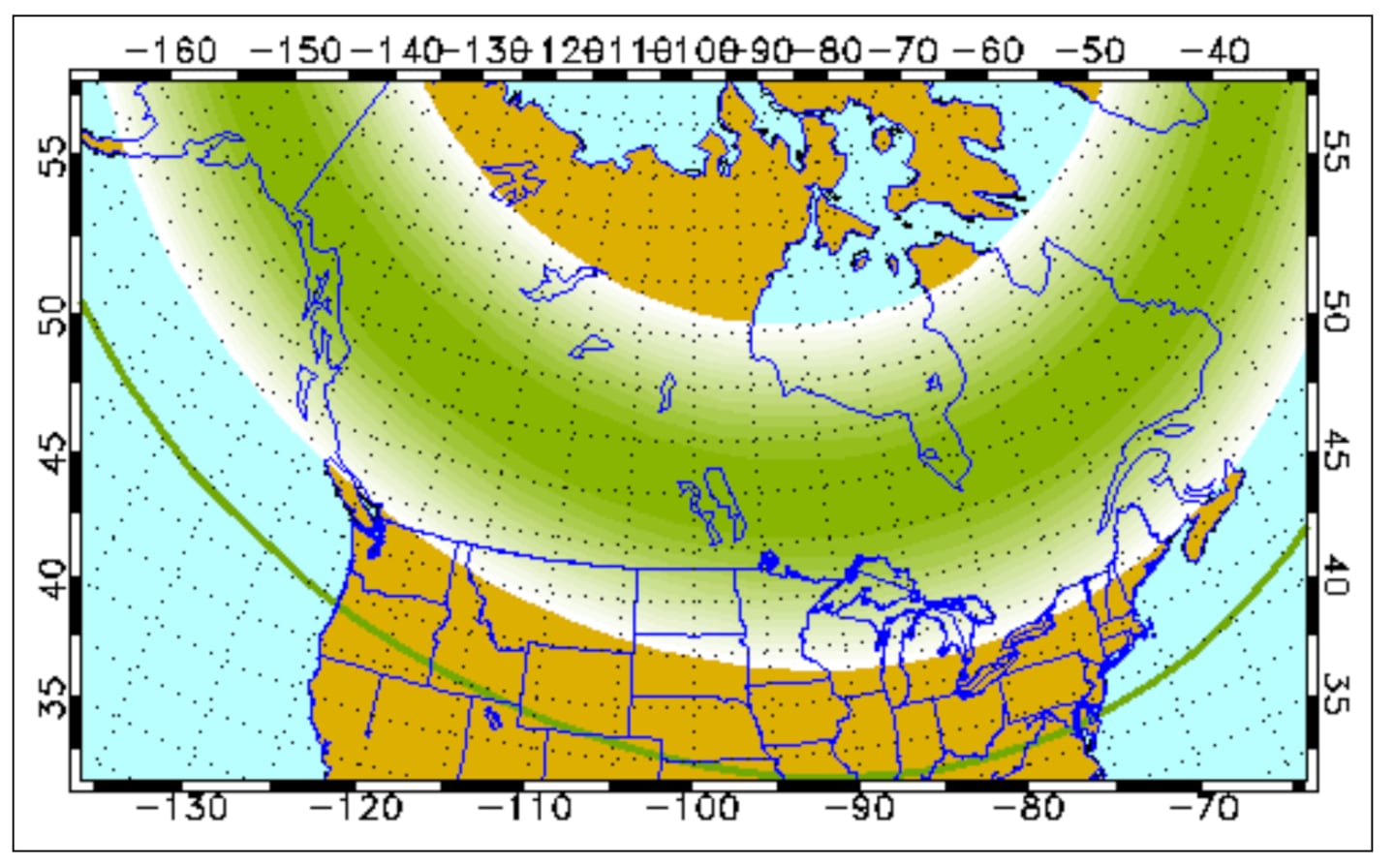 The University of Alaska shows a forecast view line (sharp green line) for the northern lights south of New Jersey on Thursday night.University of Alaska
But this is the best chance the region has seen in a while to catch a glimpse of the aurora borealis, since we’re coming off of Solar Maximum, when the sun is most active in producing these storms.
Weather-wise, we won’t have to worry about cloud cover tonight because high pressure will keep the night almost completely clear. The moonlight also shouldn’t interfere since we’re entering the new moon phase.
Based on the latest observations from NOAA, the best opportunity may actually come toward the early morning hours, roughly between 3 and 5:30 a.m. Forecasters are expecting the geomagnetic activity to build throughout the night, peaking near dawn. Again, forecasting space weather from millions of miles away isn’t easy, so it’s also worth taking a look between 11 p.m. and midnight, too.
So if you’re motivated to catch something, find somewhere dark and get away from the street lights and other light pollution. I don’t expect this to be a blockbuster event. The most likely scenario is that the geomagnetic storm stays on the weaker side and perhaps New Englanders can see some glow on the horizon to the north with the naked eye.
Be sure to snap a few photos on your phone if you can’t see anything. Your cellphone can often pick up the wavelengths and capture what you can’t see.
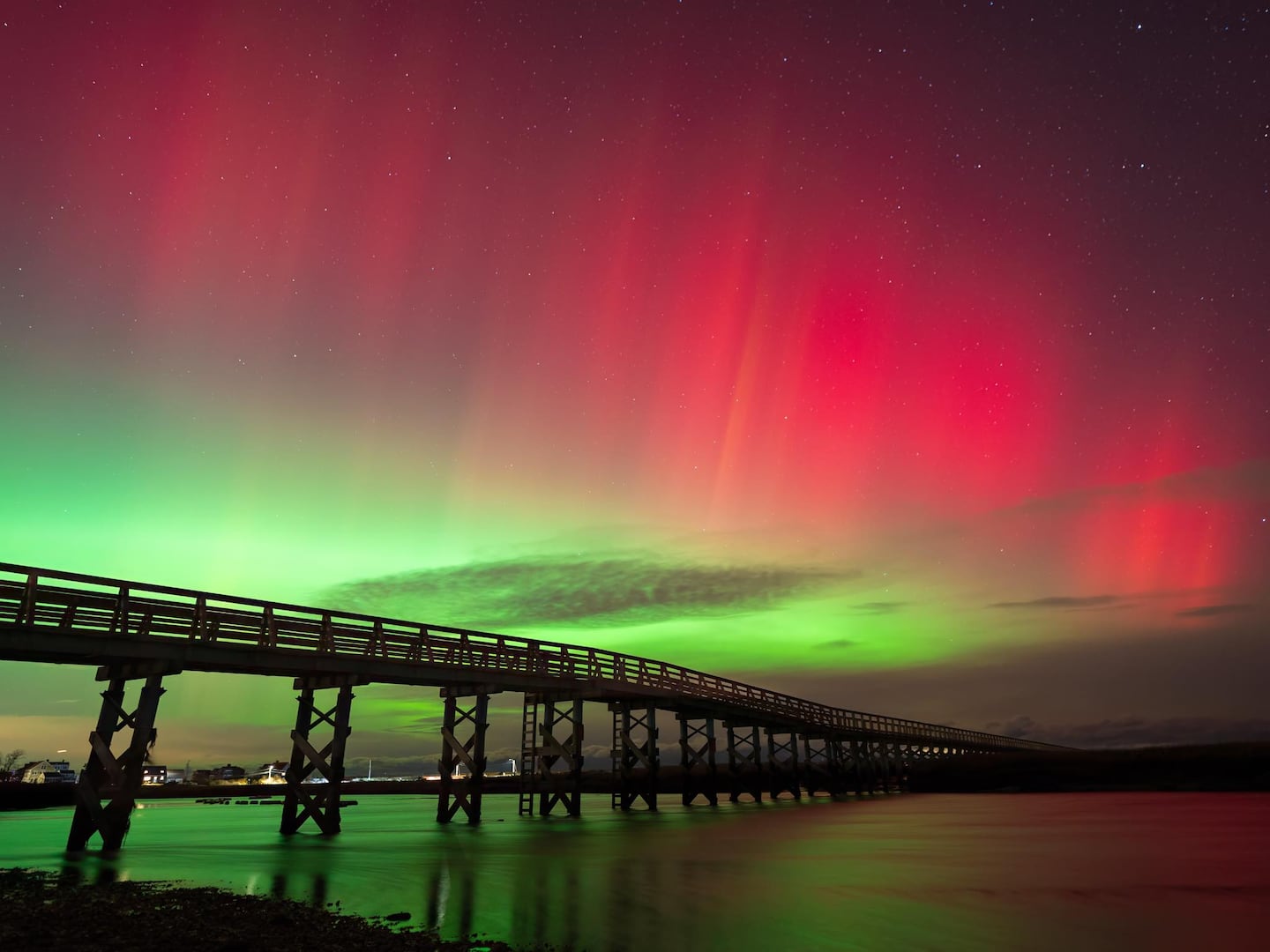 The northern lights as seen over the Sandwich Boardwalk in Massachusetts in November 2025.Paul Ruszala
Tracking aurora chances in real time
Of course, you can always keep track of the northern lights in real time via an app or NOAA’s site. Just head to the Space Weather Prediction Center website to monitor the Earth’s magnetic field.
Here’s an example below of two main metrics to watch for. The Bz (red) shows the orientation of Earth’s magnetic field. The Bt (white) shows the strength of it, and the solar wind speed is tracked in yellow.
Look for a jump up in Bt intensity (white), a flip to a negative in Bz orientation (red), and a jump in solar wind speed (yellow), then go outside and look up!
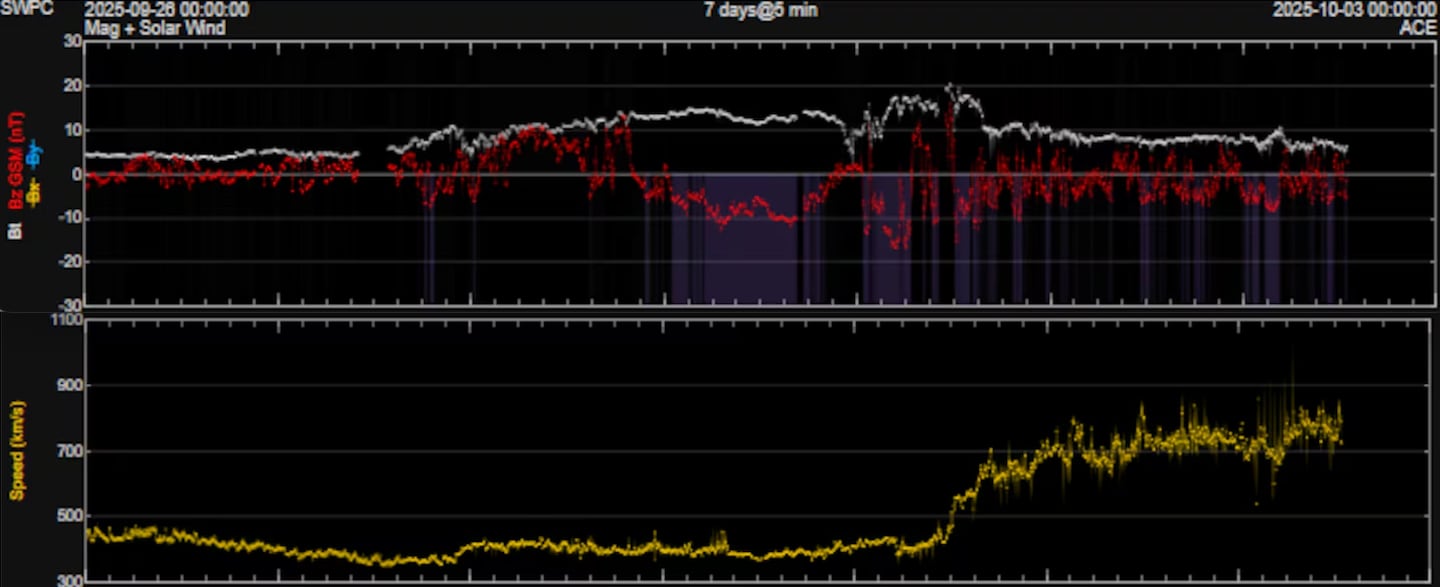 An example plot map tracking geomagnetic storms.SWPC
I touched on it above, but there’s a big reason why I think this one is worth watching.
We’re now past Solar Maximum, the peak period of the sun’s roughly 11-year activity cycle, meaning as solar activity gradually declines, these geomagnetic storms and opportunities to view the aurora should become less frequent over the coming years. That doesn’t mean the aurora is going away, but the odds of frequent, widespread displays should diminish as we move farther from the peak.
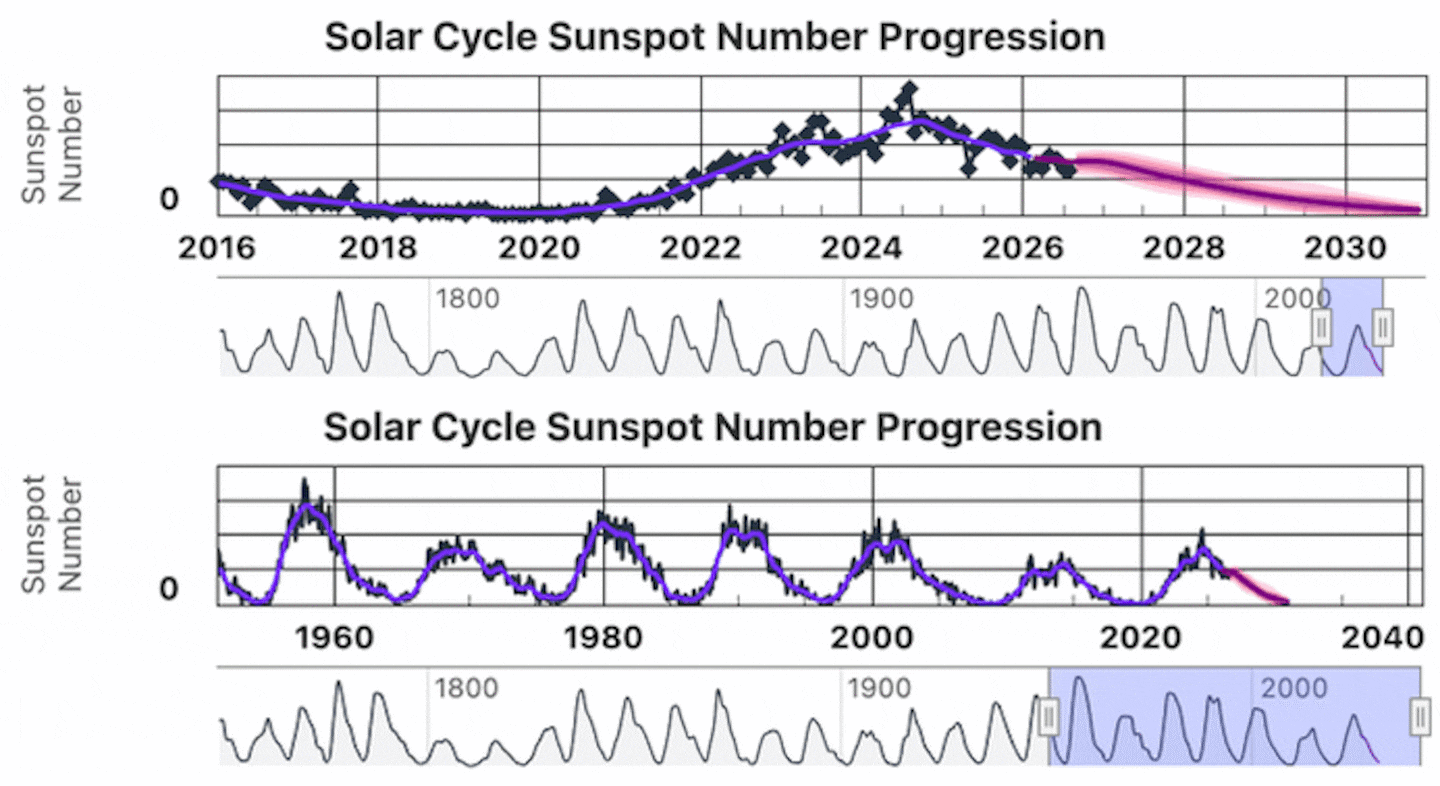 The number of sunspots has decreased dramatically in 2026 after the Solar Maximum was achieved in late 2024. Solar Maximum occurs about every 11 years.SWPC
So, if you’re on the fence, I say set the alarm. Maybe you get nothing. Maybe you see a faint green glow hugging the northern horizon. Or maybe the night sky surprises us and puts on a display. Either way, it’s probably worth losing a little sleep to find out.
Ken Mahan can be reached at ken.mahan@globe.com. Follow him on Instagram @kenmahantheweatherman.