
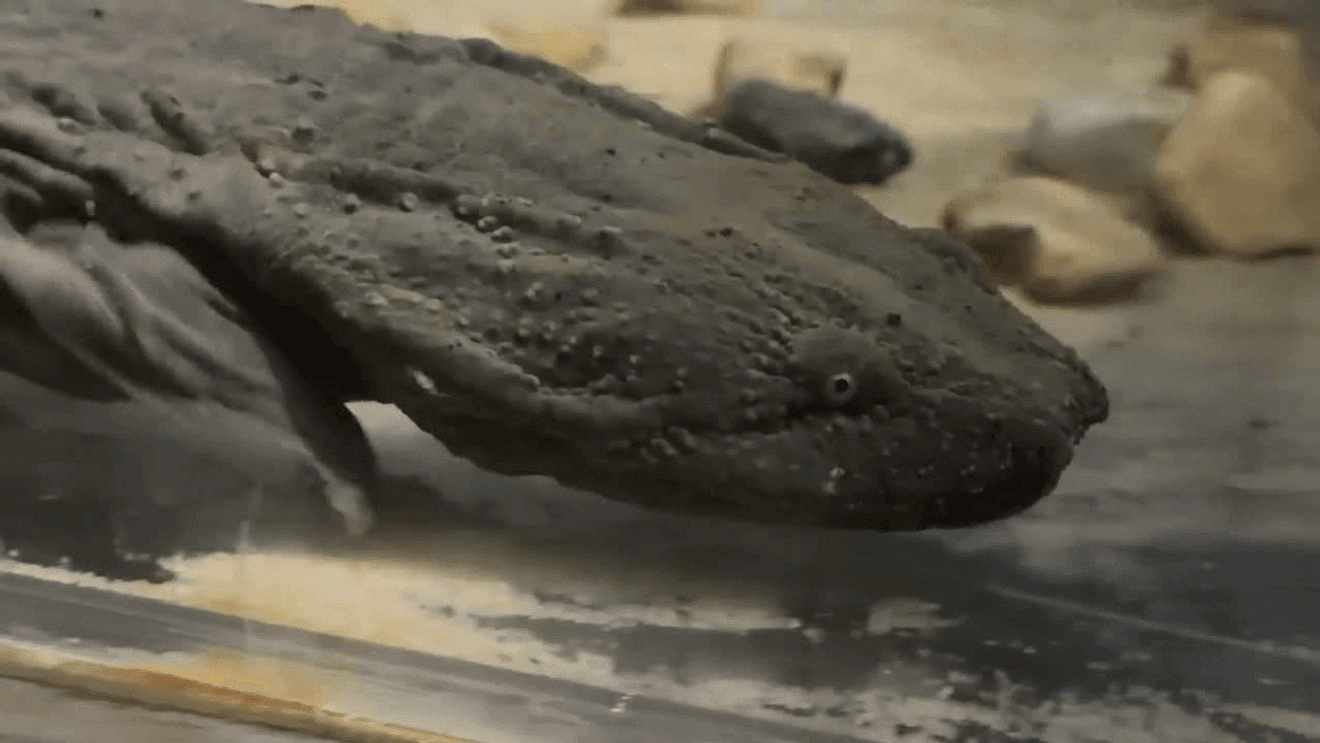
CRESTVIEW HILLS, Ky. (WKRC) — They’re slimy, wrinkly, and can grow more than two feet long.
They’ve survived for millions of years, but now one of North America’s most unusual creatures is struggling to survive in the wild.
They’re slimy, wrinkly, and can grow more than two feet long. They’ve survived for millions of years, but now one of North America’s most unusual creatures is struggling to survive in the wild. (WKRC)
The eastern hellbender, North America’s largest salamander, is disappearing from streams and rivers across the eastern United States, including Kentucky. Now, scientists and students at Thomas More University’s Biology Field Station are working to give this prehistoric-looking creature a second chance.
The university recently received two national grants to renovate its aquaculture facilities and launch a new conservation program designed to hatch, raise, and eventually release young hellbenders into local waterways. The expanded facility will have the capacity to house as many as 570 hellbenders at different stages of life.
A strange-looking creature with an important purpose:
At Thomas More’s Biology Field Station, a giant hellbender is painted on the side of the building, a fitting tribute to a species that has captured the attention of students and researchers.
“But I say, ‘Stick out your arm.’ Imagine a creature that long,” Daniel Schmidt, a biology student said.

They’re slimy, wrinkly, and can grow more than two feet long. They’ve survived for millions of years, but now one of North America’s most unusual creatures is struggling to survive in the wild. (WKRC)
Despite their intimidating appearance, hellbenders are harmless to humans.
“They’re really just sort of passive. They sort of just lurk and fly under the radar,” another biology student Aaron Denneman said.
Hellbenders have flattened bodies, wrinkled skin, and short legs. Their unusual folds of skin help them absorb oxygen directly from the water. They spend most of their lives hiding beneath large, flat rocks in cool, clean, fast-moving streams, typically emerging at night to feed.
But their dependence on clean water also makes them especially vulnerable to pollution, sediment, and habitat destruction.
Millions in decline? The numbers tell a troubling story:
The eastern hellbender has experienced dramatic population declines throughout its historic range.
According to the U.S. Fish and Wildlife Service, the species was historically documented in 626 populations. Recent surveys indicate only 371 remain. Of those remaining populations, just 45 are considered stable, while 218 are declining. The status of the others is uncertain.
The declines have prompted the federal government to propose listing the eastern hellbender as endangered under the Endangered Species Act. Kentucky wildlife officials say the situation is particularly concerning in their state.
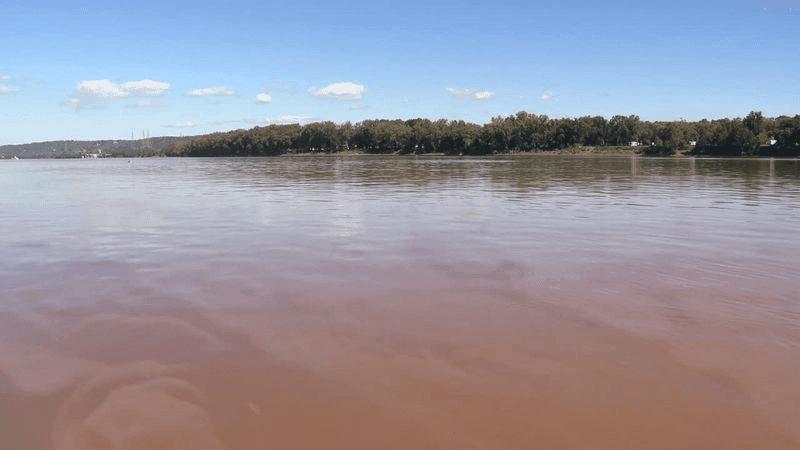
They’re slimy, wrinkly, and can grow more than two feet long. They’ve survived for millions of years, but now one of North America’s most unusual creatures is struggling to survive in the wild. (WKRC)
“About 77% of their populations have declined throughout their range, including Kentucky,” said Dr. Chris Lorentz Director of the Biology Field Station. “We really only know two good populations throughout the entire state.”
Dr. Lorentz warns that without intervention, the species could disappear from more waterways.
“If we don’t do something, they are going to disappear,” said Dr. Lorentz.
A new home for hundreds of hellbenders:
Thomas More University’s Biology Field Station has cared for adult hellbenders since 2018. But until now, its facilities have been limited in their ability to support a larger breeding and conservation program.
Dr. Lorentz showed the university’s wet laboratories, where river water flows through specialized tanks used to study freshwater mussels, turtles, and other aquatic species.
“We’re heading down to what we call our wet labs, where we have river water flowing through the labs to allow us to propagate animals,” Dr. Lorentz said.
The university received a $193,649 grant from the National Science Foundation, along with a $7,500 grant from the National Wildlife Federation and Mutual of Omaha’s Wild Kingdom. The funding will help renovate the existing facilities, install egg hatcheries, and create space to raise hundreds of hellbenders.

They’re slimy, wrinkly, and can grow more than two feet long. They’ve survived for millions of years, but now one of North America’s most unusual creatures is struggling to survive in the wild. (WKRC)
The goal is to establish a Hellbender Head Start Program, which will allow scientists to collect eggs from the wild, hatch them in captivity, and raise young salamanders until they’re large enough to have a better chance of surviving on their own.
Conservation researchers say head-start programs can increase survival rates from approximately 10% to as high as 90% under certain conditions. The research will also help scientists determine the best water conditions, temperatures, and care practices for raising the species.
“Raising animals in the lab, restoring their populations can have a big impact, particularly species that are endangered or threatened,” Dr. Lorentz said.
An up-close encounter with Kentucky’s giant salamanders:
While renovations are underway at Thomas More, the adult hellbenders that once lived in the university’s tanks have been temporarily relocated to Kentucky Fish and Wildlife facilities in Frankfort.
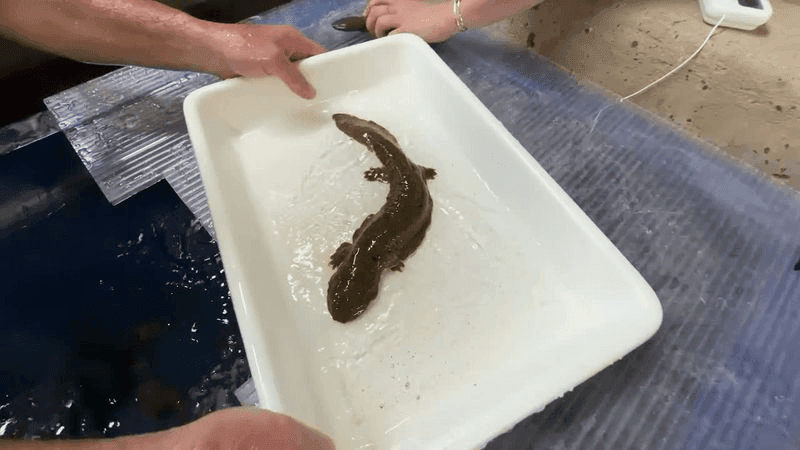
Among them were two adult females named MJ and Wisteria, both approximately 15 years old. Hellbenders can live for decades, with some reaching 30 years or more.
They’re slimy, wrinkly, and can grow more than two feet long. They’ve survived for millions of years, but now one of North America’s most unusual creatures is struggling to survive in the wild. (WKRC)
Handling one proved challenging. The salamanders are surprisingly strong, slippery, and quick to squirm out of someone’s hands. Their unusual appearance and movements help explain why they’ve captured the fascination of scientists and wildlife enthusiasts.
Monte McGregor, with the Kentucky Department of Fish and Wildlife, is partnering with Thomas More to help raise the next generation of hellbenders and eventually return them to suitable streams.
Why saving hellbenders means protecting our water:
Hellbenders aren’t just fascinating creatures. They’re also an important indicator of the health of freshwater ecosystems.
“Why do you want hellbenders in the rivers? They are one of our best species of indicators of good water quality,” McGregor said.
Because hellbenders breathe primarily through their skin, they depend on water with enough dissolved oxygen to survive. Pollution, sediment runoff, and changes to their habitat can make streams unsuitable for them.
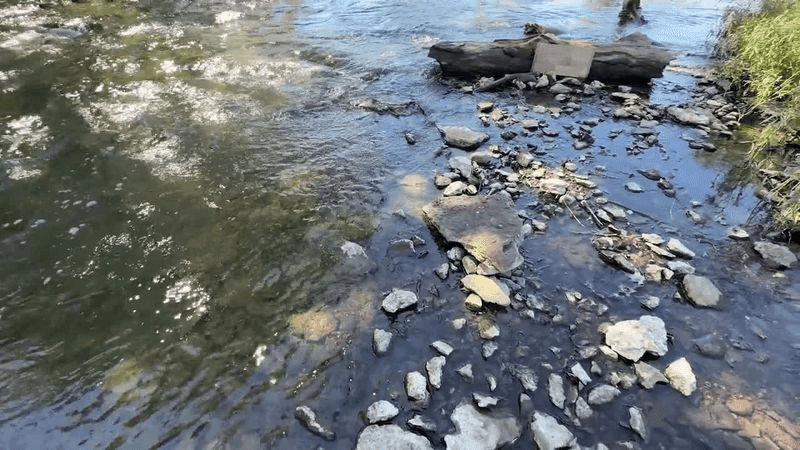
McGregor took Local 12 to a creek to demonstrate the type of habitat hellbenders prefer: cold, flowing water with large, flat rocks where they can shelter. He also pointed out heavy algae growth in the stream, explaining how environmental conditions can affect aquatic life.
They’re slimy, wrinkly, and can grow more than two feet long. They’ve survived for millions of years, but now one of North America’s most unusual creatures is struggling to survive in the wild. (WKRC)
The presence of hellbenders is generally a positive sign for a stream’s ecological health, while their disappearance can signal broader environmental problems.
How you can help save hellbenders:
While scientists work to rebuild hellbender populations, wildlife officials say ordinary people can make a difference, too.
One of the simplest ways is to leave rocks in streams exactly where they are. Hellbenders spend much of their lives beneath large rocks, which provide shelter and important nesting sites.
During breeding season, females lay eggs beneath rocks, and males guard the nests. Moving or flipping those rocks can disturb the animals, expose their eggs, or even destroy an entire nest.
Thomas More Student Aaron Dennemann also discourages the popular practice of stacking rocks in creeks and streams.
“You’re walking along a creek, or you’re hiking; you’ll see people make rock stacks,” said Dennemann. “Even stuff as simple as that is really discouraged from an ecological standpoint.”
Keeping trash and pollutants out of waterways, reducing runoff, and protecting natural stream habitats can also help.
A new generation working to save an old species:
For students at Thomas More University, the project offers a rare opportunity to work directly with wildlife researchers and participate in conservation efforts that could have a lasting impact.
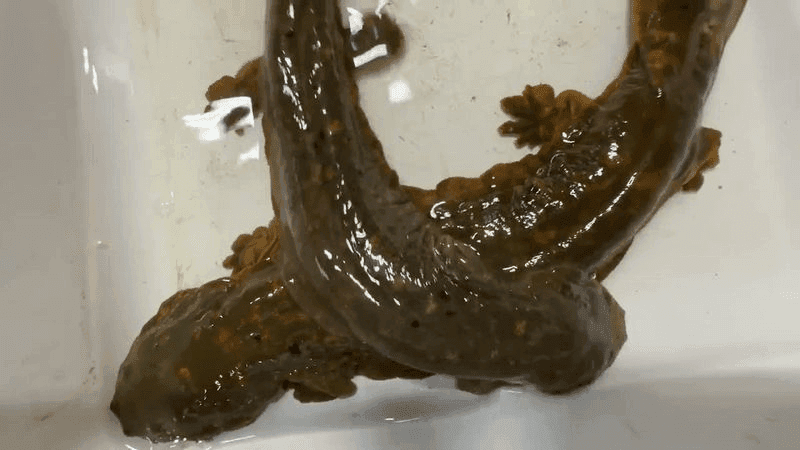
They’re slimy, wrinkly, and can grow more than two feet long. They’ve survived for millions of years, but now one of North America’s most unusual creatures is struggling to survive in the wild. (WKRC)
The renovated Biology Field Station will also expand educational opportunities for younger students through its K-12 science outreach programs. Researchers hope the lessons learned from raising hellbenders will help other conservation programs, zoos, aquariums, and wildlife agencies working to protect the species.
The university is collaborating with Kentucky Fish and Wildlife and other partners, including the Louisville Zoo, Newport Aquarium, and Purdue University.
These harmless creatures have survived for millions of years. Now, a new generation of scientists is working to make sure they survive for generations to come. And their future doesn’t depend on scientists alone.
Saving the hellbender isn’t just about protecting one unusual species. It’s about preserving the clean water and healthy waterways we all depend on.