

Cupertino airs Thursdays at 10 p.m. on CBS.
Cupertino taps Robert and Michelle King’s deep bench of New York theater legends to skewer America’s current heart of darkness.
Photo: Elizabeth Fisher/CBS
Back in the halcyon Obama-era days of The Good Wife, when the lawyers at Lockhart & Gardner took on a case that intersected with the burgeoning tech industry, the show’s creators Robert and Michelle King often refracted a real story about Google, Facebook, or Amazon through the prism of a fictional conglomerate known as ChumHum. Created by a Zuckerberg-ish guy named Neil Gross (John Benjamin Hickey), ChumHum got itself entangled in fights over the secrecy of its search-engine algorithm, price-fixing its employees’ salaries, Gross’s marital woes, the theft of a prototype tablet very much like an iPad, and, later on, the algorithmic discrimination propagated by “ChummyMaps.” By the time of the Trump administration, as tech companies got in bed with oppressive regimes, the Kings devoted an episode of follow-up series The Good Fight to ChumHum’s modifying its search results to appease Chinese censors, including a meta bit in which they posted a disclaimer that CBS itself had censored an animated short they’d planned to include.
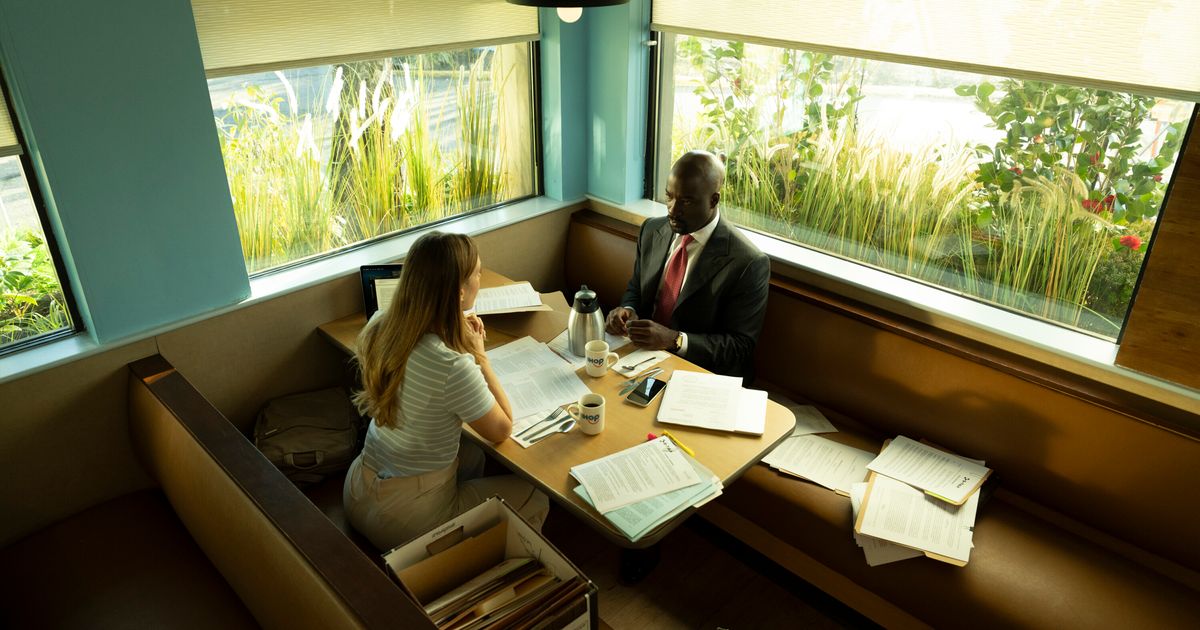
All of this is to say that if you’ve ever appreciated a Good Wife or Fight episode about ChumHum, or are even just now laughing about the concept of a tech company named ChumHum, you will love the Kings’ new drama, Cupertino, a legal procedural that rehomes the zany, angsty fun of The Good Wife and Fight and more than a little of the existential dread of Evil to America’s current heart of darkness in Northern California. The story kicks off with a team-up between two castoffs of big tech: a pedigreed lawyer named Michael Price, played by Mike Colter (a regular of the Kings’ dramas), who has been kicked out of a start-up he co-founded, and a fresh-out-of-school but sharp Christian lawyer named Olivia Siffre (Rachel Keller), cut from the same company after rebuffing sexual advances from the other co-founder. To get their revenge, the two team up to found their own firm and stick it to the Goliaths of tech.
Michael and Olivia are factory-standard templates of the Kings’ universe: earnest repositories for exposition who aren’t especially engaging themselves but get interesting when paired with more idiosyncratic characters. Their upstart firm, which operates out of Potemkin offices that have more fake walls than actual employees, takes on a receptionist who becomes their investigator, a sardonic, harder-partying variant of The Good Wife’s Marissa Gold played by Ella Stiller (of The Comeback and being Ben’s daughter). Soon, there’s an infusion of cash and chaos from a big benefactor: Busy Philipps, playing a character named Natalia Boutella, who’s the ex of a tech kingpin (a peevish Fisher Stevens) and answers the question, “What if MacKenzie Scott were blonde and had a law degree and an ax to grind with it?”
The weirdness of Cupertino follows a curve of exponential growth. The first few episodes present material that could’ve been on The Good Wife, including a few cases of the week that are shopworn but fun enough; in one, Michael and Olivia represent a put-upon coder played by Nik Dodani, who quickly becomes their resident expert on explaining technobabble. Soon, however, the Kings’ fondness for probing the strangest possible intersections of legal practice pushes Cupertino in odd and hilarious directions. One episode takes place with the characters all calling into a Zoom while stuck in traffic to debate an AI algorithm’s decision to assign an organ to one donor over the other. (In a classic network-drama twist, midway through the episode, evidence emerges that forces the legal teams to switch arguments while still stuck in traffic.)
Cupertino also continues the Kings’ tradition of hiring great New York theater actors to play guest roles, often as rival lawyers and judges. When Michael and Olivia take on a music service duplicating artists’ work to get more streams, the presiding voice from the bench is nine-time Tony winner Danny Burstein, who turns out to be a Parrothead bummed that slop has infiltrated his playlist of Jimmy Buffett favorites. And, in what turns out to be an essential acid ingredient in the Cupertino recipe, Price and Siffre often find themselves going up against a lawyer for a boutique firm representing the mutual interests of the big guys. Played by a fantastically slinky and devious Renée Elise Goldsberry, Nichole E. Ferebee channels elements of Girls5eva’s Wickie Roy and the devil’s associate Lola on Damn Yankees and has sparkling chemistry with Price, often tempting him to return to corporate life. If these companies have become so all-powerful, why not give up the fight and join them?
Given the accelerating nature of the industry Cupertino covers — both in terms of how quickly these companies can innovate and how quickly they can bludgeon regulation around their work into the shape they want — a broadcast show about Silicon Valley occasionally feels a step off from reality. A recurring figure in the first set of episodes is a mysterious whistleblower named Bo (played by an unsettlingly chipper Rob McClure), who refuses to identify much about himself, to the bafflement of all involved. (He pays them in bitcoin.) They do learn he’s connected to the latest advancements in AI technology, however, which leads to some storylines that, depending on the latest headlines you’ve read about Anthropic and OpenAI potentially leading us to doomsday, are maybe too cuddly and humane. But if there’s inevitable imprecision in the specifics of Cupertino’s plotlines, the sprawling, maximal nature of broadcast television allows it to take a vast survey of the texture and culture of the world it covers that’s mostly accurate (at least based on the ten episodes of season one’s whopping 20-episode order that were shared with critics).
Silicon Valley has developed its own strange niches and cultures, which gives the Kings and their writers a lot of material to work with: There are legal experts calling in from nude parties at Burning Man, AI cults that all but resemble fringe corners of effective altruism, weirdo antisocial billionaires obsessed with building bunkers. There, broadcast television, which has become its own kind of underdog in the streaming age, gets its revenge against the titan that consumed it. Look at these weirdos who rule the world now, Cupertino argues. Don’t they make for great television? They may have subsumed much of our lives into their ever-growing monopolies, but that can’t stop us from laughing at them every week.
Sign up for the Vulture Daily
An entertainment newsletter for the pop-culture obsessed.
Vox Media, LLC Terms and Privacy Notice