
This year’s flu season started months early and in an unexpected part of the country, according to health officials.
The unusually early start to the season has prompted local health officials to urge people to get their flu shots as soon as possible.
In Los Angeles County, flu activity began rising in September, ahead of its typical early-November start, Dr. Dawn Terashita told The Times on Wednesday.
That isn’t a major surprise, said Terashita, associate director of the Los Angeles County Department of Public Health’s Acute Communicable Disease Control Program. Flu tends to be “very unpredictable,” she said, due to the ways that it mutates.
But another unusual factor was that the flu season started this year in the Western states.
Typically, the flu starts in the South, then makes its way across the country, according to Dr. Elizabeth Hudson, regional chief of infectious diseases at Kaiser Permanente Southern California.
Terashita said it’s too soon to know the reason behind this phenomenon.
Given the early flu surge, Hudson said in a statment it might have caught people off-guard, as many hadn’t even had the chance to get vaccinated — or they were so recently vaccinated that their bodies hadn’t had a chance to produce immunity against the flu.
The county’s flu season started on Sept. 28. But the early start alone, Terashita noted, isn’t an indicator that the season will be more severe.
The rate at which flu tests are coming back positive since the season’s start has been high in the San Francisco Bay Area and moderate in Southern California and the Sacramento Valley. Flu hospital admission rates remain low across California. So far this year, there have been 34 flu-related deaths in the state, according to the state Department of Public Health’s online dashboard.
San Francisco confirmed its first flu death of the season last week. Los Angeles County has not logged any influenza deaths yet this season, Terashita said. In the 2025-26 flu season, the county recorded 126 influenza deaths, a relatively low total, she noted.
Kaiser has seen a recent increase in outpatient visits related to the flu, though flu hospitalizations have not yet risen. If the current trend continues, Hudson expects hospitalizations to spike in the coming weeks.
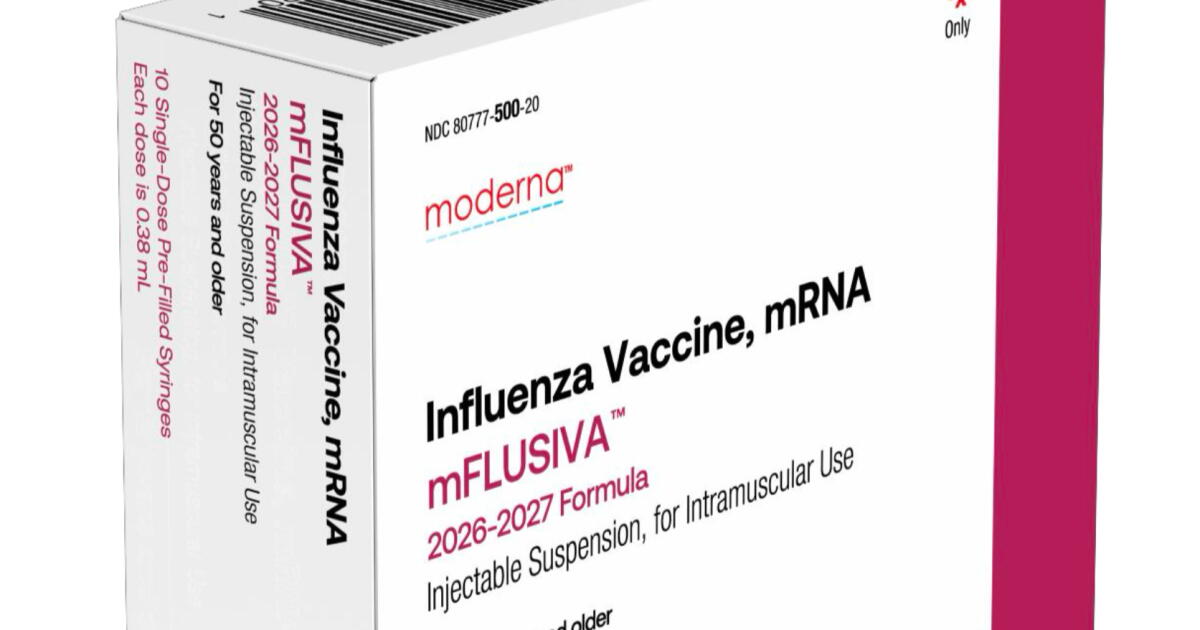
Health officials say vaccination is the best form of protection against the flu and are urging people to get their shots soon.
Dr. Peter Chin-Hong, a UC San Francisco infectious-disease expert, said people should aim to get the shot ideally before mid-October. For most, he said, the standard flu shot suffices, though he noted there are other options, including a nasal spray version — great for almost anyone with a fear of needles — and higher-dosage shots. The stronger shots have four times the antigen and are approved for those 65 and older.
The current variant, H3N2 subclade K, appears similar to last year’s strain and is included in this year’s vaccine, reducing concern about a major mismatch between the vaccine and the flu strain, Chin-Hong said.
“The ball is in our court because vaccination behavior drives how we tackle the flu,” he said. “This year we have less excuse because the flu vaccine is well-matched in general to … what has been circulating so far.”
Los Angeles County’s most severe flu season in recent memory was the 2009 pandemic, according to Terashita. That year, the H1N1 virus led to a high number of hospitalizations and deaths around the world, The Times reported at the time.
Flu cases almost disappeared during the COVID-19 pandemic, Terashita said. As people resumed gatherings and eased up on measures including masking and social distancing, the county saw upticks in flu cases in 2024 and 2025.
“We’re just watching and waiting right now” to see how severe the flu season will be, she said, “but it is a good reminder to everyone that it’s a very good thing you can do to protect yourself, which is get the vaccine.”
Times staff writer Rong-Gong Lin contributed to this report.