

While skyrocketing diesel prices are tightening already razor-thin margins for motor carriers, trucking jobs are on a growth streak. But does more hiring mean a recovery for everyone?
According to the latest employment report from the Bureau of Labor Statistics (BLS), nearly 3,000 trucking jobs were added in September. That marks the third consecutive month of increases, and the first time since April 2023 there were more jobs in trucking than the year before.
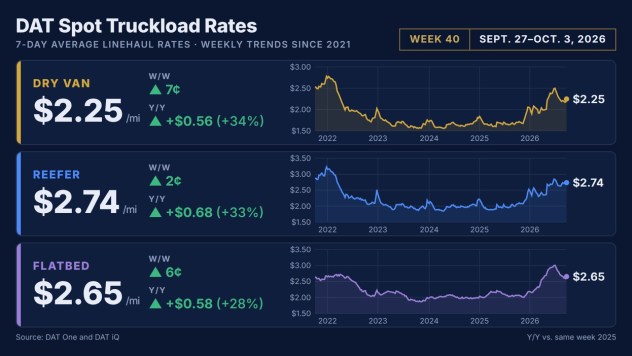
Trucking jobs have generally declined since February 2023 as the industry shed excess capacity that entered the market in the wake of the pandemic. Rates finally started to rebound this year.
September marked only the seventh monthly increase in trucking employment since February 2023, with four of those gains occurring this year.
The employment gains suggest improving conditions, but surging diesel prices complicate the outlook. On Sept. 4, diesel prices reached a record high of $5.85 per gallon national average, according to AAA. The national average peaked to $6.53/gallon on Sept. 22 before coming down, albeit slightly.
Just as owner-operators and motor carriers began getting the rate relief they had waited years for, surging diesel costs started eating into those gains.
Those costs have been crippling small-business trucking companies.
The Owner-Operator Independent Drivers Association noted that every $1 increase per gallon in diesel prices costs truckers approximately $400 more per week. As of Oct. 7, diesel prices were $2.62 more than they were a year ago.
“Our members often work load-to-load and can’t simply raise their rates when fuel spikes the way their larger competitors can,” OOIDA Executive Vice President Lewie Pugh said. “While big oil companies have seen their profits nearly double this year, the sharp increase in diesel cost has quickly eaten up what little margin mom-and-pop trucking businesses have left.”
In just one month ending Sept. 21, at least 16 trucking companies filed for bankruptcy.
Where are these trucking jobs being created?
David Spencer, vice president of market intelligence at Arrive Logistics said higher rates are creating growth opportunities for some carriers. While many owner-operators and small carriers are struggling to stay afloat, some have been able to leverage the higher rates this year.
“Three consecutive months of increases suggest that conditions are beginning to shift as elevated rates persist throughout 2026,” Spencer said. “While headwinds such as high fuel prices and shifting regulations continue to limit employment growth compared to prior inflationary cycles, the report indicates that higher linehaul rates are providing relief and modest growth opportunities for well-positioned carriers.”
BLS payroll figures exclude the self-employed. An owner-operator who leaves self-employment for a company driving job could therefore add to the trucking jobs count without adding another driver to the industry. The report does not establish whether that shift is occurring, but it offers one possible explanation for employment growth alongside small-business distress.
Cash reserves, access to credit, customer contracts and the ability to recover fuel costs could favor larger carriers.
Carriers able to withstand the fuel spike could gain drivers and freight from smaller competitors forced to shut down. That creates the possibility of larger fleets expanding even as small-business trucking struggles.
If fuel prices remain high and small carriers continue to exit while larger fleets expand, trucking could be moving toward greater concentration. The latest jobs report does not establish that shift.
Jury is still out
September’s preliminary employment figures cover the pay period that includes the 12th, limiting what they reveal about the subsequent diesel-price peak.
Andrew King, director of operations at the OOIDA Foundation, said trucking employment can take seven to nine months to respond to rates. September’s gains could therefore reflect conditions from months earlier.
King echoed what Spencer said about diesel prices and other factors limiting capacity growth.
“No one wants higher fuel prices or more expensive equipment, but those added costs may make carriers more cautious about adding capacity,” King said. “If that happens, it could actually help prevent the market from overshooting and adding more trucks than freight demand can support. Larger carriers, in particular, may be more deliberate about when and how they expand, which could help put a floor under rates rather than allowing another sharp decline.”
That leaves two questions to track: whether slower capacity growth helps sustain rates, and whether smaller carriers can survive long enough to benefit.
But there is a question worth watching: As trucking recovers, how much of the business will remain in independent hands? LL