
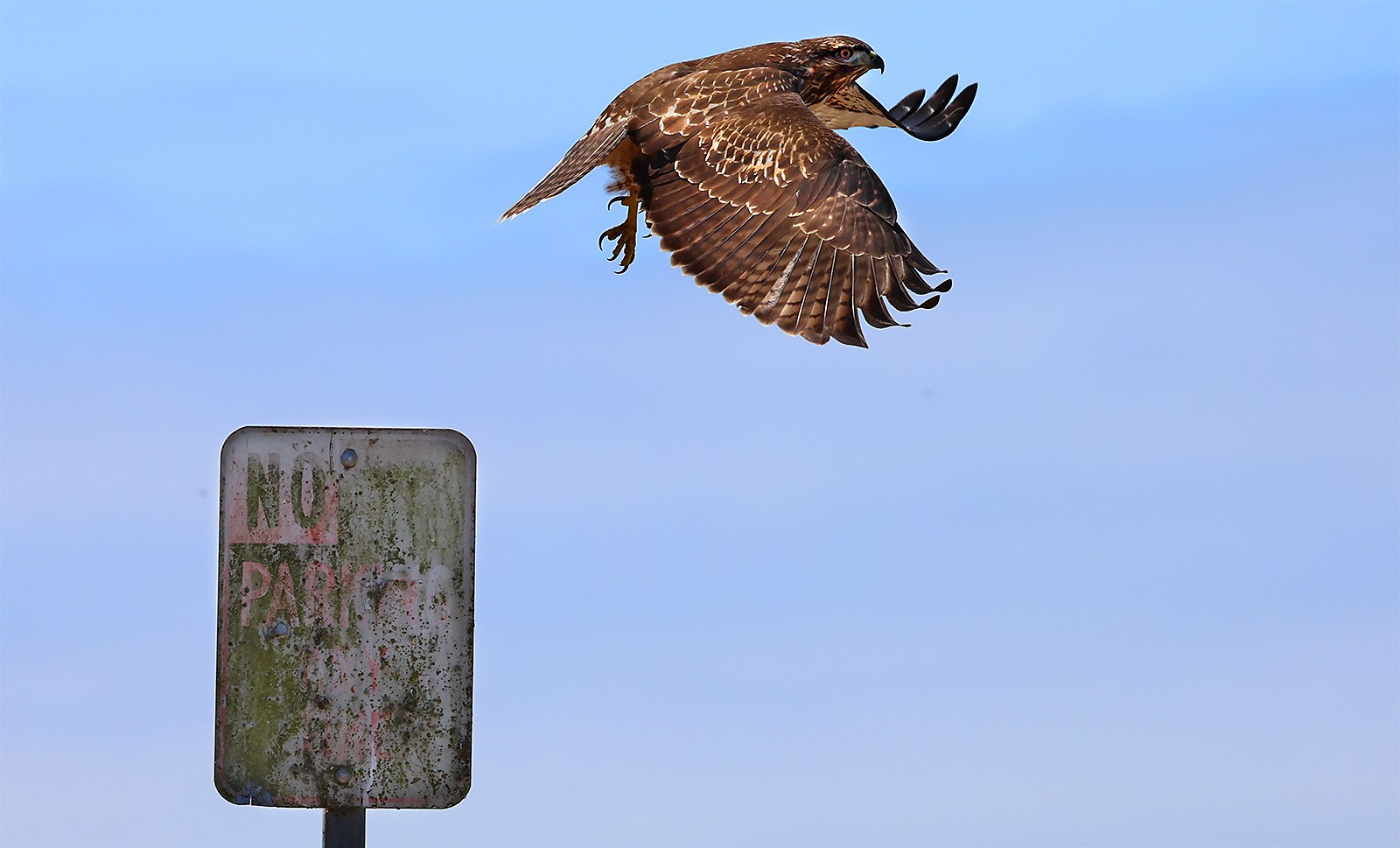
As we transition into fall, the morning air feels a little cooler. The days grow just a little shorter, and yet the most remarkable changes are happening in the skies.
At the Santa Cruz Harbor, the jetty seems to fill with life this time of year. Brown pelicans perch shoulder to shoulder on the rocks. Brandt’s and double-crested cormorants stretch their wings to dry after a morning of diving. Grebes bob in the calm harbor waters while gulls wheel overhead, always alert for their next meal. If you spend just a few minutes watching, you begin to notice that every species has its own rhythm, behavior and purpose.
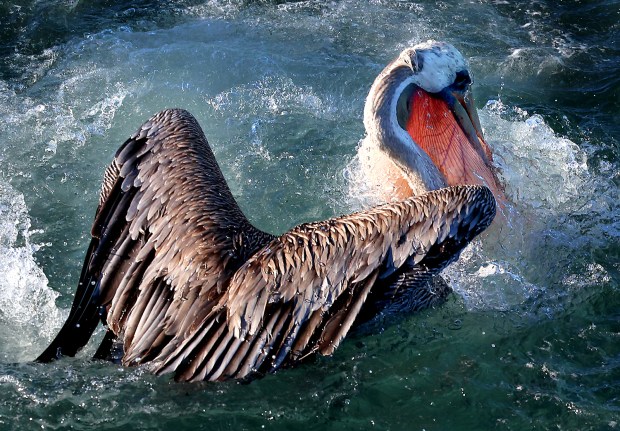 Birds at Lighthouse Point and near the mile buoy. (Shmuel Thaler – Santa Cruz Sentinel)
Birdwatching is one of the few outdoor activities that requires almost nothing to get started. You do not need expensive equipment or specialized knowledge. You do not need to travel far. A simple walk around your neighborhood, a visit to the harbor or a hike through one of our county parks is enough. You simply begin by paying attention, slowing down and looking for birds in the most ordinary places.
What starts as noticing “a bird” soon becomes recognizing unique characteristics. Specific songs and calls. Colors on wings or tails. Differences in size, shape and flight patterns. Before long, you begin asking questions. Why are they here? Where are they going? What do they eat? How do healthy wetlands, forests and oceans support their survival? Those questions naturally lead to a deeper appreciation for conservation.
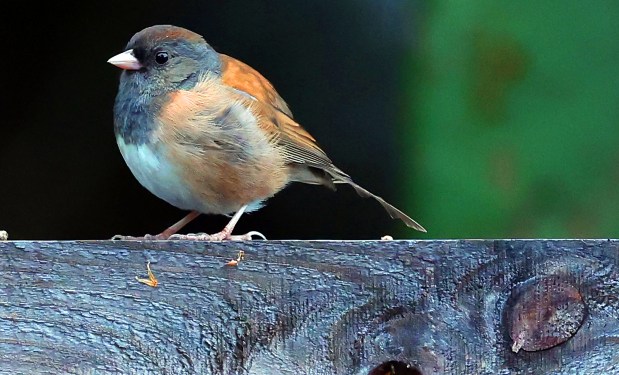 A dark-eyed junco alights on a fence in Santa Cruz this week. According to the website of Cornell University’s Ornithology Lab, “These birds are neat, even flashy little sparrows that flit about forest floors of the western mountains and Canada, then flood the rest of North America for winter. They’re easy to recognize by their crisp (though extremely variable) markings and the bright white tail feathers they habitually flash in flight. Dark-eyed Juncos are among the most abundant forest birds of North America.” They are one of the most common birds in North America and can be found across the continent, from Alaska to Mexico, from California to New York. A recent estimate set the junco’s total population at approximately 630 million individuals. Juncos have a high, short chip note that they often give in rapid succession when they fly and more slowly as they forage; the note may encourage other juncos to follow. (Shmuel Thaler – Santa Cruz Sentinel)
September and October mark one of the busiest migration periods of the year. Look offshore and you may spot vast flocks of sooty shearwaters skimming just above the waves as they continue their incredible journey across the Pacific. Visit Watsonville Slough, where elegant American avocets, dowitchers, sandpipers and other shorebirds gather to rest and feed before continuing south. Around Schwan Lake, Pogonip and our coastal open spaces, merlins and peregrine falcons return to hunt migrating songbirds, while the harbor itself welcomes an ever-changing cast of gulls, terns, pelicans, grebes and cormorants. Every day brings something different, making this one of the most exciting times of year to explore the outdoors.
Research has shown that people are more likely to care for places they know and understand. Birding helps us build that connection. It teaches patience. It encourages curiosity. It helps us observe changes in seasons, habitats and wildlife that might otherwise go unnoticed. In many ways, birds become ambassadors for the broader natural world.
Santa Cruz County is one of the best places in California to witness migration. Rich ocean nutrients fueled by seasonal upwelling, mild coastal temperatures and an incredible diversity of habitats provide food and shelter for thousands of birds traveling the Pacific Flyway. From Natural Bridges State Beach to Elkhorn Slough, Wilder Ranch, Neary Lagoon and the redwood forests of the San Lorenzo Valley, our county offers an extraordinary variety of landscapes that support hundreds of bird species throughout the year. Every outing brings the possibility of discovering something new.
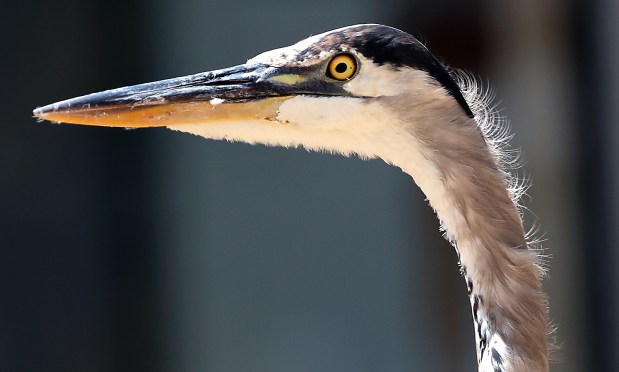 A great blue heron looks out as it forages on the grass in front of the Santa Cruz County Superior Courthouse. About the bird, Cornell University’s All About Birds website says, “Whether poised at a river bend or cruising the coastline with slow, deep wingbeats, the Great Blue Heron is a majestic sight. This stately heron with its subtle blue-gray plumage often stands motionless as it scans for prey or wades belly deep with long, deliberate steps. They may move slowly, but Great Blue Herons can strike like lightning to grab a fish or snap up a gopher.” Great blue herons can be seen throughout the entire United States and all of Central America. (Shmuel Thaler — Santa Cruz Sentinel)
If you are interested in getting started, the Santa Cruz Bird Club offers beginner-friendly field trips, identification resources and guides to local birding locations throughout the county. Throughout my own wanderings, I have always appreciated the generosity of fellow birders, who are quick to share their knowledge, lend a pair of binoculars or help identify a bird for someone just getting started. Another wonderful local resource is the Bird School Project, which helps people of all ages develop bird identification skills while fostering a stronger connection to the natural world.
If you are interested in getting more involved, check out the Bird School Project’s Monterey Bay Festival of the Birds, taking place Oct. 9-11. Whether you are an experienced birder or someone who has never picked up a pair of binoculars, the festival offers guided walks, expert presentations, workshops and family-friendly activities that make it easy to learn from some of the region’s most knowledgeable naturalists.
As our lives become increasingly busy and our attention increasingly divided, we can easily miss the subtle signs of the changing season. Perhaps one of the greatest gifts nature offers is the simple invitation to look up. You may discover that birding is not about checking species off a list at all. Instead, it becomes a reason to spend more time outside. To get curious. To observe. To appreciate the remarkable wildlife that surrounds us every day. And in doing so, to reconnect with the places that make Santa Cruz County such an extraordinary place to call our ocean backyard.
Tracey Weiss is the executive director of the O’Neill Sea Odyssey. She is working to support the residents of Santa Cruz County with the information that allows them to connect, impact and understand the ocean ecosystem and the regional environment we call home. She can be reached at osoexecdirector@oneillseaodyssey.org.