
For a century, the snowfield known as St. Mary’s Glacier has been a popular Colorado destination that captured the hearts and imaginations of thousands of visitors. Only an hour or so from Denver, the snowfield had, until this year, always been known to last year-round, bringing sightseers as well as skiers and snowboarders seeking summer turns.
Though it is called a glacier, scientists say St. Mary’s hasn’t been a true glacier — which is defined by ice so dense that it moves under the weight of Earth’s gravity — anytime in recent history. After the ice melted completely for the first time in recorded history this September, St. Mary’s isn’t even a perennial snowfield.
Now, it’s just a place — or perhaps, a spirit.
Morgan Sierra Mae, who grew up less than an hour away in Evergreen, has visited the snowfield known as St. Mary’s Glacier many times over the years.
But on Friday, Oct. 2, Mae sat cross-legged on the rocks where the snowfield, now gone, had for so long resided. Her voice echoed through the rocky valley — a natural amphitheater carved over thousands of years by snow and ice.
“I melt away, I melt away, I melt away — don’t forget my name,” she sang, the strum of her guitar accompanied by the constant babble of a mountain stream and the gentle whish of a cool breeze. “I melt away, melt away.”
Mae’s song was part of a ceremony to mourn the loss of the snowfield at St. Mary’s, pay their respects and thank the “glacier” for all it offered — hosted last week by activists with Glacier Nation, an international climate movement, and The Green House Connection Center, a Denver-based nonprofit.
“Who accompanies St. Mary’s now? Who is with her? Who’s listening and capturing the last drop of water, or what she wants to tell us?” said Marcela Fernandez, the founder of Glacier Nation. “We believe that every time that a glacier or a perennial snowfield will disappear, what we should be able to collect are the lessons that we need to learn.”
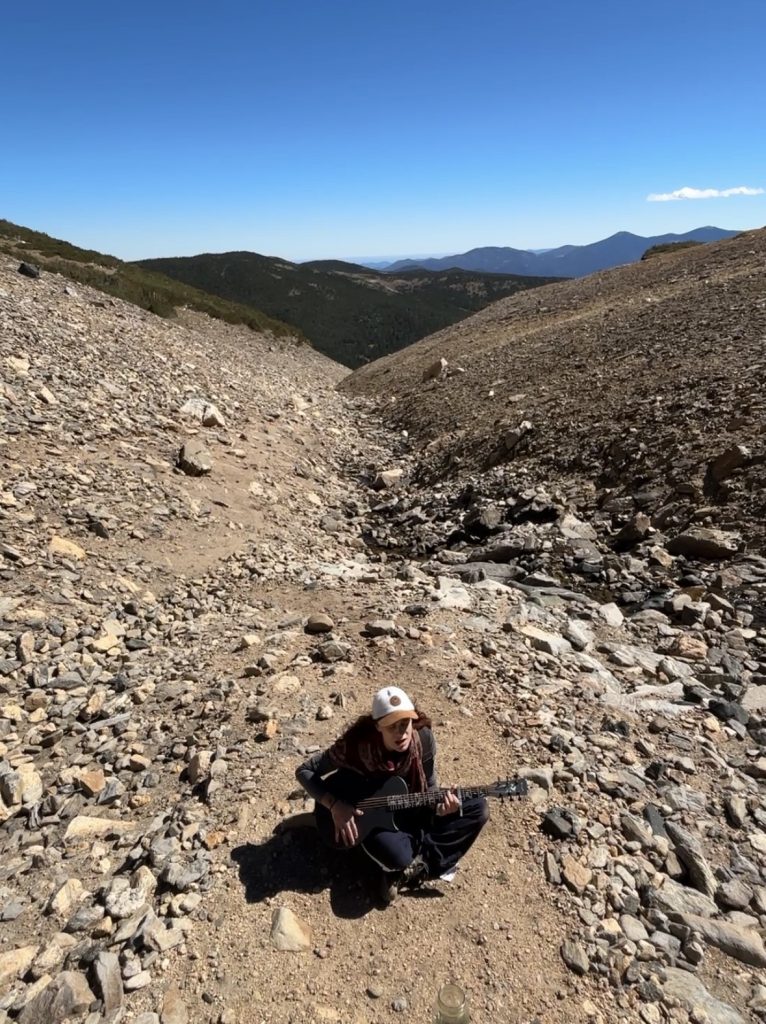 A valley completely empty of snow for the first in at least 100 years stretches out behind Morgan Sierra Mae as she sings an original song on Friday, Oct. 2. Mae, who grew up in Evergreen, said art and music help her process the grief she feels for the ecological harm that industrialization and pollution have done to places like St. Mary’s.Ryan Spencer/Summit Daily News
From Columbia to Colorado, glaciers are disappearing
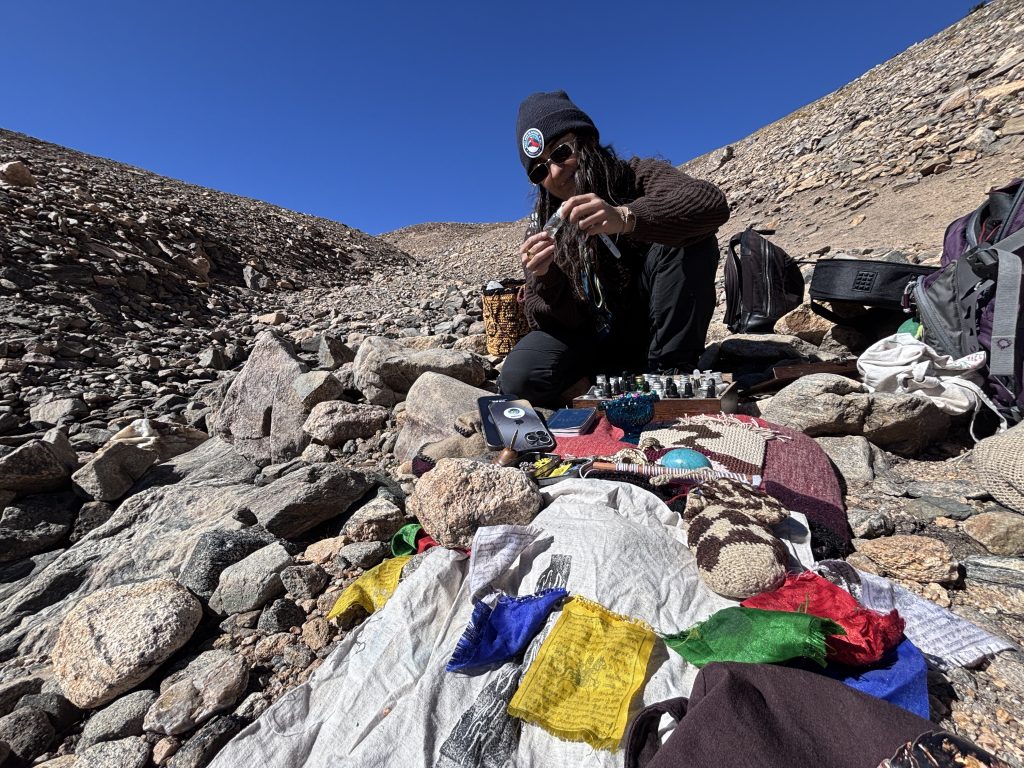
At the trailhead to St. Mary’s, a small group of about eight people formed a circle, holding hands and lowering their heads in prayer, asking the mountain for safe passage — a tradition Fernandez said is practiced in her home country of Colombia.
Fernandez quickly organized the ceremony at St. Mary’s after seeing headlines about the snowfield’s disappearance while at New York City Climate Week, the largest climate gathering in the world. She canceled plans to visit glaciers at Mount Shasta in California to come to Colorado and visit St. Mary’s.
“Glacier Nation is a movement around the world that wants to shine a light on the fact that glaciers are disappearing,” Fernandez said. “But we shouldn’t be nostalgic, apocalyptic, melancholic about it — we should be inspired to take action through restoration, through documentaries, making them (the glaciers) the influencers on social media.”
The Colombian first became alarmed about the loss of glaciers about a decade ago, when she read an article detailing how the tropical glaciers, which she hadn’t even known existed in her home country, were disappearing. She began documenting the retreat of the glaciers through expeditions, documentaries and books — and soon was raising awareness for the loss of glaciers all over the world.
Colombia has already lost eight glaciers in the last century, leaving six remaining tropical glaciers, Fernandez said. All of Colombia’s glaciers are expected to melt out within the next 30 years, some within the next few years, she said.
According to scientists, Colorado’s glaciers and snowfields won’t be far behind. Worldwide, glaciers have shrunk every year for the past 39 years — with each of the past three decades bringing bigger declines in ice than the decade before, according to the National Oceanic and Atmospheric Administration.
Hiking up to St. Mary’s, Fernandez carried a wooden box with small vials of water collected from disappearing glaciers and snowfields all over the world, including Colombia. The plan was to collect some of St. Mary’s water to take with her around the world, and offer a small amount of the water from the Earth’s other disappearing glaciers to St. Mary’s in prayer.
“This will happen to Arapaho Glacier. This will happen to Isabel Glacier. They are in the countdown to be the next glaciers to disappear,” Fernandez said, referring to two well-known snowfields in Colorado. “How are we going to prepare ourselves to say goodbye, but especially to say thank you?”
Andrews Glacier, a glacier in Rocky Mountain National Park, is pictured on Sept. 10, 2023.
Harlan Ulmer/Colorado State University
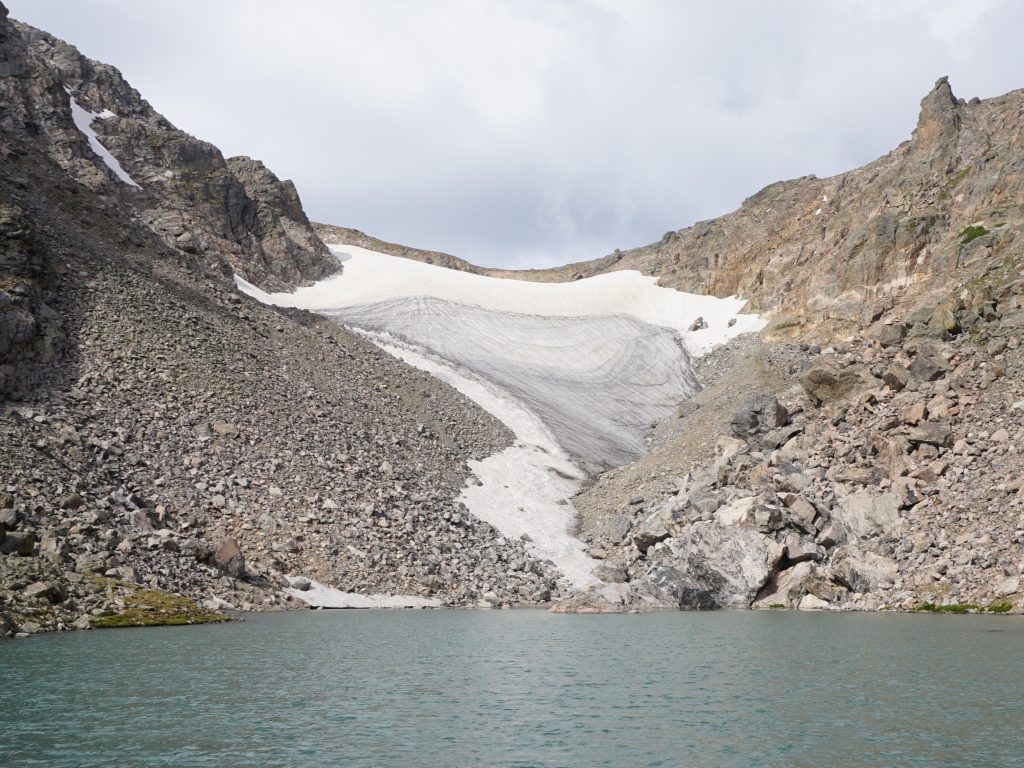
Andrews Glacier, a glacier in Rocky Mountain National Park, is pictured up close on Oct. 11, 2025.
Harlan Ulmer/Colorado State University
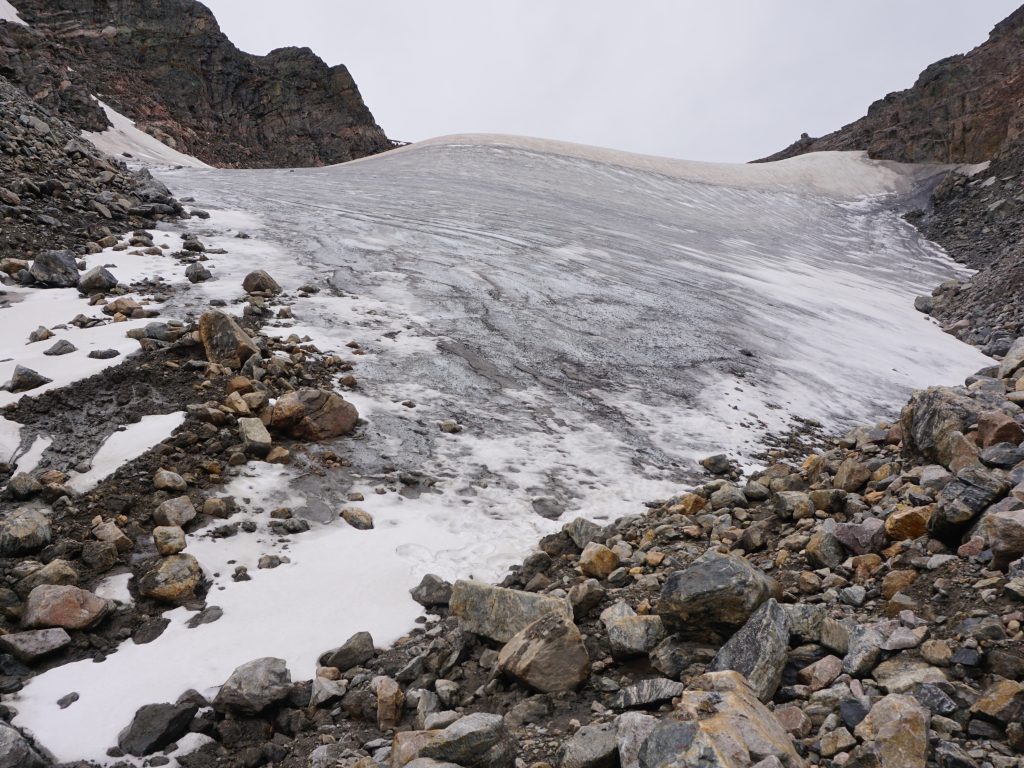
Andrews Glacier, a glacier in Rocky Mountain National Park, is pictured on Oct. 11, 2025.
Harlan Ulmer/Colorado State University
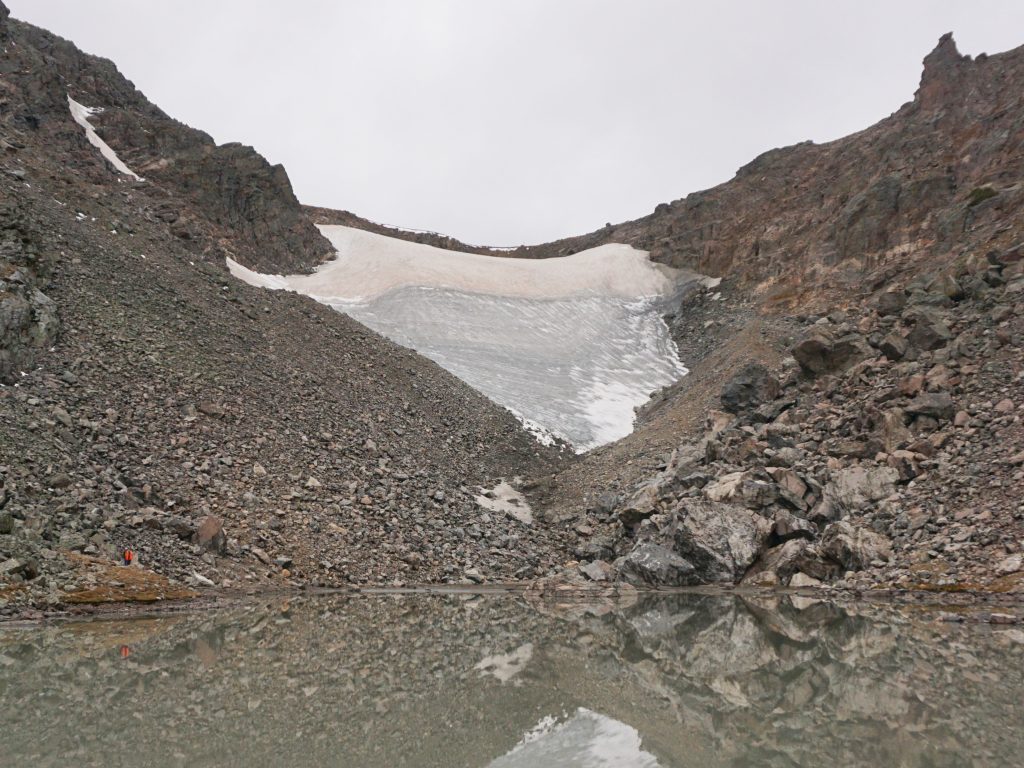
Andrews Glacier, a glacier in Rocky Mountain National Park, is pictured on Sept. 12, 2026.
Harlan Ulmer/Colorado State University
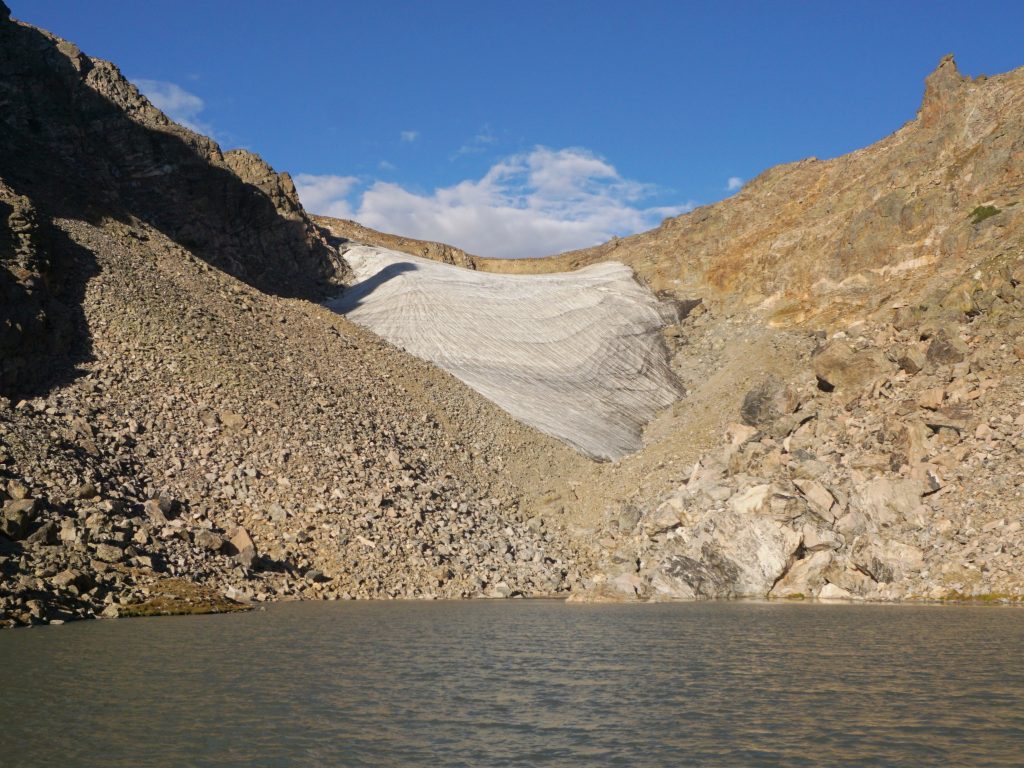
Andrews Glacier, a glacier in Rocky Mountain National Park, is pictured up close on Sept. 12, 2026.
Harlan Ulmer/Colorado State University
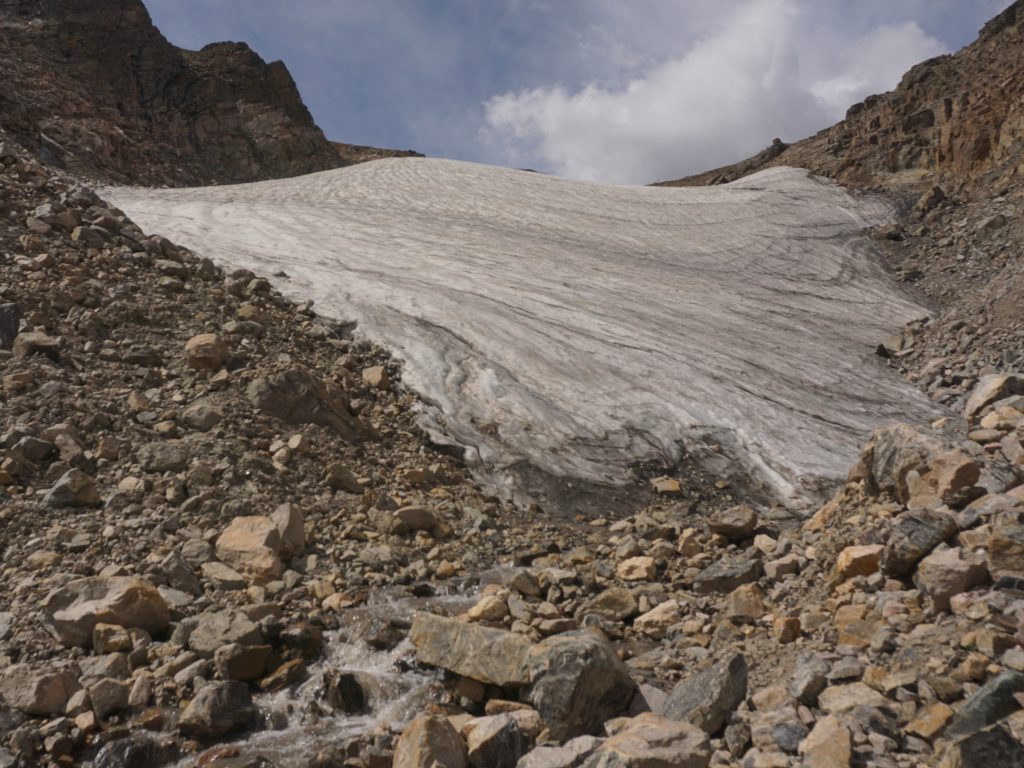
Colorado’s glaciers and snowfields
Colorado State University Associate Professor of Geoscience Dan McGrath is a glaciologist who has studied glaciers all over the world, including in Greenland, Antarctica, Alaska, Asia and here in Colorado.
Colorado’s mountains were carved by glaciers, which form cirques, or bowl-shaped valleys through erosion and are especially common across the Front Range and in places like Rocky Mountain National Park, McGrath said. But it is somewhat of an open question whether Colorado has any true glaciers left.
“I generally throw out that Andrews and Arapaho are the two most glacier-like features that we have left in the state,” McGrath said. “You would need to have evidence that they’re flowing to indicate that they’re still glaciers — and there have not been any kind of comprehensive surveys of their flow velocities or ice thickness that allows us to say definitively these are glaciers.”
The U.S. Geological Survey lists 16 glaciers in Colorado, but that includes places with perennial snowfields like St. Mary’s that “clearly have not been glaciers for a very long time and may no longer even have snow and ice in them,” McGrath said. These glaciers have been melting since what is known as the “Little Ice Age” from about 1750 to 1850, but until recent decades the melting had occurred slowly as winter snow accumulation and summer melt tended to balance out, he said.
If any of Colorado’s snowfields are still glaciers, McGrath said they’re moving very, very slowly — especially as they melt at increasing rates, as the climate has steadily warmed due to human activities.
Global temperatures have risen about 2 degrees Fahrenheit on average worldwide since 1850, with the warming trend increasing in recent decades, according to the National Atmospheric Administration. Statewide, the Climate Change in Colorado report found that annual average temperatures warmed by 2.3 degrees between 1980 and 2022 and are expected to warm another 1-4 degrees by 2025.
After Colorado faced its worst snowpack and hottest summer on record, the state’s perennial snowfields have experienced rapid ice loss, and in cases like St. Mary’s — total disappearance.
“This is not natural. The observed warming today is not natural,” McGrath said. “It’s anthropogenically driven and there’s ample evidence that both the magnitude and the rate of warming that we’re seeing today is not natural variability. It’s not warming out of an ice age. This is very much an anthropogenic signal — and there’s no question there.”
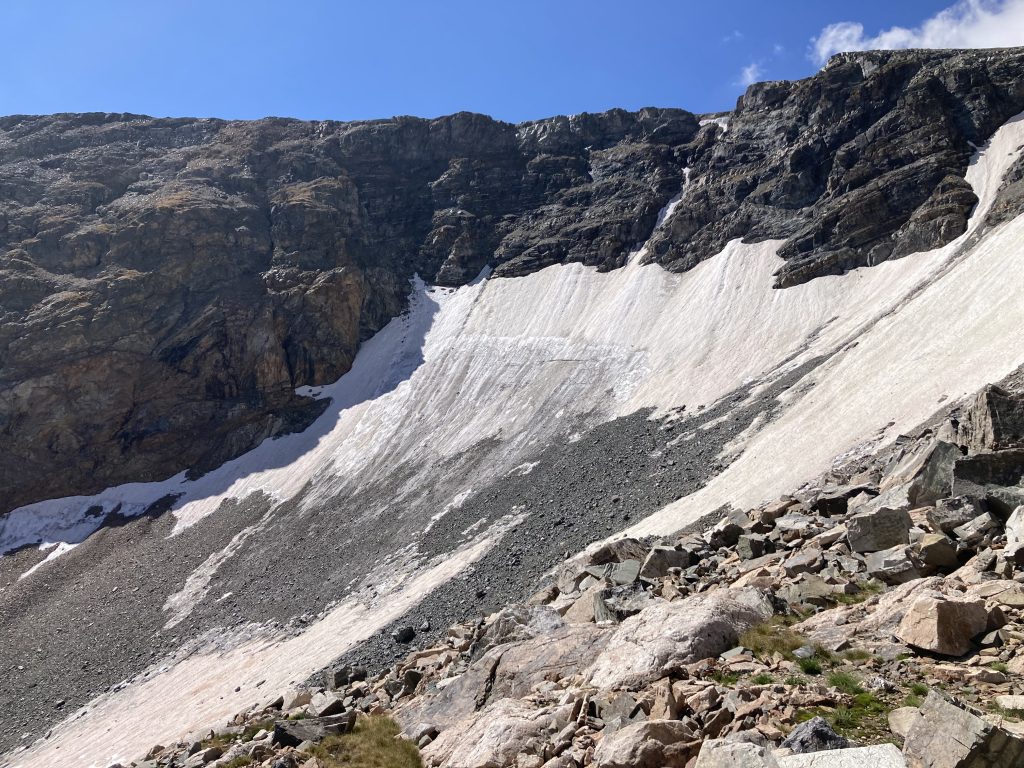
St. Vrain Glacier, located in the Indian Peaks Wilderness of the Arapaho and Roosevelt National Forests, is pictured on Sept. 1, 2024.
Harlan Ulmer/Colorado State University
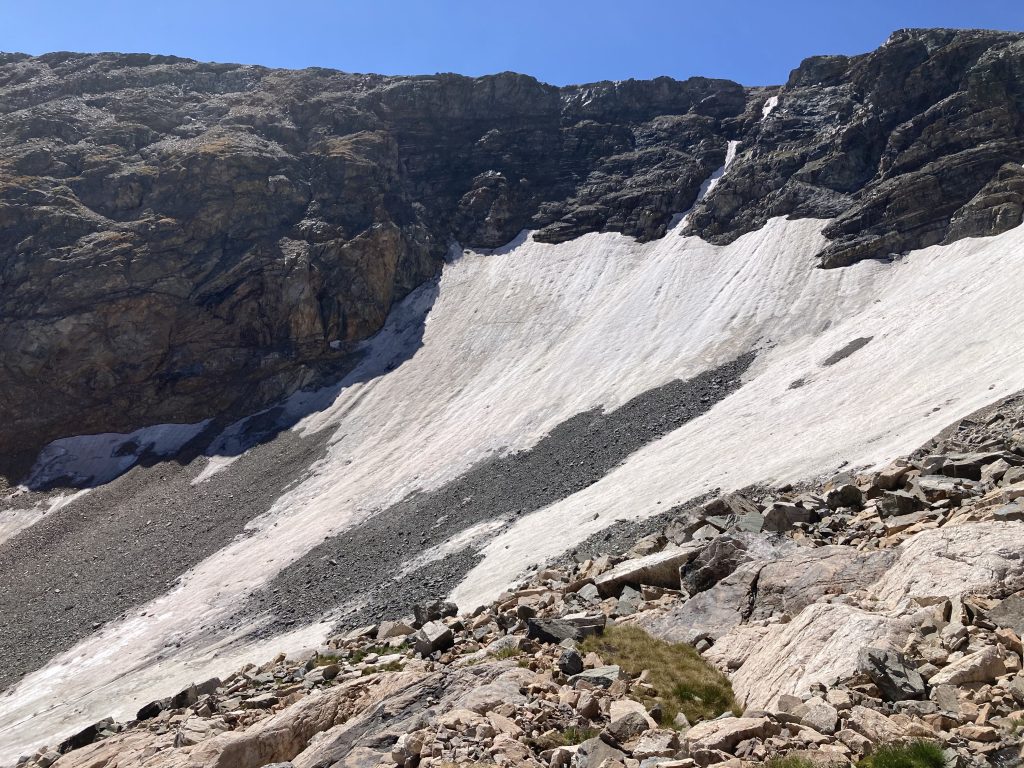
St. Vrain Glacier, located in the Indian Peaks Wilderness of the Arapaho and Roosevelt National Forests, is pictured on Sept. 6, 2026.
Harlan Ulmer/Colorado State University
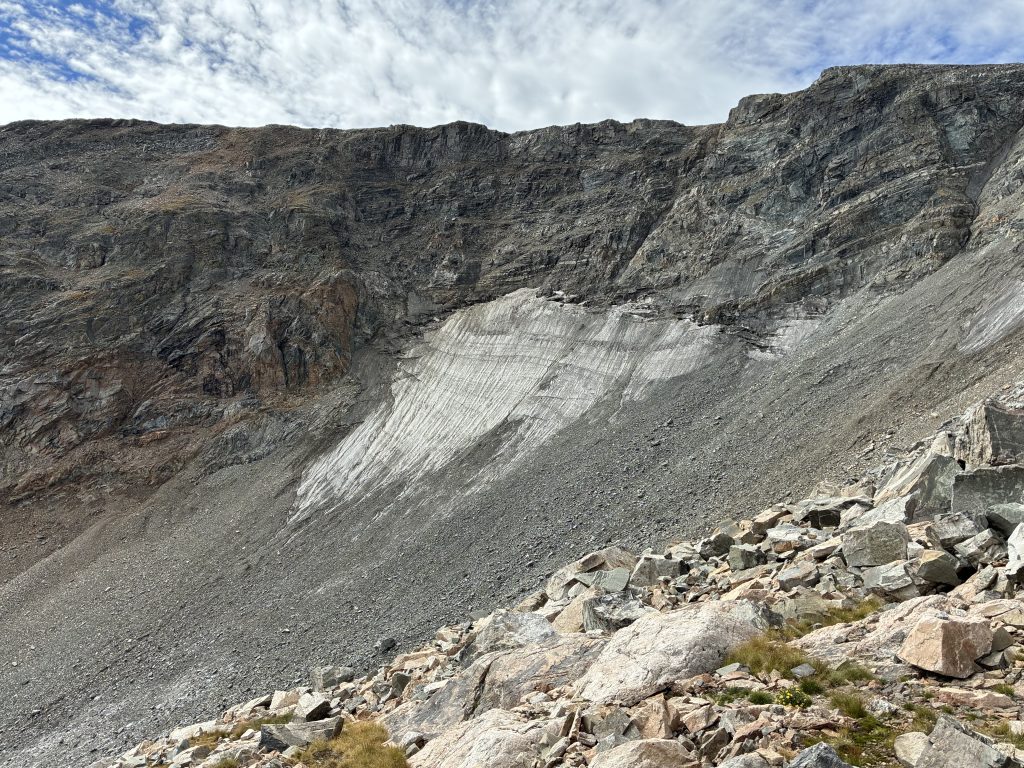
St. Vrain Glacier, located in the Indian Peaks Wilderness of the Arapaho and Roosevelt National Forests, is pictured on Aug. 31, 2025.
Harlan Ulmer/Colorado State University
In 2017, McGrath and a research team dragged a radar system out to Andrews Glacier, in Rocky Mountain National Park, measuring an average thickness of 67 feet and a maximum thickness of about 156 feet. In the nine years since, Andrews Glacier has lost about 37 feet of ice — or roughly half of its volume, according to his data.
Over the past six years, McGrath said his research has found that Colorado’s remaining major glaciers have thinned by roughly 3 to 5.5 feet per year on average, yielding total changes in thickness of 17 to 34 feet over that time.
Amid the record-hot summer, he said the researchers found that Andrews Glacier thinned by almost 12.5 feet, Arapaho Glacier by almost 10 feet and Isabel Glacier by almost 7 feet — in just a single season.
While St. Mary’s is one of the first of Colorado’s glaciers to melt out completely, it won’t be the last.
“There are many others that are not far behind and will likely fully melt out in the coming years to decades,” McGrath said. “If you extrapolate the thinning rates, say over the last six years, there’s not a long lifespan for many of these features.”
Tom Bellinger, a professor of environmental science at Metropolitan State University of Denver with a background as a hydrologist, has predicted that Colorado’s glaciers and snowfields could disappear by 2080 or the end of the century at latest.
Bellinger said that’s worrying, given that glaciers are natural reservoirs of water and their disappearance will only drive a drier future in Colorado and the West, which is already facing crisis-level shortages of water.
“It’s really a warning sign to us,” he said. “These glaciers are important because they do melt during the summer and produce water downstream. So they do feed a lot of our rivers and groundwater during the hot summer months.”
McGrath said his research indicates the glaciers may not last another half century — and some could disappear entirely within the next decades or two.
“It’s hard to pinpoint a year, or even a decade necessarily, because of the variability in the climate system,” McGrath said. “But I think the recent past has taught us that you can lose a substantial volume of ice in a short period of time — that roughly 50% has been lost in a decade.”
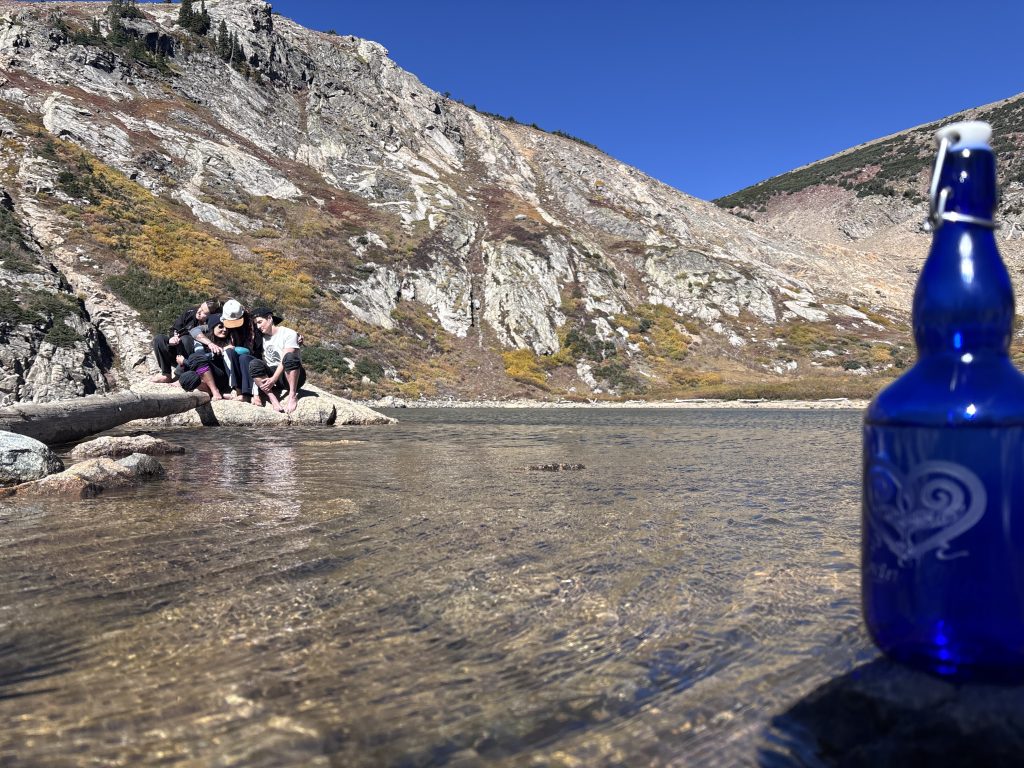 Marcela Fernandez, Morgan Sierra Mae and other activists gather on a rock surrounded by St. Mary’s Lake. In the foreground, a bottle holds water offered in prayer to the glacier and snowfield that once occupied the area.Ryan Spencer/Summit Daily News
St. Mary’s is 35 miles from the country’s most polluted zip code
Joined by three other activists, Fernandez climbed across a log to a rock surrounded by St. Mary’s Lake — an alpine lake that had long been fed by the snowfield — to collect a sample of the water.
Holding each other on the rock, the activists sang a song. Some cried. Some splashed themselves with the ice-cold water or waded into the lake barefoot. Each offered a prayer in their own way, out loud or in silence.
“Someday we will be the ancestors. Someday it’s our shoulders that the generations will be standing on,” said Angelique Rodriguez, who has Ute and Apache ancestry and leads Water-Unite, a project that centers around the importance of water, both spiritually and scientifically, to life.
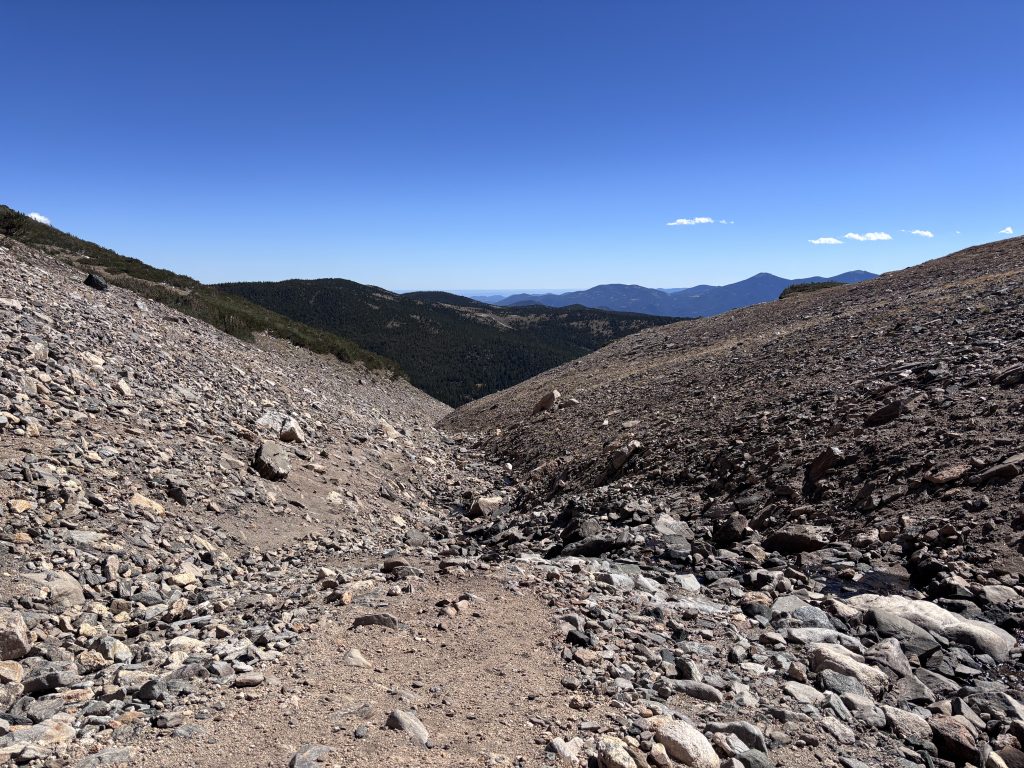 The valley once occupied by St. Mary’s Glacier is empty of snow and ice on Friday, Oct. 2. With a strong winter the snowfield could return, and perhaps even last through an entire summer again in the coming years, but amid climate change it is more likely to dry up completely as temperatures warm in Colorado, and across the globe, according to scientists.Ryan Spencer/Summit Daily News
Mae said she and other activists with the Green House Connection Center are aiming to bring awareness to the “industrial harm” that humans are causing the world. She noted that the nonprofit is located in the 80216 zip code, which is one of the most polluted zip codes in the U.S. due to the SunCor Energy Refinery in Commerce City and Superfund sites from past industrial activity. A new major data center is also planned for the area.
The 80216 zip code is less than 35 miles from St. Mary’s Glacier.
“I feel that St. Mary’s brings awareness of the urgency. It is a place where people cannot deny that it’s gone because they skied, they walked, they’ve been through here. So this is not imagination,” Fernandez said. “If there are people out there denying climate change, or if there’s skepticism about what’s going on — I think this place has a lot to say.”
The Columbian pointed up the hill at the snowless valley.
“When you see these rocks, these are moraines — these are basically the cemetery of St. Mary’s,” she said. “But her spirit is everywhere, right?”