
The discussion, hosted by Fardad Farahzad, brought together Kerri Bitsoff, a former senior official at the US Treasury Department’s Office of Foreign Assets Control (OFAC); Patrick Clawson, the Morningstar senior fellow at the Washington Institute; and Mohammad Machine-Chian, a senior economist and analyst at Iran International.
“The thing about sanctions, if they’re on the books but not enforced, they only hurt the people,” Bitsoff said, arguing that the current US campaign differed from previous rounds by focusing more heavily on enforcement and the financial intermediaries sustaining Iran’s economy.
Blockade bites
Iran faces declining oil revenues alongside damage to its energy infrastructure following the war, raising the prospect of severe economic difficulties during the coming winter, Clawson said.
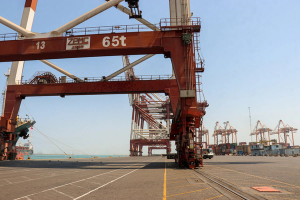 Satellite images show Iran’s key ports falling quiet under US blockade
President Masoud Pezeshkian had acknowledged that Iran could not export oil during the initial blockade, according to Clawson, who said the country subsequently sought alternative routes for limited shipments.
Iran had also relied on oil previously stored aboard vessels and in China, but those reserves were approaching exhaustion, he said.
Damage to natural gas infrastructure could compound the difficulties, potentially forcing greater reliance on mazut, a heavily polluting fuel used for electricity generation.
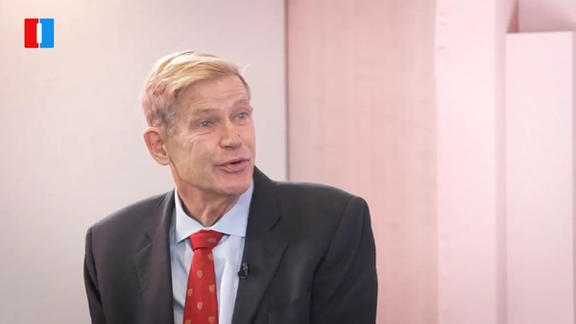 Patrick Clawson, a senior fellow at the Washington Institute, discusses the impact of US sanctions and the naval blockade on Iran’s economy during Iran International’s Insight panel in Washington, DC.
Iran depends on natural gas for approximately 69 percent of its energy requirements, making disruptions particularly consequential for households and industry, Clawson said.
Machine-Chian estimated that between $21 and $23 billion in export proceeds had not returned to Iran and that the blockade could cost the country another $35 billion in oil revenue.
Hitting financial networks sustaining Iran’s leadership
The current campaign differs from previous sanctions because Washington is concentrating on enforcement and the intermediaries sustaining Iran’s economy rather than simply announcing additional restrictions, Bitsoff said.
 US sanctions Turkish bank as Iran financial crackdown widens
She pointed to restrictions imposed by the United Arab Emirates, measures against Iranian airlines and Turkish action against banks connected to Iranian transactions.
Such measures could influence officials and business figures whose continued support for the Islamic Republic depends on financial privileges and access to international markets.
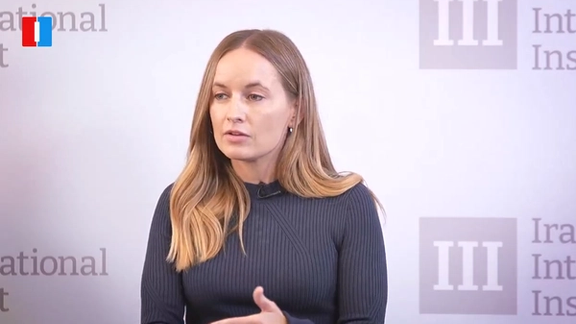 Kerri Bitsoff, a former senior US Treasury official and sanctions expert, discusses the impact of US economic pressure on Iran during Iran International Insight panel.
Earlier sanctions had often pushed legitimate commerce underground while allowing networks connected to the Revolutionary Guards to profit, Bitsoff said.
Machine-Chian described the emergence of wealthy intermediaries, sometimes called sanctions merchants, who benefited from moving Iranian oil and money through opaque arrangements.
Those networks subsequently became obstacles to negotiations and economic normalization because their commercial interests depended on maintaining the existing system, he said.
Machine-Chian distinguished between sanctions that impose prolonged hardship without producing results and measures designed to achieve specific objectives within a foreseeable period.
The loss of the UAE, Machine-Chian added, as a major commercial and financial intermediary has further complicated Iran’s position.
Dubai previously provided an important channel for Iranian transactions, but restrictions have forced businesses to seek alternatives through Turkey, Pakistan and Afghanistan, Machine-Chian said.
 Iranian banks remain open in UAE as US campaign squeezes Dubai trade – FT
Those routes, he said, have limited capacity and cannot quickly replace the financial infrastructure previously available through the Emirates.
China and regional allies face financial constraints
China remains Iran’s principal oil customer, but its commercial relationship offers fewer advantages to the Islamic Republic than commonly assumed, Bitsoff said.
Independent Chinese refineries purchase Iranian crude at substantial discounts, while payments in yuan often remain in China and are largely available for purchasing Chinese goods.
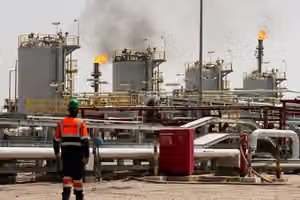 China shifts to Iraqi oil: is Iran using old workaround to beat US blockade?
Major Chinese banks generally avoid Iranian transactions, leaving smaller intermediaries to facilitate much of the remaining trade, she said.
The blockade also allows Washington to restrict Iranian oil exports without directly confronting major Chinese financial institutions, Clawson said.
Targeting those institutions could provoke Chinese retaliation affecting broader US economic interests.
The financial pressure is also affecting Iran’s regional allies.
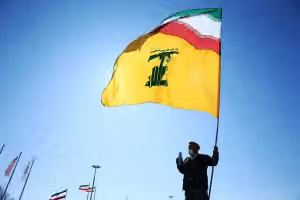 Iran’s reported $200 million Hezbollah aid angers cash-strapped citizens
Hezbollah has struggled to maintain basic financial obligations and social support programs since the blockade began, Bitsoff said.
Machine-Chian argued that Iran’s relationships with allied armed groups had become increasingly transactional, making continued financial assistance essential to sustaining their loyalty.
Political survival and prospects for negotiations
Despite the mounting pressure, the panelists differed over whether the Islamic Republic would ultimately accept Washington’s demands.
Economic hardship alone was unlikely to persuade Iran’s leadership to abandon its objectives, Bitsoff said.
Instead sustained pressure could influence members of the security apparatus whose loyalty depends on salaries, privileges and expectations of continued stability.
Clawson considered negotiated concessions possible, pointing to previous occasions when Iran reversed positions it had presented as nonnegotiable.
He suggested Iran could accept a three-year suspension of uranium enrichment, particularly because its facilities had been damaged and were not operational.
Machine-Chian was more skeptical, arguing that abandoning regional ambitions and nuclear objectives would challenge central elements of the Islamic Republic’s political identity.
 Audience members attend an Iran International Insight panel discussion in Washington, DC.
The blockade’s sustainability also remains a concern because maintaining naval operations places substantial demands on American ships, crews and maintenance resources, Bitsoff said, although she expected the operation to continue.
The discussion highlighted a central uncertainty: whether sustained economic pressure will produce concessions, weaken the leadership’s support structures or prolong Iran’s economic difficulties without fundamentally changing its political direction.