
If you’ve ever seen an American sporting event, in person or on TV, chances are you’ve heard the crowd chant, “U-S-A. U-S-A. U-S-A.”
Every time I hear it, I can’t help but wonder what those three letters represent. What have those letters ever represented?
Repeatedly chanted with their own weighted syllable, the three letters carry an idea — a pathos representing the United States of America.
Two weeks ago, I traveled to Lake Placid, New York, home of the famous United States 1980 Miracle on Ice; the rink where the story of 20 college-aged men ended. From June until the 1980 Olympic Games in February, the group underwent rigorous training under the intense leadership of head coach Herb Brooks. However, the team had been written off — the Soviets had won gold at the previous four games and had dominated the world stage during the years in between and the U.S.S.R. was the unanimous favorite.
But magic was in the crisp winter air at Lake Placid. The brotherhood formed between the blue-collar kids from Minnesota, Boston and Wisconsin was a true power of friendship — a bond only romanticized in sports and fairy tales.
In the first match of the 1980 Winter Olympics, the U.S. men’s team won, and they kept winning. It set the stage for a dramatic game between the U.S.S.R. and the U.S.A. in the medal round.
A back-and-forth match resulted in a 4-3 win for the United States. The team did it — they had skated alongside the Soviet team for an entire hockey game. Al Michaels’ voice echoed across the nation as the clock ticked down: “Do you believe in miracles?”
It’s a story of tension, unity and patriotism and it has always held a special place in my heart.
While I was born 26 years too late to experience the game and tensions of the Cold War, I have relived it through the Disney film a multitude of times in my family’s living room to an unhealthy extent, getting chills every time.
The film’s romanticization of the event is perfectly executed, but now it’s 2026, and I’m a skeptical American and a sports writer. U.S sports have lost their humble roots.
It’s no secret that the United States of America isn’t perfect — especially in its modern form — but I actively find myself rooting against the sports teams of the nation I was raised in.
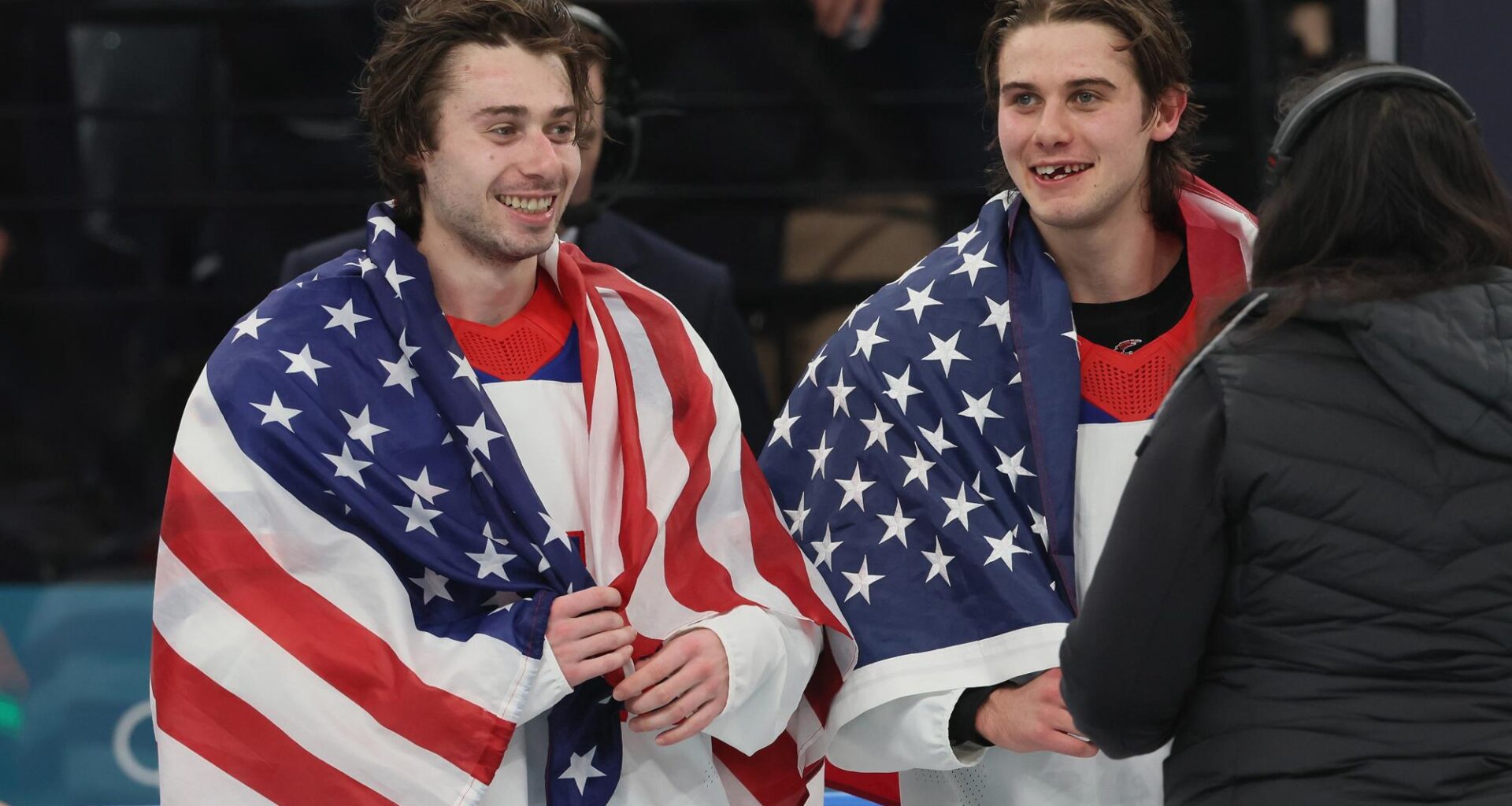
This past February, Jack Hughes slid the puck through the five-hole of Jordan Binnington, securing the Gold Medal for the U.S.A. Hockey team that hasn’t won since February 1980. But I felt conflicted cheering on the red, white and blue.
It feels as if I’m sitting complicit in a war in Iran, the federal government’s mass deportation efforts or the sexual assault that goes unrecognized by fans and sports institutions in order to stay on top.
Often, it’s not even about the broader issues, but a loss of American humility. While it’s not the athletes themselves acting on behalf of the U.S. government, the American swagger and cockiness that radiates off U.S.A. athletes rubs me the wrong way. The inherent belief that the U.S.A. is undoubtedly the best, paired with complete unwillingness to recognize greatness elsewhere; The transformation of patriotism into jingoism.
When U-S-A is chanted at sporting events; the three letters go much deeper. It exemplifies the naive, brash and problematic messaging that has plagued politics over the past 10 years.
In 2024, the final round of the PGA Travelers Championship was heading into the last stretch. Tom Kim and Scottie Scheffler were atop the 18th green; Kim needed to sink a putt to send the tournament to a playoff. As Kim stepped up to the ball, protesters ran onto the green with smoke canisters and shirts reading “NO GOLF ON A DEAD PLANET.” As the security quickly dismantled and tackled the protestors, the crowd began chanting “U-S-A” repeatedly.
Was this in response to the police response? I suppose, but was the act of protest not the more American thing to happen? While breaking event rules and creating chaos, the action was ultimately harmless and raised a poignant idea to the game of golf utilizing a fundamentally American principle — protest.
Displays like this are often seen as un-American as it can get — Colin Kaepernick’s kneeling during the national anthem is still one of the most topical and controversial decisions made by an athlete, and while the NFL and its teams claim to uplift Black athletes, Kaepernick has yet to be welcomed back into the sport.
These are the actions that have encapsulated what American sports can be — a humble representation of the nation. These are the actions that are a continuation of what the Miracle on Ice team represented. A team that was fueled by a spirit of camaraderie and American romanticism, a message that things in the future can be better than what has happened in the past.
It’s a celebration of the underdogs — the people who are willing to take a stand for what they believe in. Until the “U-S-A” chant is once again a representation of those beliefs, it will be a difficult decision to cheer in favor of those teams.