
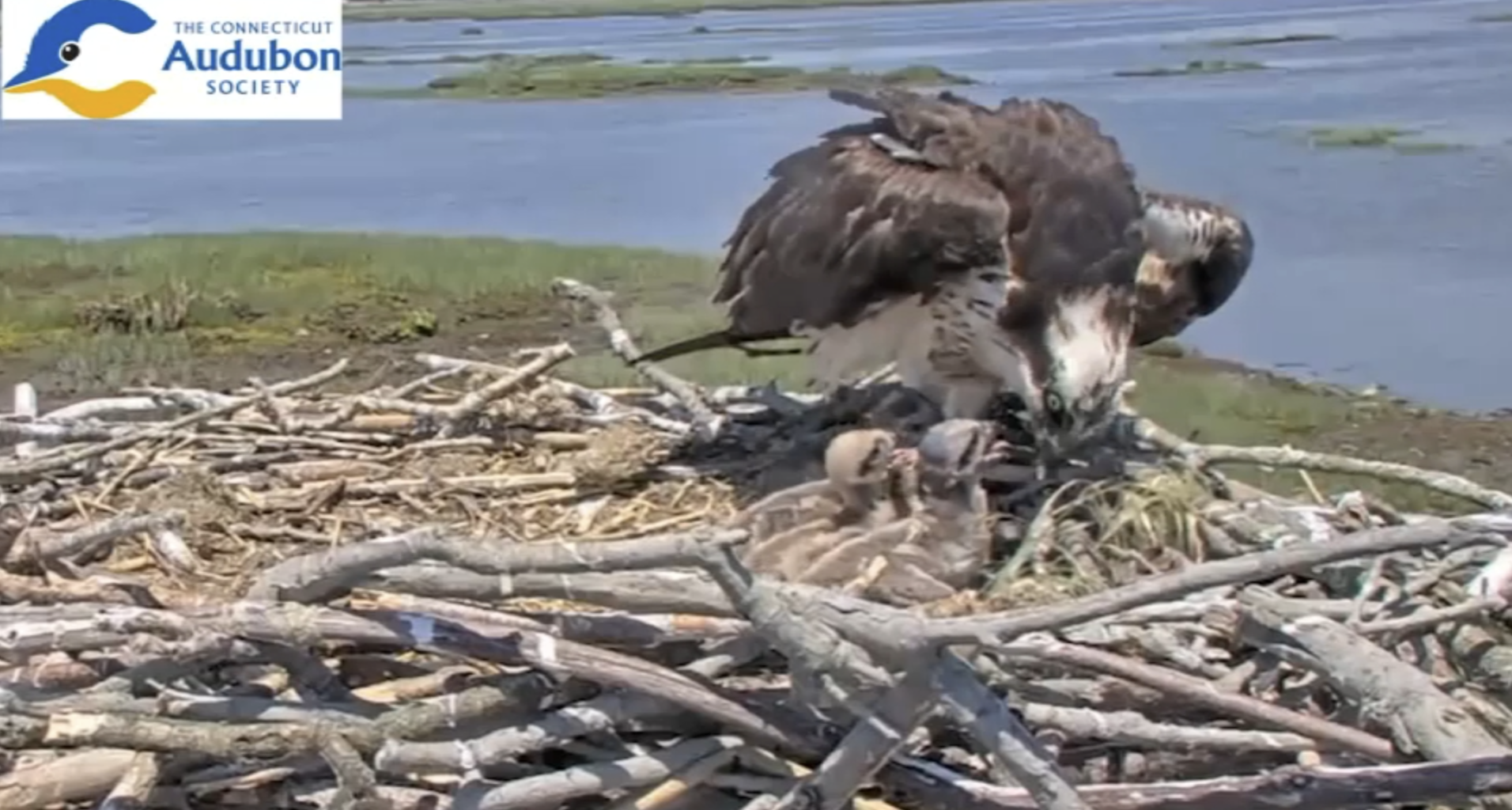
Connecticut’s osprey population is facing a troubling trend, with the birds recording their worst breeding season on record, according to the Connecticut Audubon Society.
Experts say a sharp decline in osprey chick survival rates could be linked to food shortages, raising concerns about the health of the state’s coastal ecosystem.
The average number of chicks produced per breeding pair dropped to 0.87 this year, down from 1.25 last year, which was already a record low.
Matt Joyce, with the Connecticut Audubon Society, said the numbers are alarming.
“A real sharp decline and not something you expect to see naturally,” Joyce said.
The decline in osprey chick survival has already been documented around the Chesapeake Bay, but conservation programs farther north indicate the problem is moving up the Atlantic coast.
“Having an Osprey monitoring program like we do, allows us to keep our eyes peeled for signs of that crisis moving north,” said Joyce.
While the adult osprey population in Connecticut remains relatively strong, experts are increasingly concerned about the birds’ ability to feed their young.
“The primary hypothesis is starvation of chicks in the nest,” Joyce said.
One possible explanation is a decline in baitfish populations, including menhaden, also known as bunker, which are an important food source for ospreys.
Experts say more research is needed to determine what’s driving the decline in baitfish, but commercial fishing and changing water temperatures could be contributing factors.
The troubling numbers have surprised even some Connecticut residents who have taken an interest in the birds.
Sandra Van Vooren, of East Hartford, painted an osprey for an art competition this spring but said she hadn’t realized how severe the breeding decline had become.
“I knew they weren’t great; I didn’t realize how bad they were,” Van Vooren said.
Van Vooren said the setback is particularly disappointing given previous efforts to help the species recover.
“It was one of those things we started to fix and the numbers were increasing and then it’s going back down again,” Van Vooren said.
Experts said the consequences could extend far beyond ospreys.
The birds are considered bioindicators, meaning their health can provide important clues about the condition of the broader ecosystem and food chain.
“If you are seeing ospreys dropping off, there is a really good chance that all the other organisms — striped bass, dolphins, and ourselves, we are part of the food chain as well, they will also take a knock. They will be negatively impacted as well,” Joyce explained.
There is already consideration of reducing the number of baitfish harvested annually from the Atlantic Ocean.
Meanwhile, researchers plan to continue closely monitoring osprey nests to better understand what’s causing the decline.
Joyce said the concerning numbers underscore the importance of taking precautions before the problem becomes worse.
“All the extra reason for us to be precautionary and be careful we are pausing and taking stock of the situation and find out exactly why,” Joyce said.