
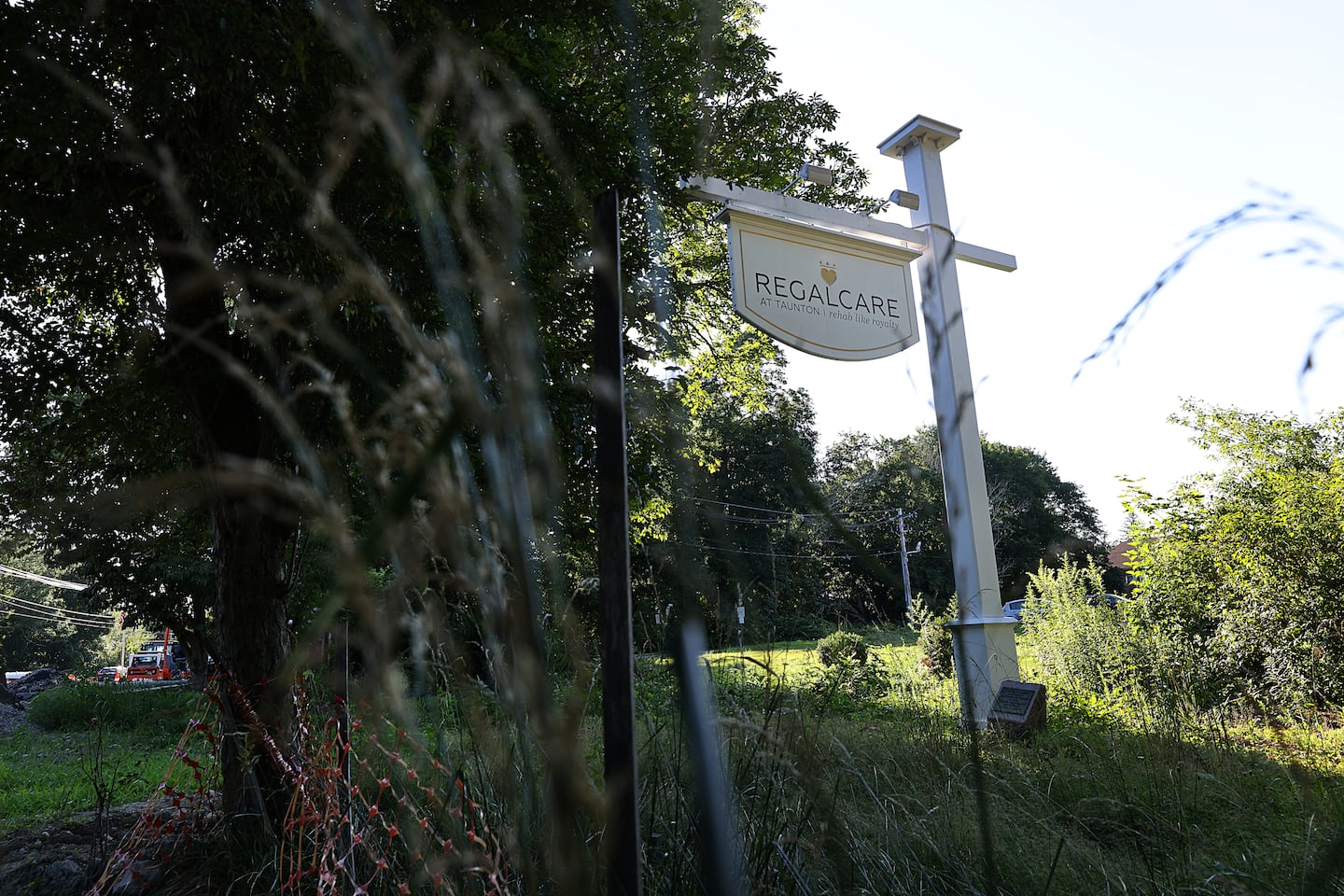
A company representative indicated in a statement late Tuesday that RegalCare will challenge the planned license revocations, which would trigger a hearing process at which the state will have to make its case for taking Mirlis’s licenses away. Regulators said that if they are successful, Mirlis will be barred from operating nursing homes in Massachusetts for the next decade.
“Families trust nursing homes to care for their loved ones, and every resident deserves safe, compassionate, high-quality care that respects their dignity,” Dr. Robbie Goldstein, commissioner of the department, said in a statement to the Globe. “The Department of Public Health takes seriously its responsibility to uphold these standards and protect the well-being of every resident.”
Inside Eli Mirlis’s dramatic cost cutting at RegalCare Taunton
A New Jersey entrepreneur began making cuts as soon as his company, RegalCare, took control of the nursing home in Taunton. (Photo by Suzanne Kreiter/Globe Staff, Video by Olivia Yarvis/Globe Staff)
Some of those who had relatives who suffered at RegalCare homes welcomed the news.
“I’m happy the state’s doing something,” said Theresa Walsh Jr., whose mother died a few weeks after receiving two different types of antidepressants at the Holyoke facility, when she normally only received one. “It was very frustrating to watch the article and see stuff on TV and not feel like anything was being done.
“I’m happy that something like what happened to my mom can’t happen to anyone else.”
The statement from RegalCare said the chain is dedicated “to providing the best, most compassionate care possible to the patients we serve, and their families.”
“We are aware of the DPH’s recent actions and will continue to work with them through the appeals process in the coming weeks and months,” it said. “In the meantime, we expect that there will be no disruption in care to our patients or their families.”
The Spotlight story revealed that in 2018, New Jersey regulators determined Mirlis lied about completing continuing education requirements and permanently revoked his nursing home administrator license. Yet Mirlis had indicated in his applications for nursing home licenses in Massachusetts that he had never had a professional license revoked.
Goldstein noted the misrepresentation — which was unknown to Massachusetts regulators before the Globe report — to explain why his department is now taking such strong action against Mirlis.
But he also noted that his department had recently conducted a “comprehensive review of quality and safety in RegalCare facilities across Massachusetts and in other states.” In addition, Goldstein flagged a recent settlement with the US Attorney’s Office in Boston and the Massachusetts Attorney General’s Office in which Mirlis admitted billing MassHealth and Medicare for intensive, medically unreasonable, and unnecessary physical therapy on frail, elderly patients.
These concerns were detailed in the Spotlight report, which also examined eight other out-of-state nursing home companies with questionable records, most of them from New York and New Jersey. These nine chains now own nearly one in five Massachusetts nursing homes.
The report questioned why Massachusetts regulators weren’t doing more to block Mirlis from acquiring more homes here, given his dismal record within Massachusetts and elsewhere. In an earlier interview with the Globe, Goldstein said that state regulators were limited in their ability to deny licenses to nursing home operators based on their out-of-state records, saying that doing so could expose the state to litigation — a claim some legal observers disputed.
Goldstein suggested he needed the additional muscle granted by a 2024 law that gave the Department of Public Health broader authority to investigate the out-of-state records of nursing home operators — covering everything from poor performance to finances — before granting them licenses.
He noted that the law has not been implemented because the state first needs to adopt regulations that would allow DPH to put it into effect. The state’s Public Health Council is scheduled to vote on those Wednesday.
Representative Thomas Stanley, a Waltham Democrat and longtime elder advocate, was one of two state lawmakers who met with Goldstein last week following the Spotlight report, expressing anger at the revelations and the department’s inaction.
“We made it clear that action had to be taken and I said sometimes, that if no action is taken, then the state is complicit,” Stanley said Tuesday. “And what the hell are we here for? The state needed to act, we have to protect the defenseless.”
Paul Lanzikos, a cofounder of Dignity Alliance, an elder advocacy organization, said he received a call late Tuesday from the DPH informing him of the state’s planned action. Lanzikos said the department indicated it is also planning to take a closer look at other problematic chains.
“I asked them, are they paying attention to any other questionable characters who have blown into town?” he said. “Without saying yes, they indicated as much.”
The COVID-19 pandemic created chaos in the nursing home world, setting off a series of sales. In relatively short order, RegalCare became one of the largest chains in Massachusetts. Mirlis acquired most of his dozen homes here after 2022. All told, his RegalCare chain has at least 29 homes in five states.
Several of his homes saw dramatic drops in quality after Mirlis bought them. The federal quality ratings of his homes in Taunton and Quincy fell from five stars to one, and the home in Holyoke from three stars to one.
Among Mirlis’s 12 nursing homes in Massachusetts, the facility in Greenfield had until recently stood out, with a four-star rating. But when new federal ratings were released earlier this month, it had plunged to two stars.
The ratings are based on visits from inspectors, who over the years found a host of problems ranging from patients being left in soiled diapers and waiting hours to get a response to calls for help to far more alarming and dangerous incidents. For instance, at RegalCare’s home in Quincy, a blind, wheelchair-bound patient crashed to the bottom of an unblocked ramp in 2023, suffering a brain hemorrhage and multiple fractures, according to a federal inspection report.
Within a year of buying two Medford facilities, in 2024, RegalCare had tallied more than $400,000 in federal fines for lapses in care involving more than two dozen patients.
Those failures came amid steep cuts to services — and increases in payments to related businesses owned by Mirlis.
At the Taunton facility, for instance, RegalCare by 2025 was spending $530,000 less on nursing services than the previous owners had. Meanwhile, his real estate company charged the nursing home rent of $522,000, more than four times what the previous owners had paid.
The cuts meant that the number of hours worked by registered nurses fell by more than half, and those worked by licensed practical nurses fell by more than a third.
The DPH’s current action does not require any RegalCare facilities to close or residents to relocate. The department said that beginning Wednesday, all RegalCare homes will have a monitoring visit at least once weekly.
But several of the company’s worst-performing homes will be watched even more closely, the department said, with at least two weekly visits. They include RegalCare’s two Medford nursing homes, Glen Ridge and Courtyard. Also RegalCare at Wakefield and RegalCare at Taunton, which was highlighted in the Spotlight report.
Hope Cayouette, who placed her beloved 85-year-old grandmother, Carol Lessard, in Taunton in the spring of 2025, said RegalCare did not diagnose Lessard’s pneumonia, among other failures. Her grandmother died following delayed care for a fall and an internal bleed.
“I have tears in my eyes,” Cayouette said, when told about the state’s actions. “Without [Mirlis] running this organization the way he has run it into the ground, he can’t hurt anymore people the way he hurt my nana.”
She added: “Justice is served. I can’t believe it happened so fast.”
The DPH said that residents, families, and staff can report any other issues to DPH through its call center at 617-468-2189 or 833-305-2070. The call center will be available Monday to Friday, except state holidays, from 8 a.m. to 6 p.m.
-Neena Hagen and Tricia L. Nadolny of Globe staff contributed to this report.
Kay Lazar can be reached at kay.lazar@globe.com Follow her @GlobeKayLazar. Gordon Russell can be reached at gordon.russell@globe.com.