
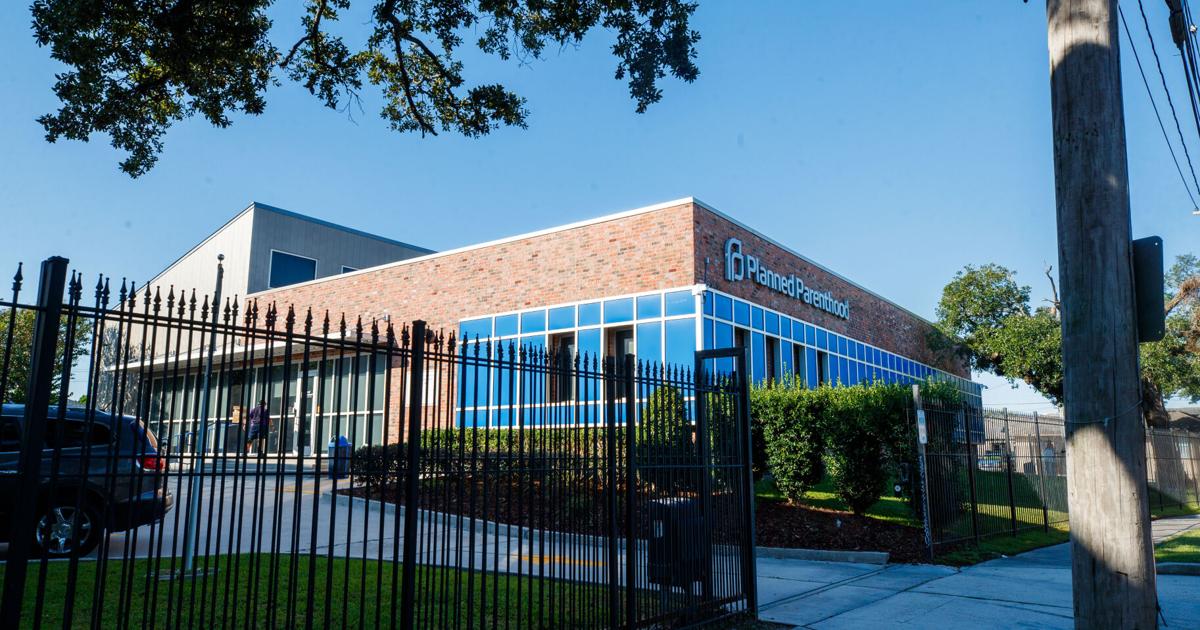
On Wednesday morning, a security guard paced the gated perimeter of Planned Parenthood’s South Claiborne Avenue clinic, where staffers were preparing to treat patients for the first time in roughly a year.
“We’ve only been open for about an hour. So it’s a little quiet so far, but we have a full schedule and are excited to see patients,” said associate medical director Lori Williams, APRN.
Last September, Planned Parenthood Gulf Coast shuttered its two Louisiana clinics after more than 40 years in the state, amid what Planned Parenthood Great Plains CEO Emily Wales called “political attacks.” Those included federal Medicaid funding restrictions and opposition from officials such as Louisiana Attorney General Liz Murrill, who described Planned Parenthood as “a business (built) around promoting death.”
Gov. Jeff Landry at the time called the closures a win for babies and mothers.
Planned Parenthood Great Plains, meanwhile, had already been eyeing Louisiana for expansion to meet the local need for contraception, STI care, cancer screenings, gender-affirming care and other reproductive health services. In June, Wales announced plans to reopen the New Orleans clinic under the Great Plains affiliate, which for 90 years has operated in Arkansas, Kansas, Missouri and Oklahoma.
“We’re a different organization, but we also operate in red states with hostile legislatures who often don’t value sexual and reproductive health care,” Wales said in a Tuesday phone interview. “We’ve been able to make our model of continuing healthcare work for a long time, and we’re committed to bringing that same effort and approach we use in other states to Louisiana.”
Half of the organization’s funding is supplied through private donations and half through clinical revenue. That model ensures patients in need can access care at little or no cost.
At the New Orleans location, six employees will treat 15 to 20 patients a day. There are no immediate plans to reopen a Baton Rouge location, though telehealth appointments are available.
“We heard from folks in Baton Rouge that there are health care deserts, and we will figure out a way to be more present in those communities,” Wales said.
Any expansion into Baton Rouge would come amid an ongoing legal battle over abortion access in Louisiana, where Murrill has challenged federal rules governing abortion medication and pursued out-of-state providers accused of violating Louisiana’s abortion ban.
Planned Parenthood’s Louisiana clinics have never provided abortions.
“We won’t provide any abortion in the state of Louisiana because of the ban,” Wales said. “One thing we can do is answer questions honestly when patients ask what it looks like to travel for care.”
Since the U.S. Supreme Court overturned Roe v. Wade in 2022, out-of-state patients have accounted for 75% of abortions performed in Kansas, the highest share in the nation, Wales said.
Erica Bayles Inzina, policy director of Louisiana Right to Life, cited four Kansas abortion centers operated by Planned Parenthood Great Plains as a reason Louisiana taxpayer dollars should not subsidize the group’s activities.
“New Orleans does not need Planned Parenthood. Planned Parenthood’s non-abortion services are already being provided by other existing healthcare providers, many of whom provide broader services as well,” Inzina said in a Wednesday statement.
However, Dr. Jennifer Avegno, Deputy Mayor of New Orleans Health and Human Services, called the expansion “a huge win.”
“In a state where maternal mortality leads the nation, we need more comprehensive, high-quality care that is accessible to all,” she said in a statement.