
Reading Time: 2 minutes

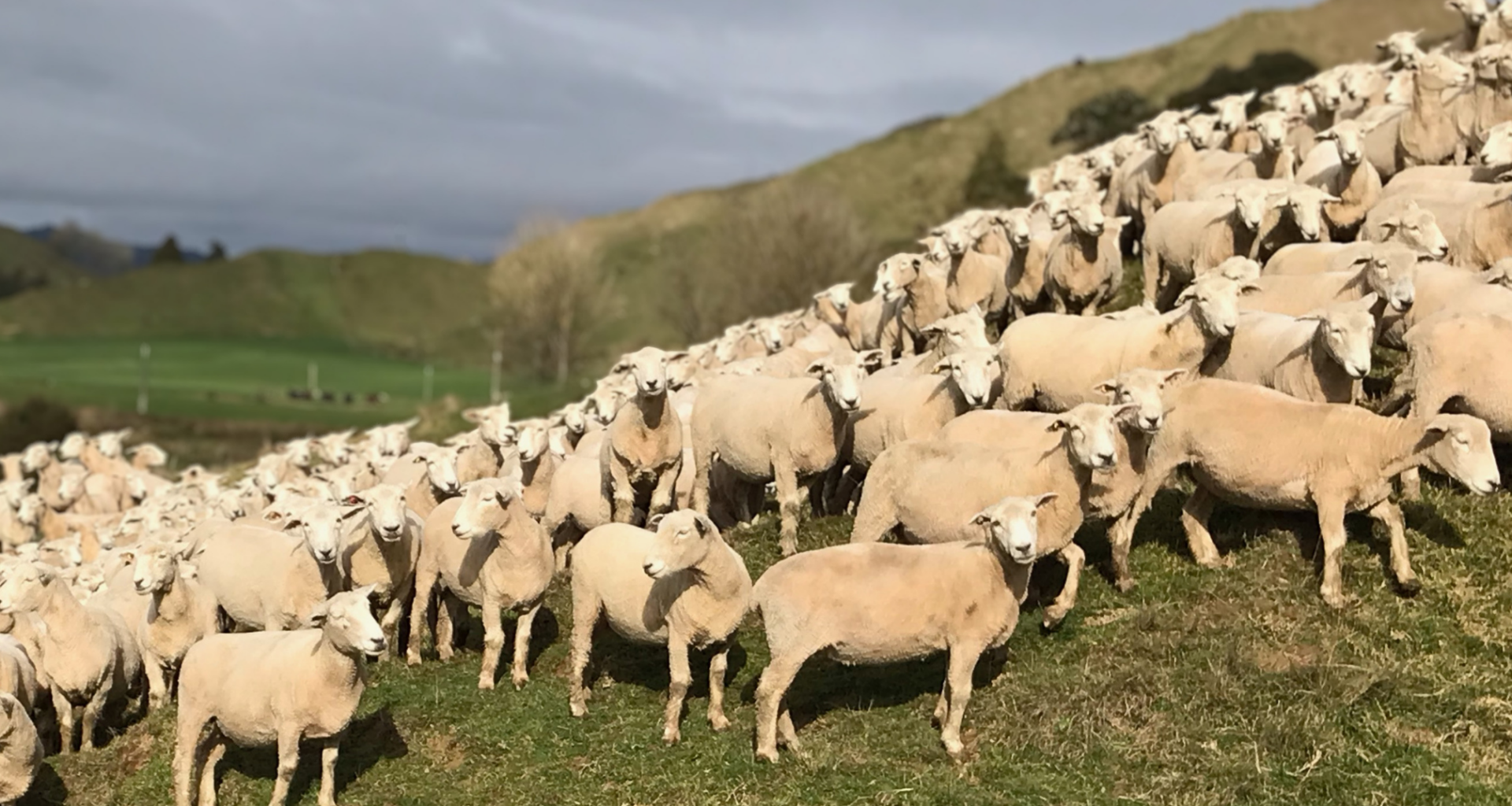
Genetics, data and commercial performance drive Paparata Elite Romney’s breeding programme as the King Country stud focuses on producing productive, resilient hill country sheep.
Based at Tatu, near Ohura, the stud has been breeding since 1983 and consists of 1500 recorded ewes that run with the station’s commercial flock, which includes 24,000 Romney ewes, 6000 lambing ewe hoggets and 400 rams.
The 8400 hectare station also has 2800 beef cows, 2400 R1 cattle, 550 R2 steers and 120 bulls. The farm’s cows are used predominantly as a tool to clean up pastures. In total, it has around 65,000 stock units.
Paparata owner Trevor Johnson said he uses the Romney breed because of their dual purpose and ability to handle North Island hill country.
That survivability is reflected in the stud’s breeding programme, which includes a focus on facial eczema (FE) tolerance, worm resistance, methane reduction, eye muscle scanning, reproduction and lamb growth.
“We have been FE testing since 1998, and I haven’t seen a sheep with eczema down here for well over five years. We have got FE beaten.”
Paparata sources outside sires from flocks that have a long history of FE testing.
“We’re also testing for worm resistance, and we use CARLA saliva testing to test for internal parasites.”
With drench resistance a growing problem in the sheep industry, the CARLA saliva test measures protective immunity to ingested parasite larvae. It identifies sheep that can handle worms without risking those that cannot.
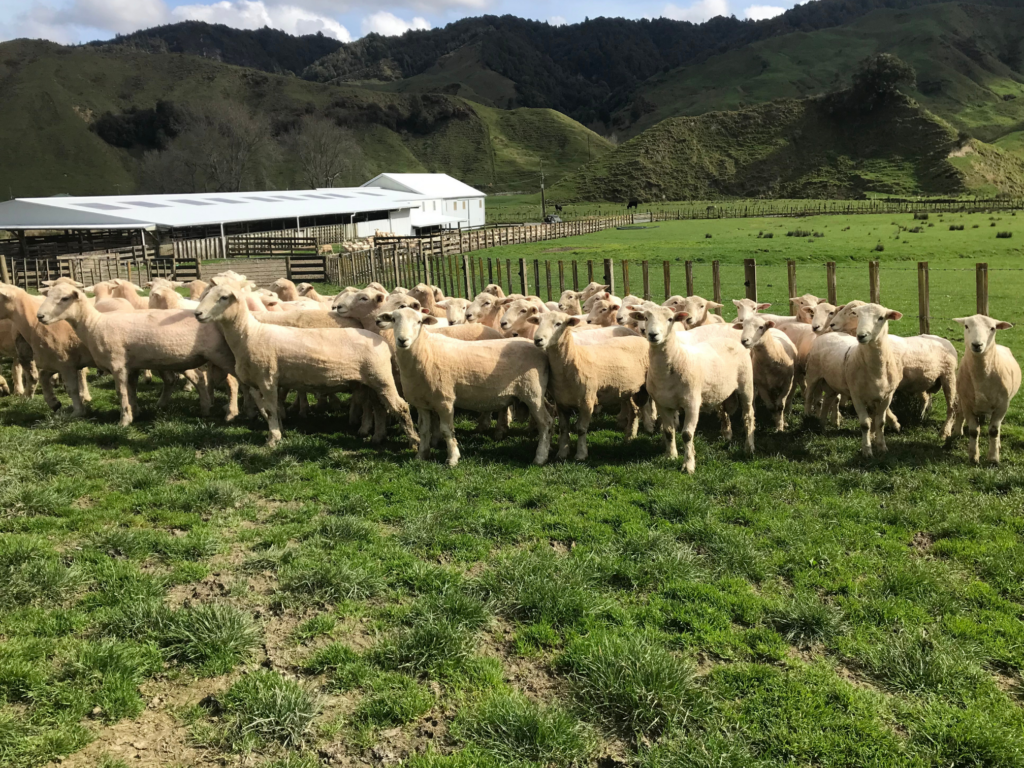 Paparata’s Romney stud breeding programme focuses on facial eczema tolerance, worm resistance, methane reduction, eye muscle scanning, reproduction and lamb growth. Photo: Supplied
Animals with high CARLA antibody levels are more resistant to parasite infections, suffer less from them, and can grow more efficiently.
Paparata’s breeding policy also includes lowering its sheep’s methane emissions. Differences in methane emissions between individual sheep are passed on to the next generation, he said.
Fertility and lamb growth rates are also a priority for Paparata, with the lambs growing at 300 grams a day and the recorded ewes scanning at 185% for this coming season.
The flock is also eye-muscle scanned for size. Eye muscle scanning estimates lean meat yield and eye muscle area.
Paparata has used DNA technology to identify parents of recorded lambs since 2000. This has eliminated the need for a daily lambing beat to match lambs with their mothers.
This has also meant the station’s flock is lambed under commercial conditions with no shepherding.
“We aim to keep lambing percentages around 180-200%. More lambs above this percentage increase the number of triplets born, which we are seeking to control.
“Our goal is straightforward: every year we want to leave the flock a little better than the year before. Small gains, backed by good data and careful selection, add up over time.”
Paparata Station will hold its annual ram sale on November 19, offering farmers the chance to purchase genetics designed to produce sheep that survive and thrive in hill country conditions.