
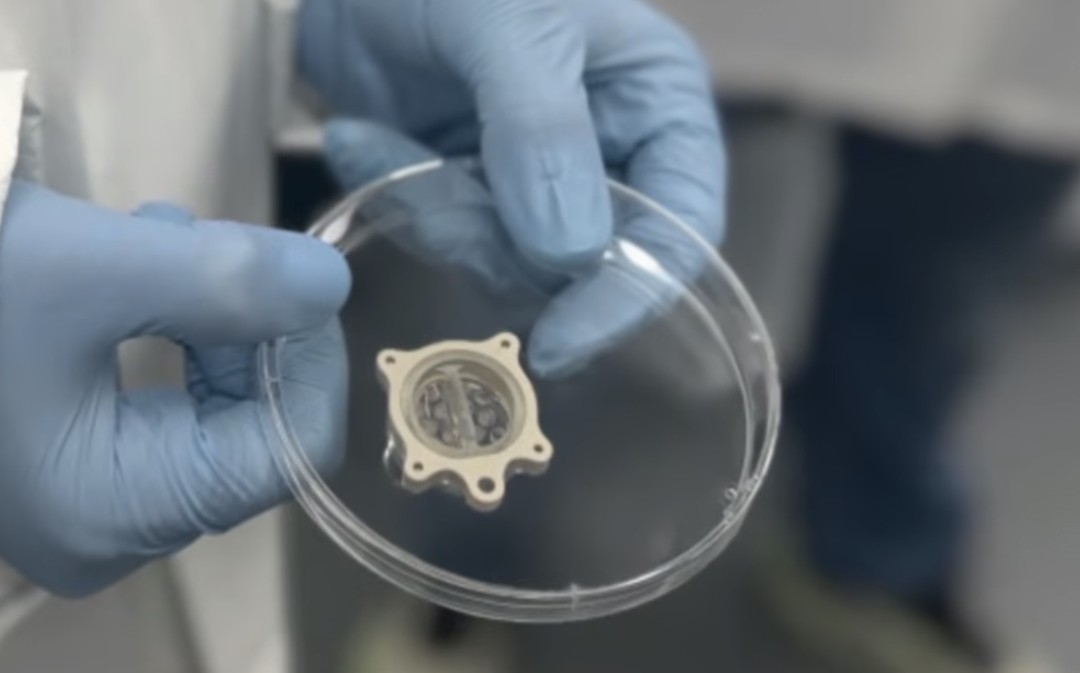
Scientists are about to find out what happens when tiny hearts and brains go to space. ABC News reports that Mount Sinai researchers, working with NASA and aerospace firm Space Tango, have launched “mini-organs” to the International Space Station to see how they handle microgravity and heightened radiation—conditions that seem to fast-forward aging in the human body. Interesting Engineering notes that the miniatures were sent into space on a SpaceX Falcon 9 rocket. Up to 16 mini-hearts, as well as peppercorn-size “miBrains,” are riding in a shoebox-like automated lab called CubeLab on a resupply mission, per ABC. The organs, which can mimic both healthy and diseased tissue, will be monitored for how they respond to electrical signals and the stress of near-zero gravity.
One Mount Sinai researcher says that roughly six months in orbit can mirror 10 to 20 years of aging on Earth, giving scientists an unusually quick window into diseases like Parkinson’s and Alzheimer’s, as well as the toll of sedentary life or long-term bed rest. NASA says the work will help protect future crews headed to the moon and, eventually, Mars. “The results from these experiments will help us better understand the impacts of space travel on brain and heart health, refine how we prepare astronauts for spaceflight, and, potentially, improve care and develop interventions for aging populations across the Mount Sinai Health System and surrounding communities,” Mount Sinai’s Sarah Millar says in a release.