
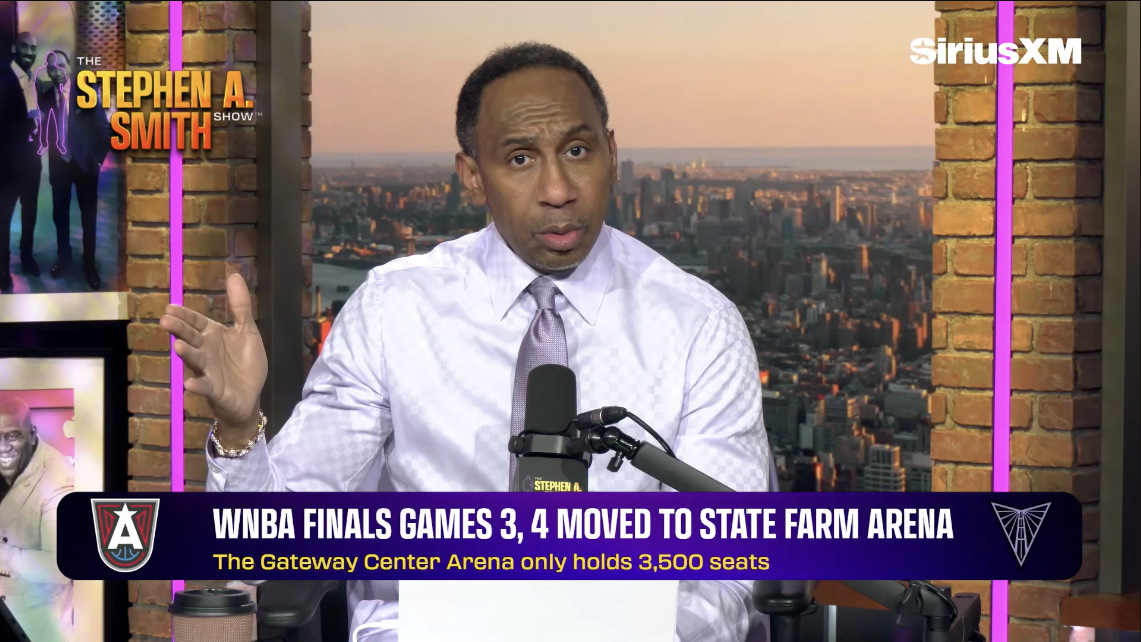
As the WNBA continues to grow in popularity and be used in culture war conversations in the media, Stephen A. Smith wants more from both the league office and the media that covers the league.
During a rant Wednesday on his radio show about the last-ditch effort to host WNBA Finals games at State Farm Arena in Atlanta, Smith called out what he sees as a “dereliction of duty” that the league was caught off guard by the scheduling conflict. And he added the situation to a larger web of controversies that he believes people around the league have “cowered” away from this season.
Smith repeatedly asked “What are you here for?” while calling out the voices around the league for shying away from difficult conversations.
“Have some damn guts,” he said.
“Sophie Cunningham from the Indiana Fever makes noise for her political position, and you’ve got a whole bunch of people cowering away from it. Kelsey Mitchell speaks out about how uncomfortable it’s been being a member of the Indiana Fever, even from her own fan base. And it takes Caitlin Clark sitting at a podium, answering questions, for people to be willing to talk about it. You’ve got elected officials sticking their nose where it doesn’t belong, and we’ve got a bunch of people cowering away from tackling the issue. Well what are you here for? Every single supposed controversial issue that has become associated with the WNBA, we see the league cowering away from the issue. What are you there for?”
Later, Smith related his poor judgment around covering Lane Johnson’s retirement to WNBA media’s supposed cowardice. The First Take host noted that he is not afraid to make mistakes or correct himself when he does, while WNBA media, in his mind, is too worried about making mistakes or stepping out of line.
Smith argued that it is unreasonable for the league and its supporters in the media to expect fans to engage with the league when they are not being spoken to seriously.
“We’ve got too many people in the world of sports that’s too damn afraid, too hesitant, to speak based on the information placed in front of them, and let you know where they stand. Where their heart lies,” he said. “But you’re asking for the support of the people, when you ain’t being real enough with them. In real time. Anybody can come up with opinions that are safe. Anybody can join the groups.”
Many have argued that there was a vacuum of leadership around the WNBA’s transgender participation policy, the hate toward its players, and some of the officiating and disciplinary decisions related to Clark and the Indiana Fever this season. Seemingly as a result, commissioner Cathy Engelbert is stepping down from her post after her contract expires at the end of the year.
Smith said he wished that people around the WNBA would be more courageous about publicly standing on business, even if it means ruffling feathers along the way.
“You’ve got to be willing to tackle these issues, fearlessly,” he said. “It’s your league. You’ve got to go for yours, no matter how unpopular of a position it is. At least show the world they’re gonna have to answer to you if they’re going to come after the WNBA in any way.”
While Smith jumped between the league office and the media in a way that was somewhat difficult to follow, the ESPN star’s message was ultimately a positive one. After several run-ins early on with WNBA commentators and pushback to his commentary around the league’s handling to Clark, he appears to be receptive to the idea that he should let knowledgeable women’s sports experts lead the conversation. The problem, as Smith seems to see it, is that these veterans in the space won’t call a spade a spade.
Others have previously noted that WNBA media can be territorial, but Smith is making a larger point. The WNBA needs to be pushed and held accountable in order to right the ship off the court. And too often, he believes the media covering the league do not serve that role.
For many years, covering the WNBA in some ways meant advocating for the league and its growth. And even as new reporters enter the sphere and some evolve their thinking around covering the league as a real business, players and fans expect a different standard. From the league’s restrictive locker room policy to its reticence toward overt criticism, even the top voices around the WNBA are still deciding how they want coverage to look. As Smith notes, that has led to numerous missed opportunities and avoidable controversies.