

From physical assaults and sexual harassment to AI being used to challenge disciplinary action, golf clubs are facing an increasingly serious problem dealing with member behavior. In this special report, Rob McGarr speaks to an industry expert about the sport’s worrying new direction.
Golf clubs have always had their share of arguments. Whether it’s a rules dispute, a criticism of the greenkeepers, allegations of dodgy handicaps or anger about slow play, there’s always something contentious to discuss over the post-round pint.
But the clashes are becoming considerably more serious, according to Alistair Smith, chief executive of the National Golf Clubs’ Advisory Association.
“Since golf returned after Covid, the number of member disciplinary cases has been increasing,” he says. “In the last six to 12 months, it has really gone through the roof.”
The NGCAA provides legal advice and support to golf clubs across Great Britain, handling enquiries on everything from employment law to member discipline. While the volume of enquiries is increasing and reached 1,800 in the last 12 months, Smith says it’s the nature of the incidents that is the biggest concern.
“When I started in 2017, about 65 to 70 percent of our enquiries were about employment law,” he says. “The increase in member disciplinary matters have changed the balance. They now make up a much greater proportion of what we advise on.”
And the incidents involved are not always the sort of clubhouse disagreements that can be resolved with a quiet word from the secretary.
“We’ve had fights and physical assaults, we’ve had stuff on social media where it’s abusive messages from member A to member B,” he says. “There have been incidents of sexual harassment, both through WhatsApp and social media, and physically and verbally on site. There are incidents of cheating on the golf course in competitions.
“It’s the full range of misconduct, really.”
Has golf’s behavior problem got worse?
Pinning down exactly why these cases are increasing is more difficult.
Golf experienced a surge in popularity during the pandemic, bringing a wave of new players into the sport. One theory places the blame on this new breed of golfers who are unfamiliar with traditional club culture, but Smith is reluctant to point the finger solely at newcomers.
“In my experience, which is anecdotal rather than based on figures, it is a real mixture of new people and people who are long-standing members of golf clubs,” he says. “There’s no evidence to point it towards it being a problem associated with new golfers.”
If new golfers aren’t necessarily to blame, what is driving the rise in disciplinary issues?
Smith admits he doesn’t have a definitive answer, although he suggests the problem could reflect wider changes in society.
“Another theory is that people were told during Covid that they couldn’t do certain things and are now rebelling against the system, thinking they can do what they like,” Smith says. “Perhaps that reflects society more widely.”
 Members putting up a fight
While he doesn’t have a conclusive explanation for the increase, Smith has noticed that the way members respond when challenged has changed.
“In the past, if somebody did something wrong, the secretary might bring them into the office and have a quiet word. The person would apologise and that would be the end of it.
“If they did something particularly bad, they would often be contrite, resign their membership, and walk away without further ado.”
Nowadays, misbehaving members are increasingly likely to put up much more of a fight.
“We’re in a much more litigious society,” Smith explains. “There are much more detailed bits of information out there on the internet. Members are generating documents as part of their disciplinaries from AI, and they are using those to try and defend themselves.
“That means that they are attacking procedure from all angles. Rather than deal with the nuts and bolts of, ‘Have you done it or have you not?’, they look for weaknesses in the process to try to get themselves out of it.”
It is a development that creates an additional headache for clubs. An incident that might once have been settled internally can now become a drawn-out dispute over whether the club followed the correct procedure.
For golf clubs, that creates a difficult balancing act. They need to be able to take action when members behave badly, but they must also ensure that any disciplinary process is fair and follows the rules laid down in their constitution – as well as the law.
Fail to do so, and the dispute can become a legal matter in its own right, with members potentially bringing claims for breach of contract.
“Going to court can be expensive,” Smith says, “although some clubs have legal expenses insurance that covers some or all of the fees.”
But getting it wrong doesn’t only hurt a club in terms of solicitors’ fees.
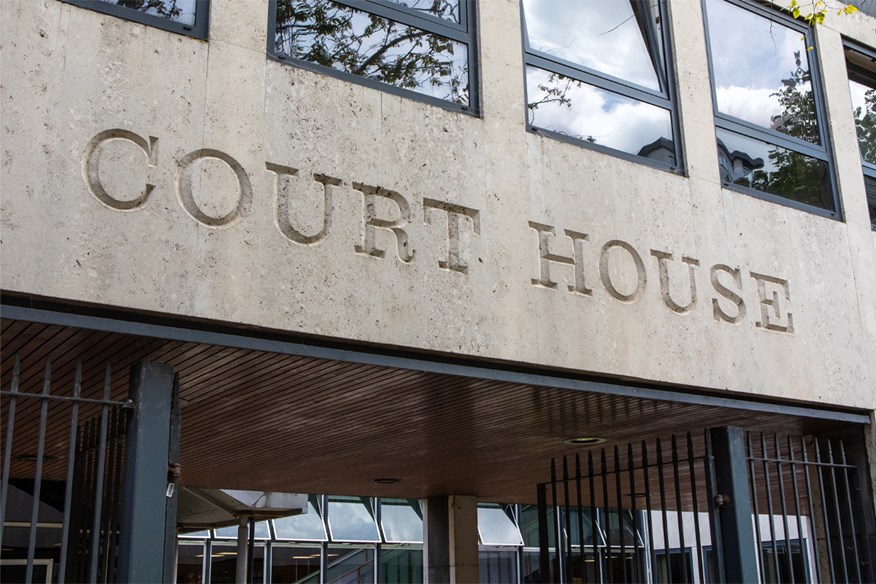 The golfer a club couldn’t get rid of
The consequences can be particularly frustrating when a club believes it has good reason to remove a member.
Smith recalls a court case involving a club that had expelled a member for cheating.
“The club mishandled its procedure, and the judge ordered it to reinstate the member,” he says. “The club then had to take back someone who, based on the evidence, appeared to have cheated, and the other members had to face that person in future competitions.
“That can be quite galling. And the reputational damage can be significant if the case ends up in a public court case and everyone finds out what the club has done wrong.”
The case illustrates the importance of following the correct process, even when a club believes the underlying misconduct is clear-cut.
When the club has to play judge and jury
Even when an incident is reported to the police, a club may still need to take disciplinary action of its own. Criminal proceedings and a club’s internal process are separate matters, and one doesn’t necessarily remove the need for the other.
“A club can’t simply leave it to the criminal justice system,” Smith explains. “Even if the person is convicted of an offence, they could still be a member. The rest of the membership might reasonably ask whether they want someone who has been fighting on the 18th green to remain in the club.”
The club must consider the interests of its wider membership, while ensuring that it follows its own rules and gives the member a fair opportunity to respond.
“Whilst the vast majority of golfers are respectful, even a small number can cause significant reputational and financial damage to a club if disciplinary matters are handled incorrectly,” Smith says.
 What can golf clubs do?
For clubs, the key is to make sure their rules and procedures are fit for purpose before a problem arises.
“Clubs should get their documents checked during peacetime, so they’re ready when something happens,” he says. “Clubs should have their constitutions and disciplinary procedures reviewed, ensuring the documents are up to date, correctly drafted, and consistent with one another.
“They can then follow the process and come to us for advice if members raise unexpected challenges.”
A club needs to be able to investigate allegations, reach a decision on the evidence and, where appropriate, impose a sanction that can withstand scrutiny. And they should not assume that their existing documents are fit for purpose.
“Even the oldest constitutions normally provide for the discipline or expulsion of members, as clubs have been dealing with this for a long time,” Smith says. “But older constitutions may not be fit for today’s world. They can get into trouble if they follow articles written in the 1950s that don’t comply with the principles of natural justice as they apply today.”
These issues can be difficult to resolve once a live dispute is already under way, which is why Smith urges clubs to review their documents in advance.
“The easiest way is to join the NGCAA, and we can review them. Our role is to ensure that golf clubs have the robust framework and legal support necessary to handle these cases fairly and decisively. Clubs should pick up the phone or email me at the first hint of an incident that could lead to disciplinary action, so we can guide them through it.”
For golfers themselves, Smith’s message is much simpler.
“Just behave,” he says. “There’s not much else to it. In the same way you’d mind your Ps and Qs in the workplace, it’s a similar environment at a golf club.”
And for anyone who thinks a momentary indiscretion on the course or in the clubhouse is unlikely to have serious consequences, he offers a final reminder.
“There are consequences for misbehaving, including expulsion from the club.”