
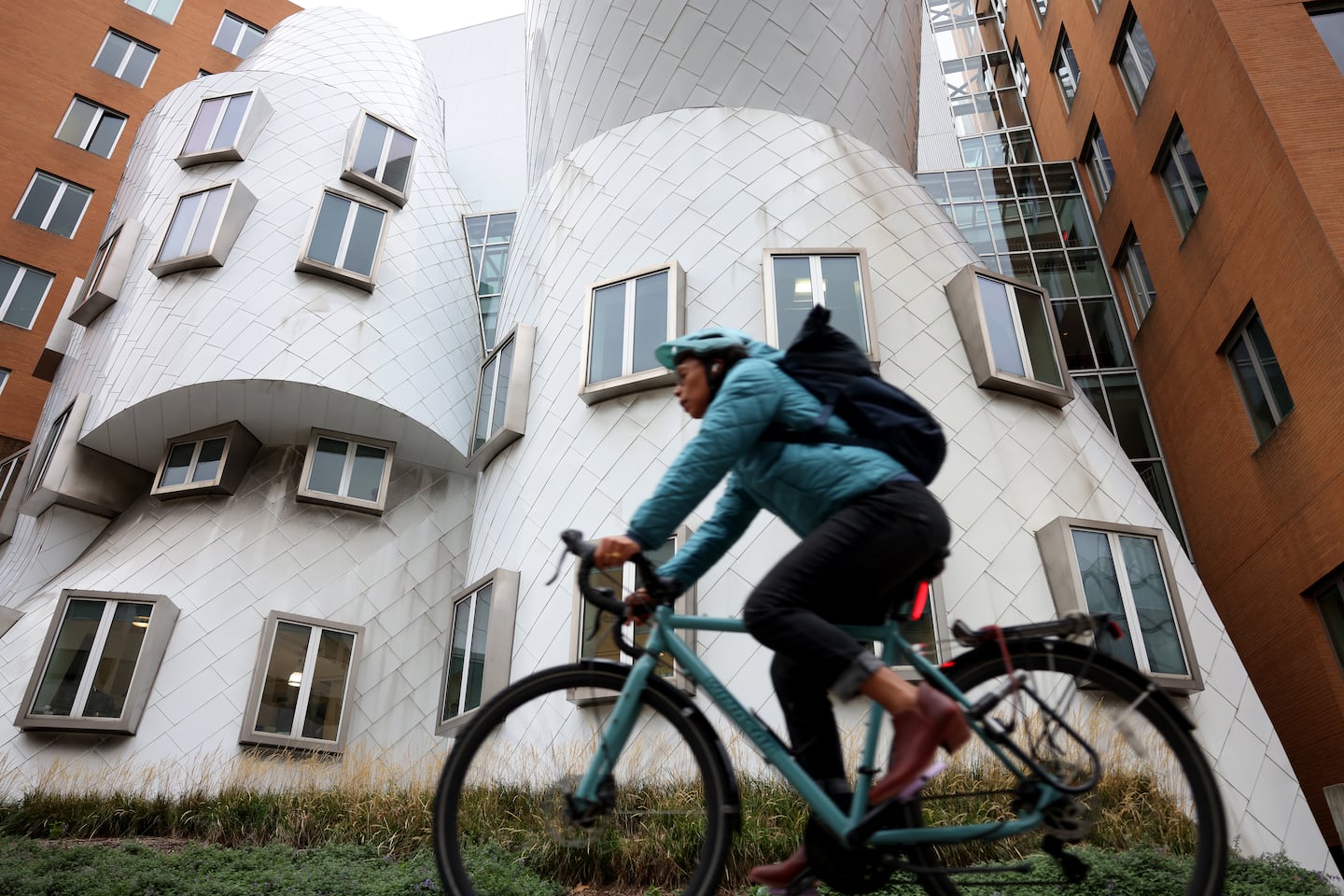
Framed in timber instead of concrete and steel, and sheathed in triple-glazed glass, BU’s 12-story Pardee School of Global Studies would have stood alongside another distinctive addition to the skyline: the $305 million, multiple-award-winning Duan Family Center for Computing & Data Sciences, nicknamed the Jenga Tower for its stacked-block design.
But construction of the $118 million global studies building has been shelved by the university in the face of financial pressures that have resulted in budget cuts and layoffs.
Colleges and universities in and around Boston have historically commissioned cutting-edge buildings by the world’s preeminent architects — I.M. Pei, Paul Rudolph, Frank Gehry, Rafael Moneo, Eero Saarinen, Alvo Aalto, Eduardo Catalano, Le Corbusier. Some of their work here inspired whole new movements in design.
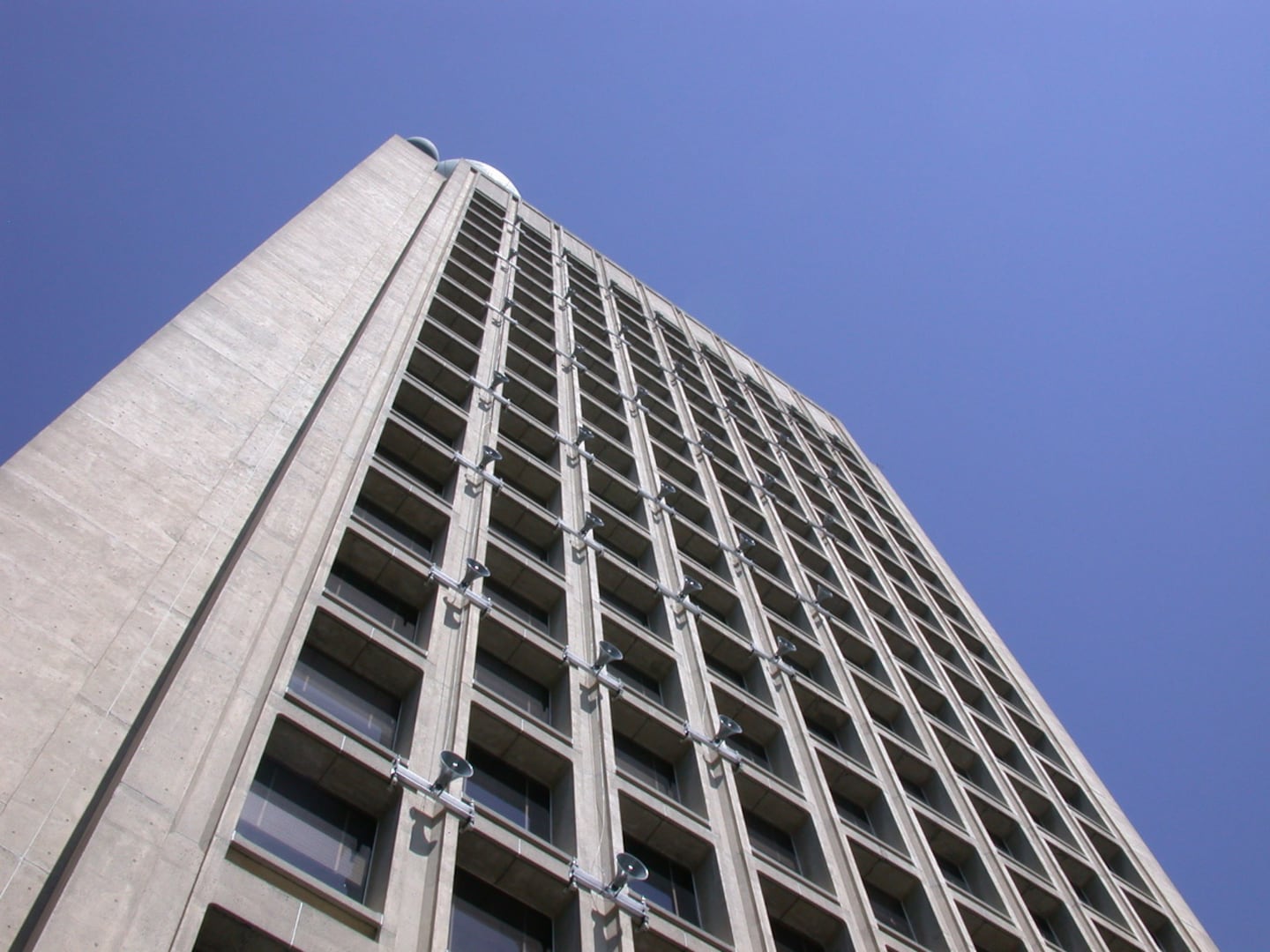 I.M. Pei’s iconic Building 54 at MIT was the surface for an multi-speaker audio installation in 2005.Carrie Bodle
Now these kinds of attention-getting campus projects are among the many things imperiled by enrollment declines, funding cuts, and countless other problems plaguing higher education.
“We’re in a moment when everyone is pausing,” says Nader Tehrani, principal of the Boston architecture and design firm NADAAA and former head of the department of architecture at MIT.
After 14 years of significantly outpacing enrollment growth, the rate of new construction at universities and colleges has abruptly leveled off and is “trending toward zero,” the building industry analytics company Gordian reports.
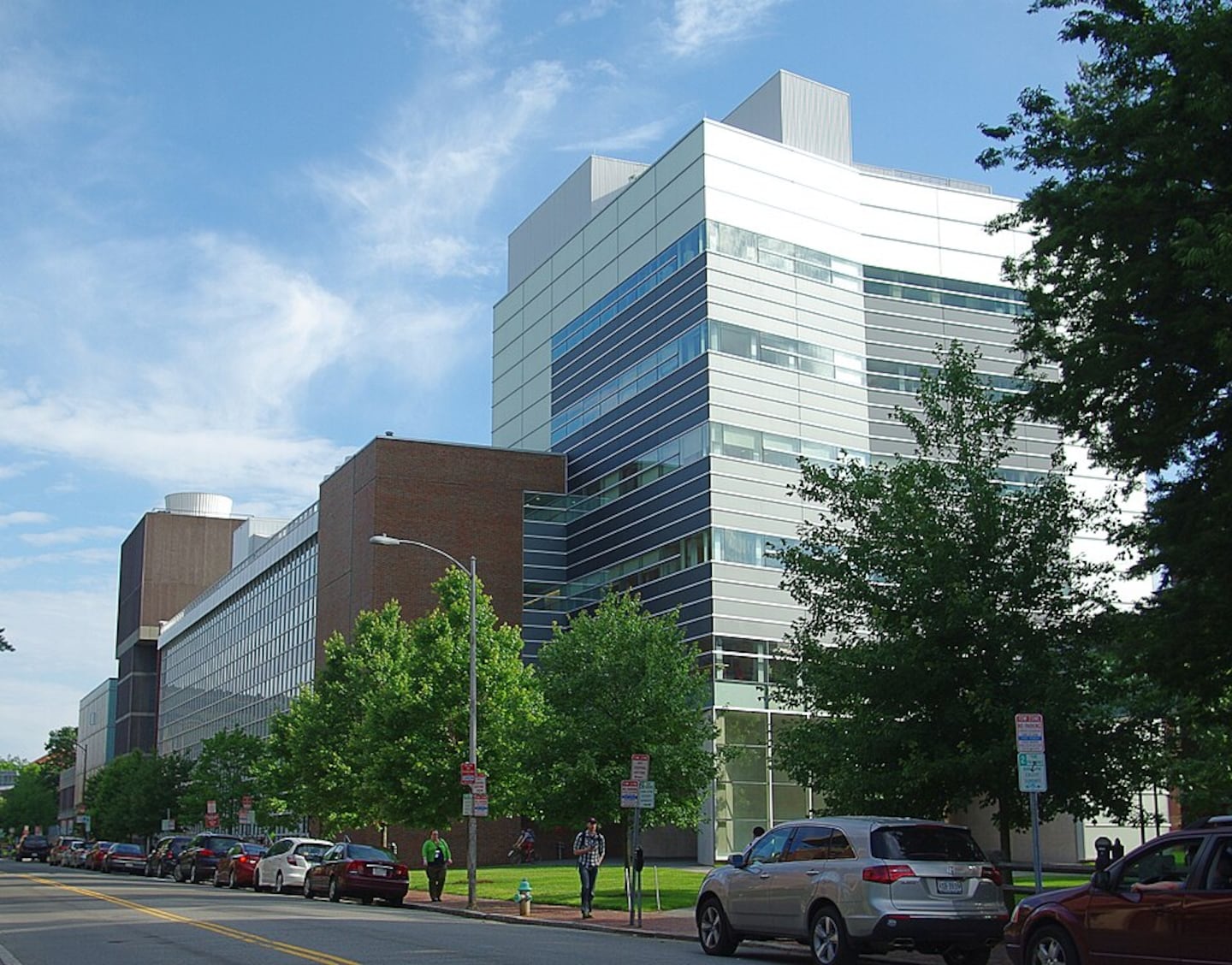 Harvard’s Laboratory for Integrated Science and Engineering, seen in the foreground, was designed by Rafael Moneo.Bostonian13/Wikimedia Commons
“The expansion that was in place for the better part of 60 years is slowing down,” says Pete Zuraw, Gordian’s Boston-based vice president of market strategy and development and former assistant vice president for facilities management and planning at Wellesley College.
“There’s been optimism in education that it will always grow,” Zuraw says. “Now that’s severely in question.”
There are still new projects going up, most notably on Harvard University’s research campus in Allston. But those buildings had long been in the pipeline and new ones are being stopped or pushed back, as are major renovation plans.
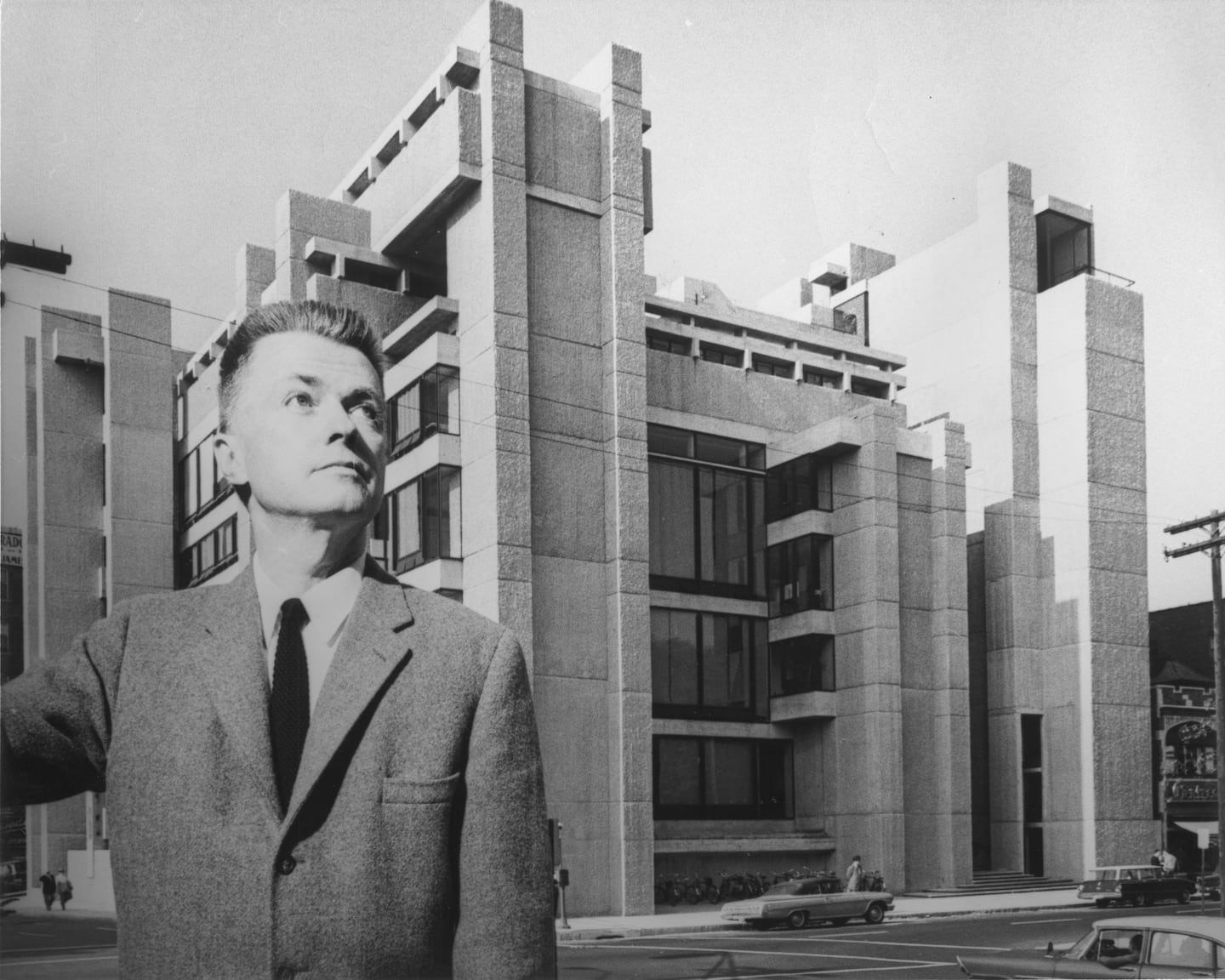 The architect Paul Rudolph with Yale’s Art & Architecture building in the background, circa 1963.
As it fends off Trump administration attacks and contends with an increased federal endowment tax, for instance, Harvard has put on hold its plans to renovate Widener, Lamont, Pusey, and Houghton libraries. In addition to indefinitely delaying the Pardee School, a spokeswoman says, BU has pushed back the renovation of its Mugar Memorial Library, one of several midcentury structures designed by onetime Harvard architecture dean Josep Lluís Sert. A third phase of BU’s student village and a new science research building that were part of a previous master plan have been left out of a shorter-term update.
It’s not just in Boston that this is happening. Yale University has suspended 10 construction projects, citing federal funding battles. “Prudence dictates cutting back our ambitions,” the president of Johns Hopkins University said when he announced that it would cut construction and renovation spending by as much as 20 percent. The University of North Carolina at Chapel Hill has tabled plans for a $228 million health research center.
With its concentration of top universities, however, Greater Boston has disproportionately benefited from the architecture they commissioned, says David Manfredi, CEO and principal of Elkus Manfredi Architects.
Institutions “use it to express values,” Manfredi says. “And they might not love this word, but they use it to communicate brand and often to put themselves in history.”
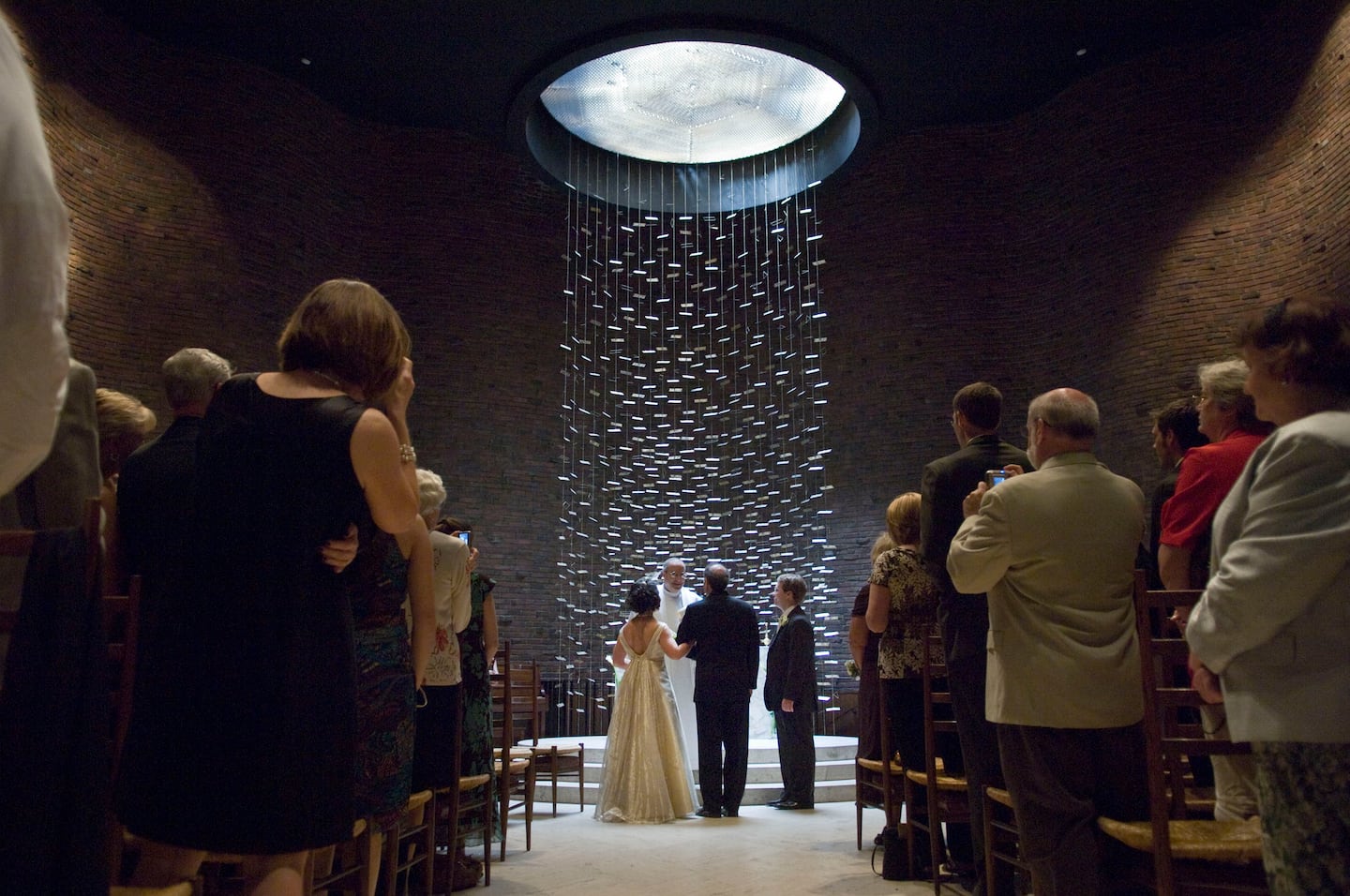 A 2008 wedding in the MIT chapel, which was designed by Eero Saarinen and opened in 1956.Wiqan Ang
Before this downturn, US universities and colleges were spending nearly $28 billion a year on new buildings and renovating older ones, Gordian reports. The sudden halt in campus projects is a major reason why the American Institute of Architects billings index shows the number of architecture commissions falling nationwide, and doing so faster in the Northeast than anywhere else, says Danyson Tavares, executive director of the Boston Society of Architects.
“It’s become a real economic problem” for more than just the universities, he says.
That colleges and universities kept building even as enrollment plateaued, of course, is one reason critics say that many schools have found themselves in such financial trouble now. On top of everything else, institutions nationwide face a collective backlog of maintenance to existing facilities of more than $112 billion, according to Gordian.
Not all of the architecture higher education institutions have commissioned is universally admired. And some of the most famous buildings have proved exceptionally costly to repair or maintain, such as Gehry’s Stata Center at MIT, which went over budget and suffered cracks and leaks.
But campuses are like laboratories for architectural movements, including by being at the forefront of such things as advances in sustainability, says Eric Höweler, a professor of architecture at Harvard and author of the book “Design for Construction.”
The kinds of buildings colleges and universities commission are often “radical ideas,” says Höweler, partner in the Boston firm Höweler + Yoon. “Is the market ready for them? Not yet. That is one of the best cases I see for investing or continuing to invest in higher education, is that it’s seeding the future techniques” of architecture.
“For better or for worse, there’s always a small utopia that a university is attempting to produce,” says Ana Miljački, MIT’s incoming dean of architecture. “Its architecture can speak to that. It’s a way to project the values that it holds into the world. The point is not the bottom line or profit per square foot.”
Miljački assumes her new role just as the MIT architecture school moves into the former Metropolitan Storage Warehouse, the monumental hulk transformed into classrooms, offices and laboratories by Diller Scofidio + Renfro.
That kind of restoration, rather than new construction, is likely to be more common on campuses now less able to invest in brand-new buildings, she says.
“We’re going to enter a time of really new adaptive-reuse experiments by really important architects,” Miljački says. “I see that as an inevitable turn for the discipline.”
What is likely to continue to be built from scratch at universities and colleges is architecture meant to attract students, experts say. Already, several schools in Massachusetts have announced deals through which amenity-rich new dorms are being financed by private developers that will earn revenue over time from student fees.
But the era of signature buildings at Boston-area universities and colleges may be past, Chris Vogelheim, higher education sector leader at the architecture and engineering firm HED, says wistfully.
In their heyday, institutions “would hire these world-renowned architects and the buildings would become almost iconic,” Vogelheim says. “I think there’s going to be less of that.”