

Want to bookmark your favourite articles and stories to read or reference later? Start your Independent Membership today.
Already a member?
Log in
In February, 1995, six years after the creation of the World Wide Web, cyber pioneer Clifford Stoll wrote one of the most famously myopic visions of the future. “The truth is no online database will replace your daily newspaper,” he wrote in a column for Newsweek, dismissing the hyperbole that the internet was about to change the world forever.
“Visionaries see a future of telecommuting workers, interactive libraries and multimedia classrooms,” he continued. “Commerce and business will shift from offices and malls to networks and modems… Baloney.”
In recent years, it has been cited as one of the worst tech predictions, but none of these things would have ever actually happened on the scale they did without the advent of the smartphone just over a decade later.
Before Steve Jobs stood on a stage in California in 2007 and unveiled the first iPhone, the internet was something people went to. They would sit down at their home or office computer, or in an internet cafe on the high street, and log in. They could check their email, browse some websites, maybe make a bank transfer or buy something, and then they would get up and leave. They would be offline.
The smartphone made connectivity continuous. There was no more boundary between being online and offline, people never had to log off. It marked one of the most profound behavioural transitions in modern history.
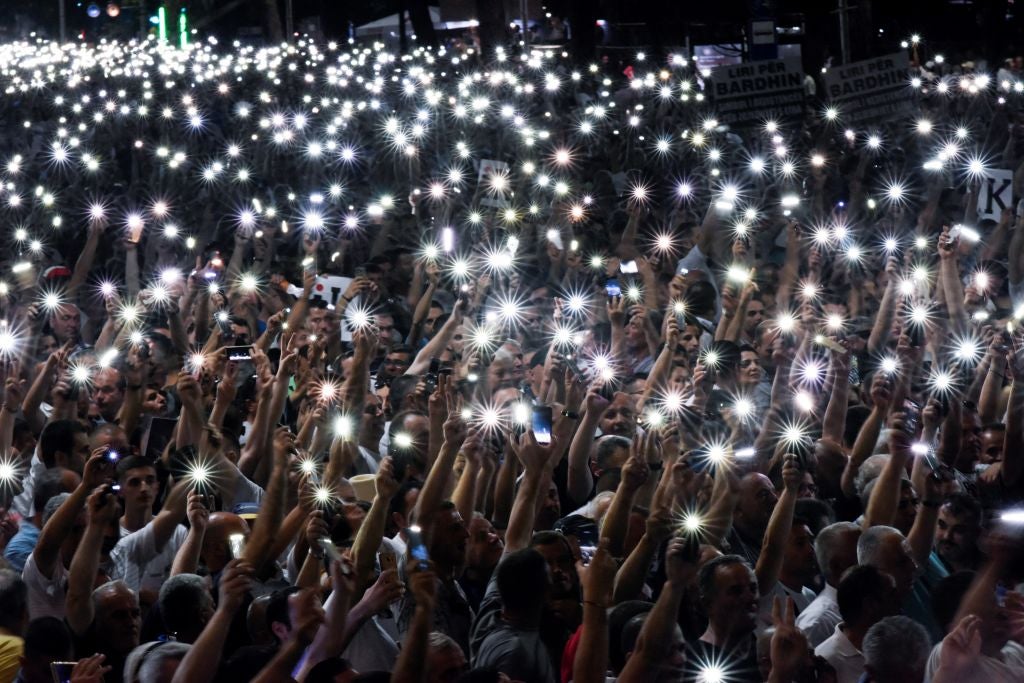 Supporters of Albania’s opposition Democratic Party leader Lulzim Basha hold up their smartphones during a protest in Turana on 21 June, 2019 (AFP/Getty)
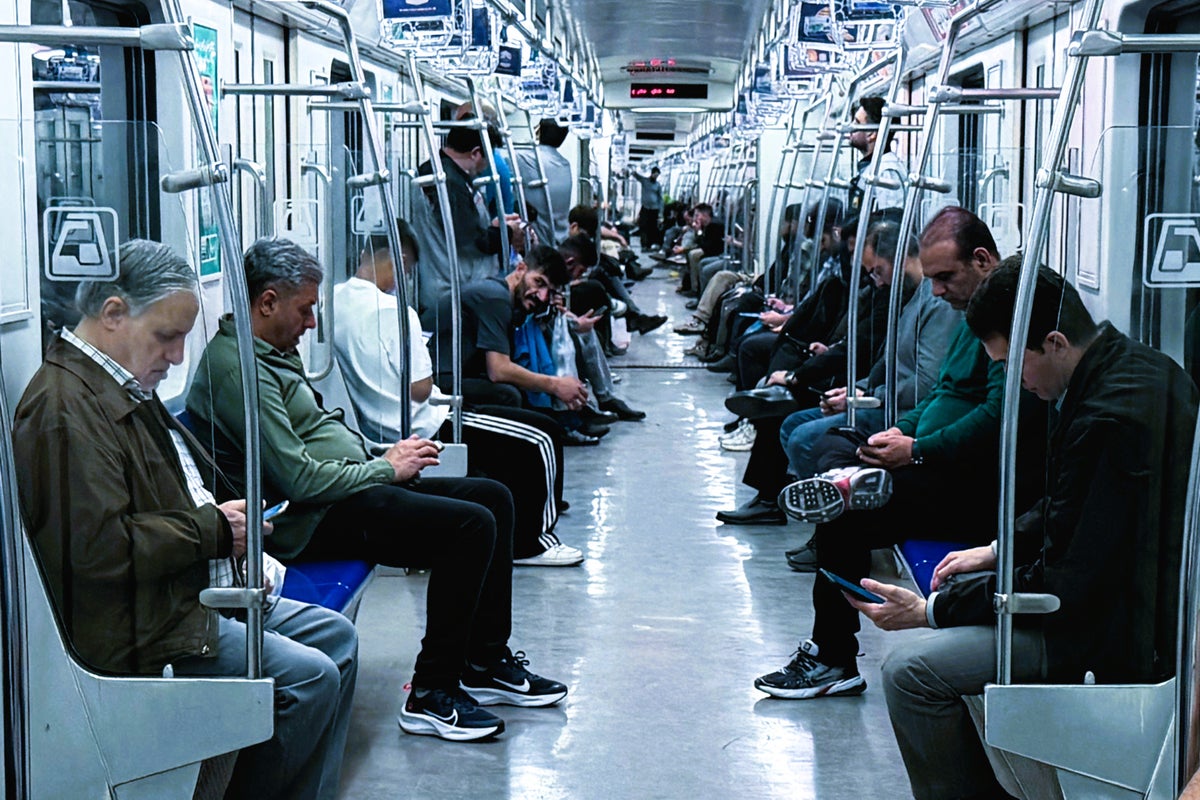
The average person spends four hours and 37 minutes on their phone each day, according to data compiled by DataReportal. That works out to two straight years staring at a smartphone screen over the course of a decade. For the majority of people, it is the first thing they do when they wake up and is a reflex that continues throughout their day. People check their device approximately 186 times a day – roughly once every five minutes.
‘Brain drain’
The habit has had significant impacts on our brain chemistry, rewiring neural pathways to create a new form of dependence that shares similarities with physical addictions.
A study last year, titled ‘Smartphone dependence and its influence on physical and mental health’, found that people can experience “not only physical discomfort but also feelings of loneliness, anxiety, and depression” if they use their phone excessively.
“Whether waiting for a bus or subway, eating a meal, watching TV or preparing for bed, an increasing number of people rely on their smartphones to help them pass the time,” the study noted. “Smartphone addiction shares similarities with substance addiction in terms of behavioural characteristics (eg, compulsive use, reward-seeking) and potential neurobiological mechanisms (eg, involvement of the brain’s reward circuit).”
Another study in 2023 found that smartphones create a kind of “brain drain” that worsens our cognitive performance, even when we’re not looking at them. The researchers asked participants to complete a series of tasks while their phones were at various distances away from them. Those whose phones were in another room performed far better than those who carried out the tasks with their phones next to them – even when the device was turned off.
Despite the negative impact of smartphones on our mental and physical health, getting rid of them is increasingly difficult. This is because they have not just changed human behaviour, but that of businesses too.
Beyond the emergence of brand new business models that would not be possible without apps, like Uber and Tinder, smartphones have influenced how traditional industries operate. They have brought about the arrival of online-only banks like Revolut and Monzo, and given newspapers the confidence to ditch print editions entirely. This one you’re reading right now went completely digital a decade ago. There’s also keeping in touch with friends, storing tickets for transport or shows, finding where to eat, and paying for something – operating in the modern world without one is a challenge most people would rather avoid.
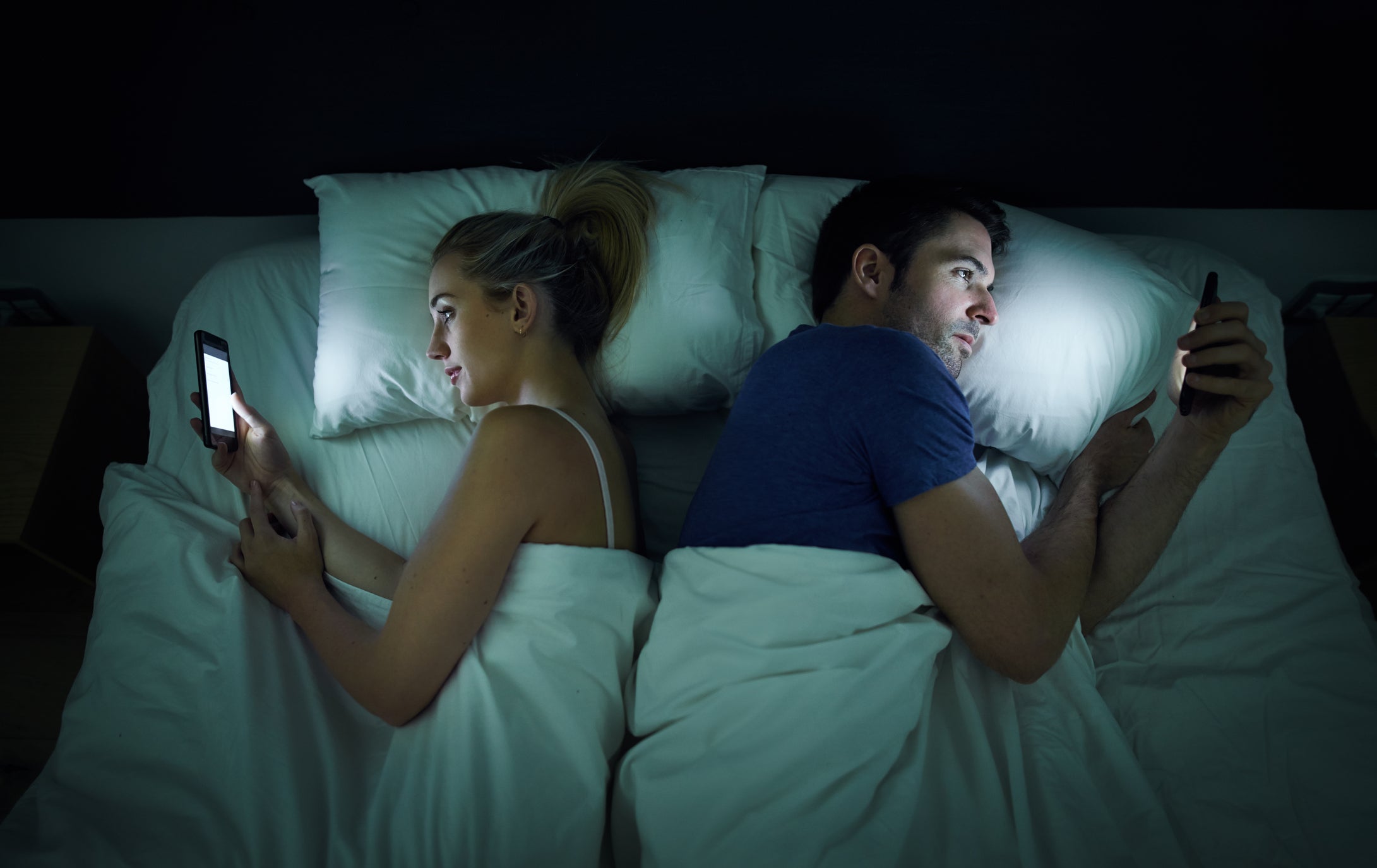 Smartphones have simultaneously connected the world and brought about a loneliness epidemic (Getty/iStock)
And beyond the necessities, there are features engineered to keep us engaged: scrolling through social media content that is algorithmically tailored just for you is taking up more and more of people’s time. Over the last 10 years, the number of hours spent on apps like Facebook and Instagram has doubled, according to data collected by consumer insights platform GWI.
Not only are they taking up our time, but the algorithms are also leading to increased polarisation, extremism and the erosion of collective culture through personalised recommendation engines.
The damage caused has led to widespread calls for children to be banned from social media platforms, while some regulation is seeking to effectively phase out algorithmically-served content altogether.
Peak smartphone era
Attempts to lessen our dependence on the technology may be irrelevant for what comes next. We have already passed the peak smartphone era, with figures published this week by Counterpoint Research showing that sales have fallen to their lowest point in 14 years.
Global smartphone shipments are expected to fall to around 1 billion units this year, which is roughly half a billion fewer than the peak in 2016. The prolonged period of decline is a result of incremental upgrades that have led consumers to be less inclined to upgrade their devices, while a memory component crisis brought about by AI demand has seen sales fall sharply this year.
But a bigger shift in the tech industry may already be underway that sees people shift away from smartphones in the same way they did with desktop computers.
Over the next decade, a new era of “ambient computing” could replace our current fixation with screens, according to several leading tech figures. On Thursday, Panos Panay, Amazon’s senior vice president of devices, said that AI agents will carry out tasks on a user’s behalf.
“As it works in the background, you’re able to stay more present,” he said at TechCrunch Disrupt. “You’re able to get more done. You’re about to spend more time with people… I think that transformation is coming. I think that is the next generation.”
As part of this vision, Amazon unveiled a new AI-powered device called the Bee Frontier. It is a wearable that can be worn like a bracelet or clipped to clothing and will “listen to your whole day” in order to serve as a hands-free, AI personal assistant.
OpenAI is also working on a suite of new AI-powered devices that do away with screens in favour of audio and visual input. Developed in collaboration with famed iPhone designer Jony Ive, the gadgets are built to be unobtrusive and act as a constant “human-like” companion for ChatGPT users.
The device, which is expected to ship early next year, will be the fastest-selling product ever made, according to OpenAI boss Sam Altman. In a trailer for the mystery gadget, Ive said “I am absolutely certain that we are literally on the brink of a new generation of technology that can make us our better selves.”
These next-generation devices could supercharge the transition from smartphones to ambient computing, ushering in a brand new era of the internet – and once again change how we behave forever.