
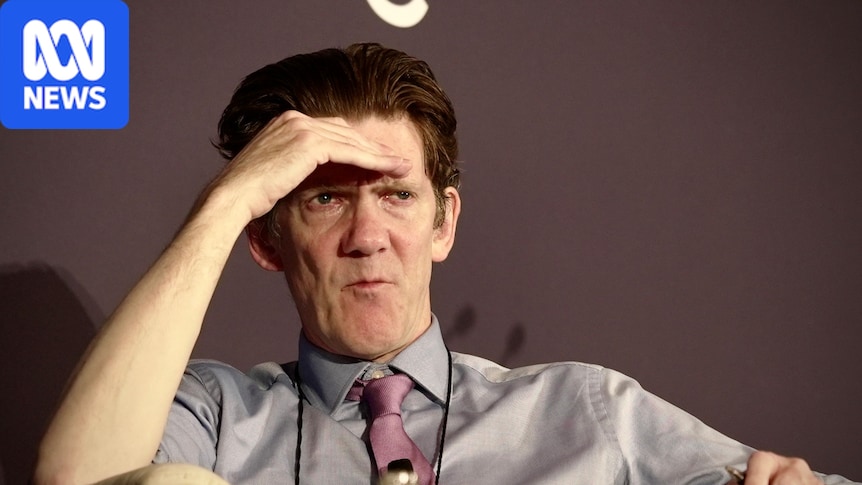
Reserve Bank deputy governor Andrew Hauser says the inflation outlook is “materially worse” than the RBA had forecast, raising the prospect of another interest rate hike as soon as November.
Just under a fortnight out from the next interest rate decision, Mr Hauser warned high inflation was becoming entrenched in the Australian economy.
“We are beginning to see some signs that some people in the community are not sure if we’re going to bring inflation back into target at all, or certainly not for an extended period,” Mr Hauser told the Citi Investment Conference in Sydney.
The RBA targets headline inflation between 2 and 3 per cent on average over time.
Inflation currently sits at 4 per cent, according to the August consumer price index.
Mr Hauser said the central bank’s liaison program and surveys showed there was “an increasing share of businesses who are thinking that, maybe, sort of 3 per cent, 3.5 per cent [inflation] is the new normal”.
“Look, that is the central banker’s nightmare.
“We can’t allow expectations to shift away from target.”
Market pricing now puts the chance of an interest rate hike in November at 51 per cent, based on Bloomberg data.
The odds of a hike next month had dipped below 20 per cent last week, after the unemployment rate reached a five-year high in September.
UBS chief economist George Tharenou described Mr Hauser’s remarks as “hawkish” and said the investment bank was forecasting a November rate hike.
“Hauser’s comments today are consistent with our view of the likelihood the RBA staff provide an explicit recommendation at the November meeting to raise the cash rate,” Mr Tharenou said.
The RBA will release its quarterly forecasts in its Statement on Monetary Policy on November 3, the same day the interest-rate-setting board next hands down a decision.
Betashares chief economist David Bassanese agreed that the RBA official was setting the stage for a Melbourne Cup day hike.
“Despite the steadfast claims that the Reserve Bank is no longer in the business of offering forward guidance, its signals to the market in recent weeks have rarely been clearer,” Mr Bassanese said.
“In short, the RBA seems increasingly prepared to risk a recession to get inflation down – given it has been above target for an extended period and it is sensing evidence of rising inflation expectations within the community.”
“It remains possible the RBA board vote will be split, and the external members have a majority to hold rates, and hence effectively ‘outvote’ Bullock and Hauser,” Mr Tharenou said.
However, even if the RBA holds rates in November, he still would expect “a ‘hawkish hold’, with the RBA retaining a tightening bias … and also setting up a hike at the subsequent meeting in December”.
‘Laying shorter-term pain on top of pain’
Mr Hauser reiterated the “hard choices” facing the RBA as it balanced the pressures on prices from the Middle East crisis, the AI and technology boom and weak productivity growth.
Asked about the pain of higher interest rates hitting many households, on top of cost-of-living pressure, the deputy governor said: “It’s a continuous challenge to explain this.”
“The reason is that, even though we are laying shorter-term pain on top of pain, it’s to prevent a longer and potentially far worse pain down the track if inflation expectations get locked in,” Mr Hauser said, echoing comments RBA governor Michele Bullock has made as the central bank has lifted rates.
The RBA and the inflation myth
Mr Hauser downplayed concerns about the state of the jobs markets, saying there was potentially “noise” in the numbers, after the unemployment rate rose to 4.7 per cent in September.
“That said, it clearly was a little weaker than we and others have been expecting,” he said.
“I stress the ‘little’. These unemployment numbers in Australia are still right at the bottom or very near the bottom of G20 out-turns on labour markets.”
He said “no lost job is one to celebrate” but the labour market needed to soften.
“We need to see some easing in the economy, whether [the unemployment rate] goes to 5 [per cent], whether it goes to some other number,” Mr Hauser said.
“That’s a debate we’re having in the context of our forecast at the moment, and you’ll see our answers to that in a week or two.”
Watch The Business, Mondays to Thursdays 8:44pm on ABC News Channel, after the Late News on ABC TV, and anytime on ABC iview