
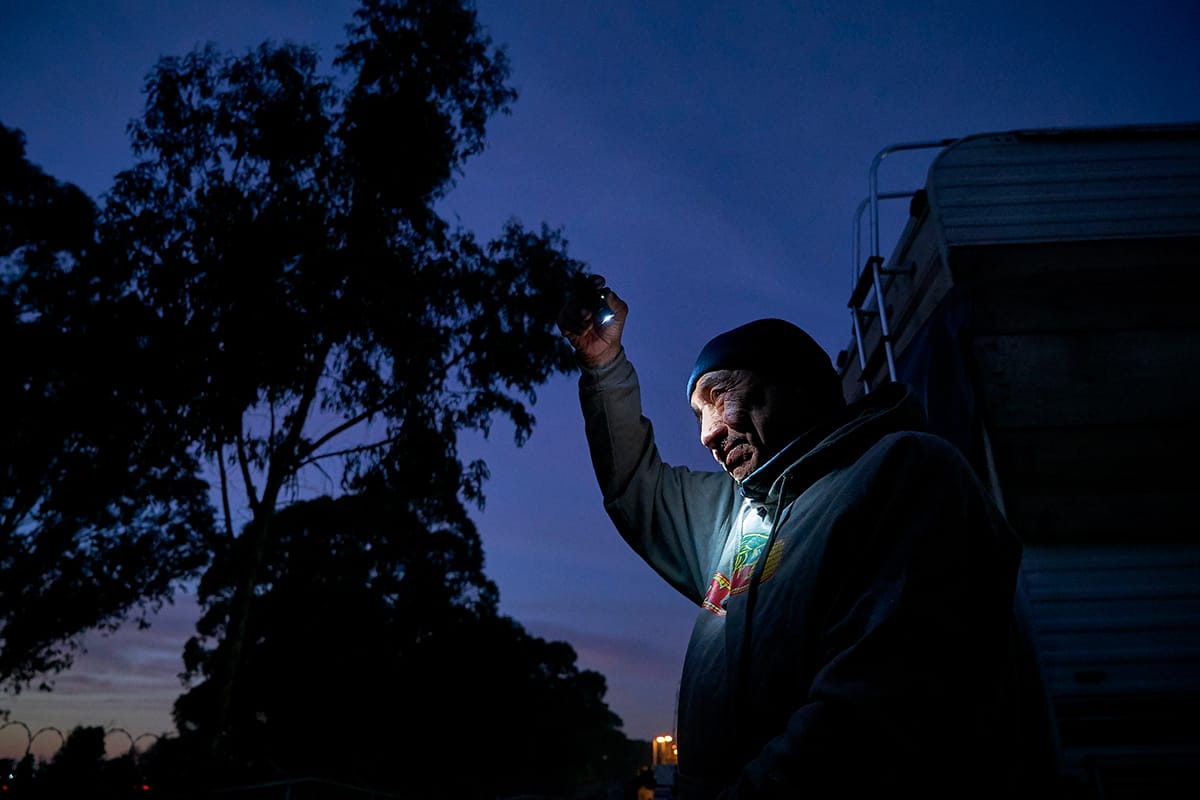
A documentary about life inside a Berkeley RV community screens Wednesday at the Hillside Club.
Like Heaven Without God, directed by Berkeley filmmaker Luca Capponi, follows residents living in a temporary parking lot near the Berkeley Marina as they navigate homelessness, uncertainty and the relationships they’ve built with one another.
The screening is set for Wednesday, Oct. 21, from 7-9 p.m. at the Hillside Club, 2286 Cedar St. Tickets are $15 for general admission or $10 for members, seniors and students, with additional fees for online purchases.
Editor’s note: The following Q&A was adapted from director Luca Capponi’s written statement, with his review and approval.
What drew you to Berkeley’s RV community and its stories?
I first became involved with the community as a volunteer, and later worked within the program. Over time, I developed close relationships with the people living in their RVs in the parking lot. What initially drew me in was the contrast between the temporary nature of the place and the sense of community that was developing within it.
I want viewers to experience this place from the inside, almost as if they were neighbors themselves. My hope is to show a side of homelessness that people rarely get to see, including the everyday routines, relationships, struggles and hopes of the people who live in my neighborhood.
How do you tell these stories visually?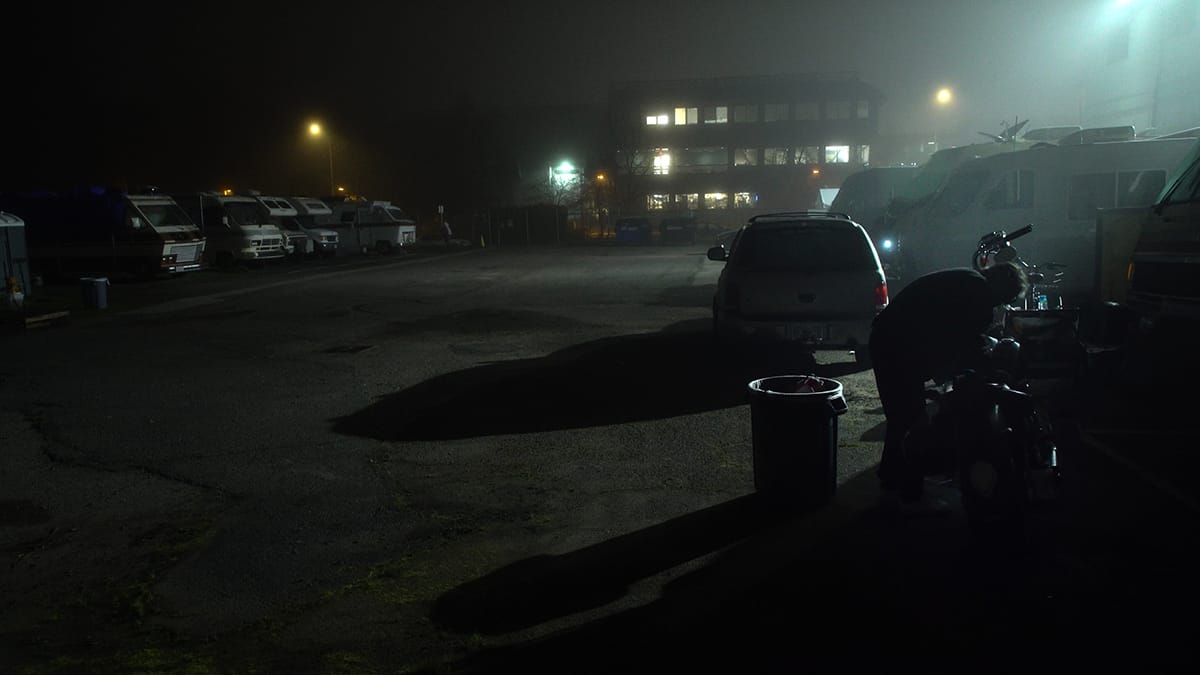 All images courtesy of Like Heaven Without God
The biggest challenge was making a parking lot visually compelling. It’s not a particularly cinematic environment at first glance: asphalt, fences, parked vehicles and industrial surroundings. But I became fascinated by the possibility of finding beauty and meaning in such an ordinary, seemingly anonymous space.
The film moves between intimate scenes inside the RVs and wider shots of the surrounding landscape. We see people going about their daily lives, talking about their experiences and sharing their stories. Then we step outside and see the parking lot, the railroad tracks, the traffic and the San Francisco skyline in the distance.
Visually, I wanted to explore that contradiction. The camera moves between intimate moments inside the RVs and wider landscapes of the surrounding environment. Handheld shots create closeness with the protagonists, while more static compositions emphasize the sense of immobility and waiting.
I also gave considerable attention to the sky, the changing light and the distant San Francisco skyline, allowing the landscape to reflect the emotional states of the characters.
“My hope is to show a side of homelessness that people rarely get to see, including the everyday routines, relationships, struggles and hopes of the people who live in my neighborhood.”Why is the setting so important to the film?
The parking lot is almost a character in itself. There’s a railroad nearby, with cargo trains passing through and sounding their horns. You can hear traffic moving around the community. In the distance, the sun sets behind the Golden Gate Bridge.
San Francisco is right there on the horizon, but it can feel like an unreachable island.
Meanwhile, people in the parking lot are coming home from work, fixing their vehicles, preparing meals and getting ready for bed. Their lives continue against this backdrop.
I wanted the audience to experience that contradiction rather than simply have it explained to them.
What filmmaking approach did you use?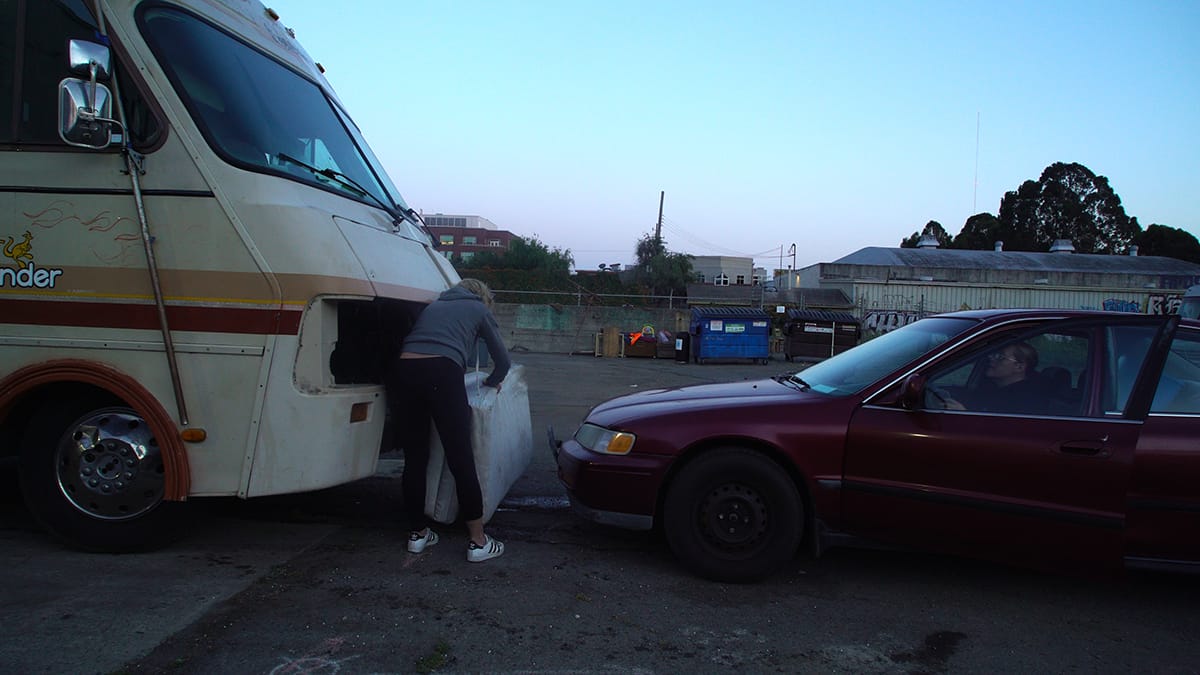
My approach was largely observational. I wanted the camera to become a familiar presence rather than something that constantly interrupts people’s lives.
I wanted the camera to feel close to the people we’re following, without intruding. We used handheld shots to capture personal moments and conversations, along with more stationary shots that convey the feeling of being stuck in one place.
We also used wide shots of the landscape, including the sky and clouds, to reflect the uncertainty people are living with.
Above all, I wanted to intervene as little as possible and let people’s experiences speak for themselves.
The film also has a choral structure, following six residents whose individual experiences gradually create a collective portrait. Finding the right balance between their stories was one of the central challenges of the editing process.
What do you hope audiences take away from Like Heaven Without God?
I don’t necessarily want audiences to leave the theater with a specific answer or conclusion. I would rather they leave with questions and, most importantly, with a connection to the people they’ve spent time with.
The film is about immobility, injustice and human suffering, but also about people’s desire to change their lives.
I want viewers to see the people living here as individuals, rather than simply as examples of homelessness. Their circumstances can be difficult, but there’s also a community here, with its own relationships and routines.
Even though we spend almost the entire film in a single parking lot, I hope viewers gradually become attached to the protagonists and begin to see the place through their eyes.
My relationship with the community shaped every aspect of the film.
I was already involved in the daily life of the parking lot, first as a volunteer and later through my work with the program.
That access came with responsibility. As the director, I’m responsible not only for the creative direction of the film but also for the wellbeing of the people who have agreed to participate.
There is always a delicate balance between documenting someone’s life and respecting their vulnerability, especially when filming people experiencing difficult circumstances.
I wanted to honor that trust by telling their stories with care and respect.
Ultimately, I see the film not simply as a portrait of homelessness, but as the result of a relationship that developed over several years.
Disclosure: Berkeley Scanner founder Emilie Raguso serves on the board of the Hillside Club.
Sign up for The Berkeley Scanner
Authoritative public safety and politics news coverage in Berkeley, CA
No spam. Unsubscribe anytime.