
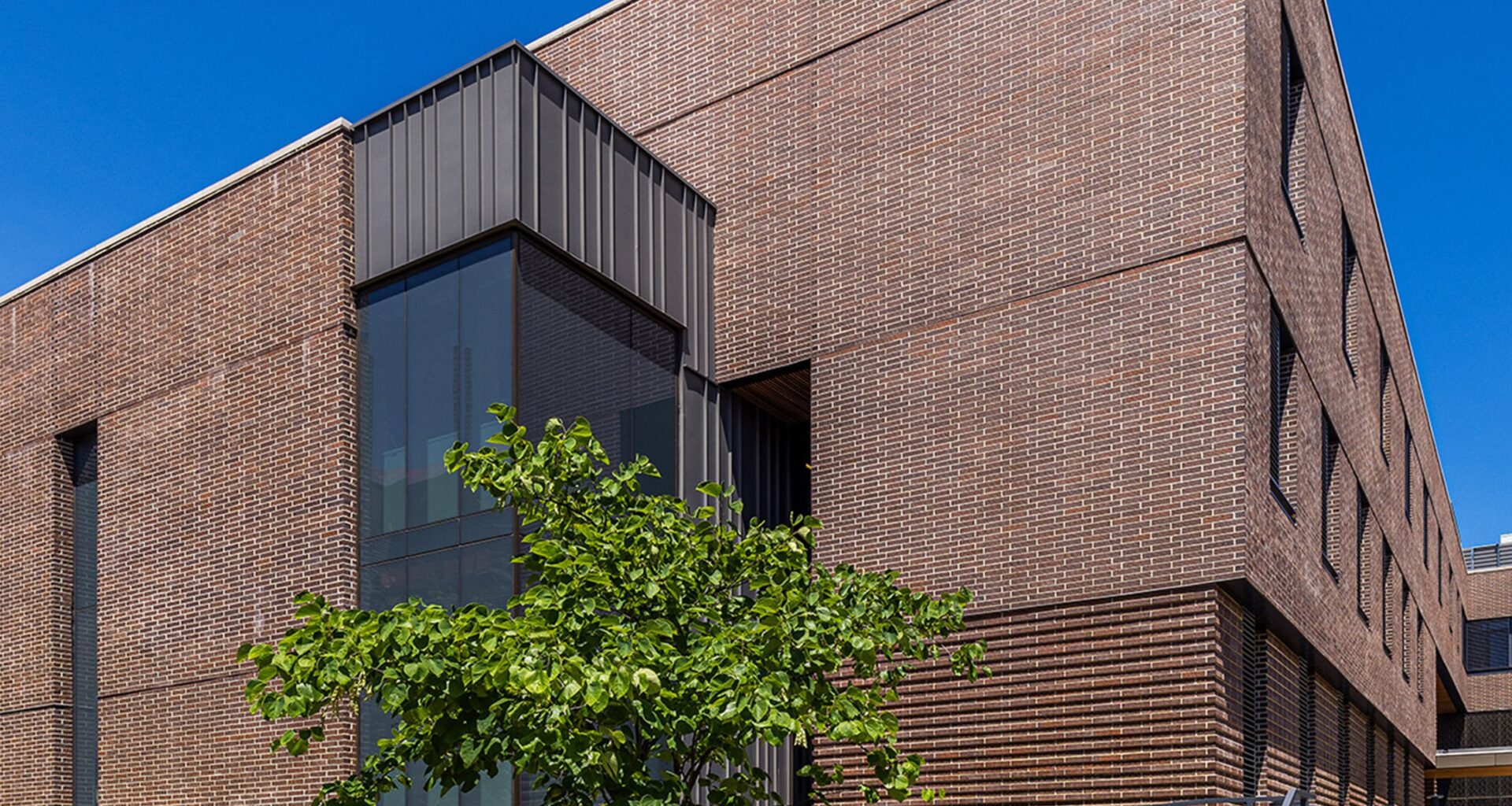
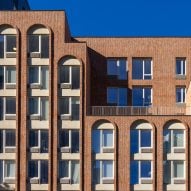
Burgundy-coloured bricks incorporating reclaimed manufacturing waste wrap Princeton University’s Frist Health Centre in Princeton, New Jersey, as shown in this video carousel produced by Dezeen.
Called Ponderosa Western, the bricks are part of North American manufacturer Glen-Gery‘s Western Series and incorporate materials recovered from its own manufacturing process.
View this post on Instagram
The extruded bricks, which were laid in a horizontal running bond pattern, feature sharp, precise edges and a surface texture that combines velour, grooved and sanded finishes.
The facade was designed to complement the century-old Gothic brickwork of the university’s historic Eno Hall, which was constructed in 1924.
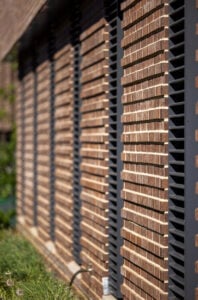 The burgundy bricks are part of Glen-Gery’s Western Series
The new building features metal sunshades to help reduce solar heat gain, alongside mineral wool insulation behind the brickwork to support the centre’s energy performance.
Courtyards, green roofs and diverse plant life surround the building, creating a landscape designed to provide a calming environment for students and faculty.
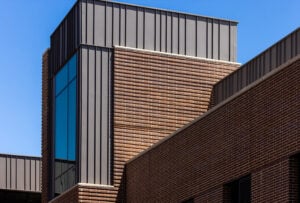 The bricks are featured alongside metal sunshades to help reduce solar heat gain
Exposed mass timber and visual connections to the outdoors continue throughout the interior of the building.
The project has been recognised by AIA New York State for its use of biophilic design and adaptive reuse.
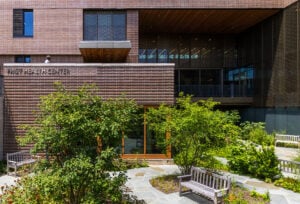 Frist Health Centre has been recognised by AIA New York State for its use of biophilic design and adaptive reuse
Frist Health Centre at Princeton University is a 76,500-square-foot facility dedicated to holistic health and student wellbeing. It opened on the university’s campus in 2025.
Glen-Gery is a brick manufacturer that specialises in creating custom facades for cultural, residential and educational institutions across North America.
NA Design Studio wraps residential building in Brooklyn with multi-coloured Glen-Gery bricks
This process means that the artists themselves were unsure of what the pieces would look like until they were completely finished.
“The thickness of the shingle coat varies depending on the complexity of the shingled area,” Wegwerth and Dehn said. “As a result, the final silhouettes and tonal values only emerge gradually during the process.”
To find out more about Glen-Gery, visit its website.
The photography is by Glen-Gery.
Partnership content
This video was produced by Dezeen as part of a partnership with Glen-Gery. Find out more about Dezeen partnership content here.
Share
Photography by Glen Gery
Read more