
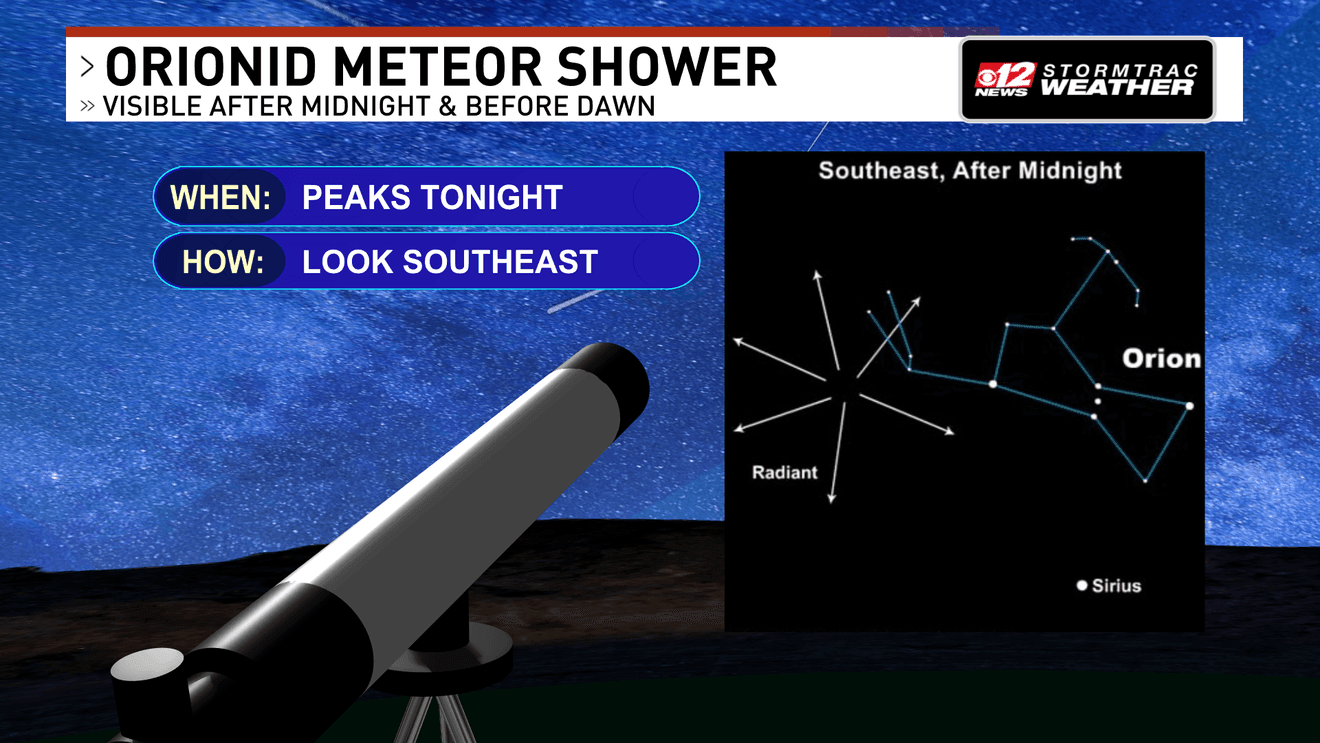
The Orionid meteor shower reaches its peak tonight, Wednesday, Oct. 21, and continues into early Thursday morning. The shower is made up of debris left behind by Halley’s Comet, which burns up as it enters Earth’s atmosphere.
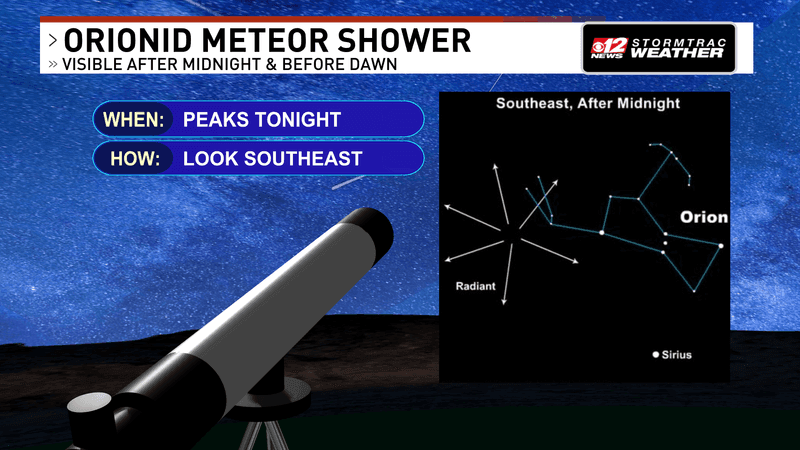
ORIONID METEOR SHOWER.(WPEC)
Under dark, ideal conditions, the Orionids can produce about 10 to 20 meteors per hour. But a bright waxing gibbous moon will hide some of the fainter streaks. NASA says the moon is expected to set around 3 a.m. local time, giving skywatchers a darker window before sunrise.
For West Palm Beach, the forecast calls for partly cloudy skies and a chance of showers after 11 p.m. Clouds may make viewing hit or miss.
If skies cooperate, find a dark, open spot away from city lights and give your eyes about 30 minutes to adjust. You do not need a telescope or binoculars. Meteors can streak across any part of the sky, so look broadly rather than focusing directly on Orion.