

The internet has made it easier than ever to connect with people and keep up with everything that’s happening in the world. But it’s easy to forget that the systems we depend on for these things don’t make decisions for themselves. People decide how they’re built and what type of content they prioritize. And those decisions have consequences that affect the lives of real people.
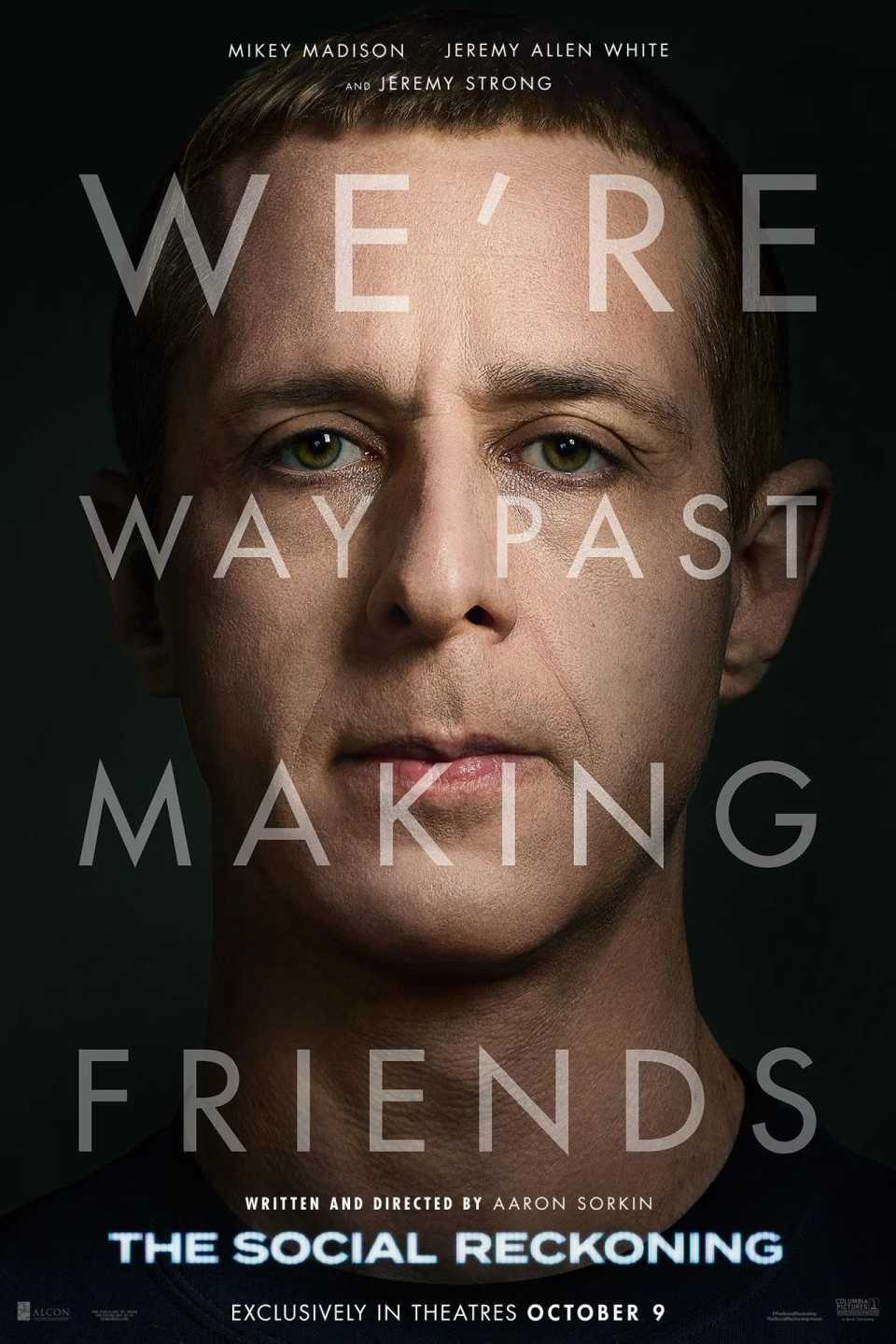
The 2026 American biographical legal thriller, The Social Reckoning, explores this problem when Facebook employee Frances Haugen (Mikey Madison) discovers that the company’s pursuit of engagement and revenue comes at the expense of user safety. But when she tries to raise her concerns, the people responsible for the platform are reluctant to change the way they operate.
Release Date
October 9, 2026
Runtime
112 Minutes
Director
Aaron Sorkin

Mikey Madison
Frances Haugen

Jeremy Allen White
Jeff Horowitz

Jeremy Strong
Mark Zuckerberg

Technology reflects what its creators choose to prioritize
Facebook’s pursuit of engagement comes at a cost to user safety
Credit: Sony Pictures
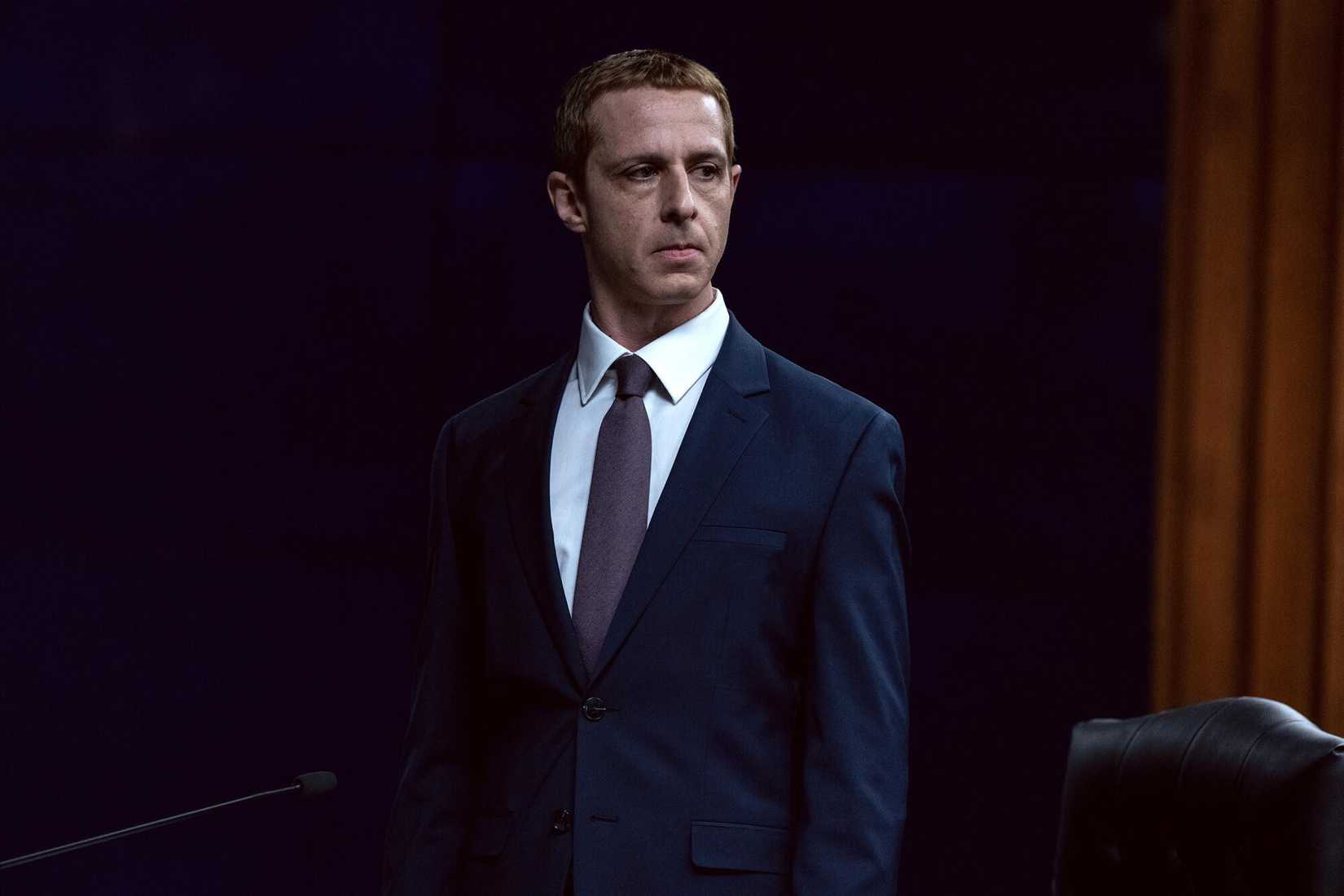
When Frances and her colleagues present their findings to Mark Zuckerberg (Jeremy Strong), they explain that Facebook’s algorithms amplify hate speech and divisive content. When they propose changes to address the problem, Zuckerberg rejects all their carefully thought-out recommendations and ends the presentation early.
Zuckerberg’s reaction exposes a conflict at the core of Facebook’s entire business. The company says it just wants to connect people, but its success also depends on keeping them engaged for extended lengths of time. So if the content that keeps users logged in contributes to the very problems Frances’s team tried to address, fixing those problems could mean losing the engagement that the platform depends on.
The movie humanizes this conflict of interest through Frances’s former friend, Kayleigh (Portia Doubleday), who became politically radicalized after the Facebook algorithm placed dangerously divisive content in front of her. While an algorithm can’t determine what someone believes by itself, it does raise concerns about what happens when a platform repeatedly exposes people to hateful content.
That distinction is a pretty big deal because algorithms are often discussed as if their outcomes are beyond anyone’s control. But the systems that recommend content are designed, tested, and adjusted by real people. And it’s those same people that have the ability to change how it works. They just choose not to because the current status quo is more beneficial to their bank balances.
Calling Facebook a public square doesn’t make it one
Facebook’s leaders decide who gets heard and who gets shut out

Credit: Sony Pictures
As Zuckerberg prepares to testify before the Senate in the movie, he describes Facebook as a “public square,” which presents the platform as a place where people can exchange ideas and decide what they think for themselves. But that logic doesn’t really make sense alongside the company’s ability to determine which content it amplifies, how rules are enforced, and who it allows to use the service.
Facebook may host conversations between millions of people, but it is still a company with the power to set the terms of those interactions. Its rules are not made by a public vote, and users don’t have equal authority over how they are applied. All of that becomes clear after the film’s depiction of what happened inside Facebook after the January 6 attack on the US Capitol.
Zuckerberg’s advisers urge him to block President Donald Trump from posting on the platform after Trump fails to call off the rioters. After some hesitation, Zuckerberg agrees to the ban. That means if a company has the power to restrict a person’s access to a major channel of communication, its decisions are no longer just internal business matters. They have real-life consequences.
Still, most people using Facebook have no say in how its policies are designed or when they change, yet those policies can influence the information they encounter and the conversations they take part in. This creates an imbalance of power where the people making the decisions can treat them as business choices, while everyone else has to live with the results.
The people behind the platform are part of the problem
The movie raises questions about who answers for the harm technology can cause
By the time Frances testifies before the Senate, the issue is no longer confined to what she discovered in Facebook’s internal research. Her disclosures have made it possible for people outside the company to scrutinize decisions that were previously hidden from them. The film’s closing titles then return to Facebook’s wider influence, including the company’s changes to its fact-checking programs.
Since a lot of people use Facebook as a source of news, what does accountability look like when a company has become part of the infrastructure through which people communicate and understand the world? The answer can’t depend only on whether a platform’s leaders describe their intentions as good. Intentions don’t tell us whose interests it serves.
It also offers zero information about what happens when evidence of harm conflicts with the company’s goals. Those questions require scrutiny of the decisions themselves, and of the people who have the authority to make them. The Social Reckoning is ultimately about the gap between a technology’s promise and the agendas that shape its use.
Facebook can describe itself as a tool for connection, and the internet may feel like a place that belongs to everyone. But the systems through which we experience the online world are built and governed by people whose decisions don’t affect everyone equally. And for the most part, those in charge of what we see will always put themselves first.

Related
Mike Flanagan changed Carrie’s ending, and it changes everything
Stephen King’s Carrie has always ended in tragedy, but Mike Flanagan has other plans for the bullied teenager