
Because I follow Stewart Brand — writer, futurist, cool cat — on social media, I saw this announcement: “All my work online for a guaranteed 100 years. It’s a new service being offered by WordPress. I think it’s great.”
It’s true. For $38,000, WordPress is offering a stepped-down version of digital immortality, “A FULL CENTURY [their emphasis] ensuring that what you create today remains accessible for the future.” Their plan includes LOCKSS — Lots of Copies Keeps Stuff Safe — technology, which “stores all of your data in at least three separately mirrored data centers to ensure access and redundancy in the event of failures or disasters.”
On the one hand it’s great to see this homage to Brand, the founder of the Whole Earth Catalog and woolgatherer extraordinaire.
On the other hand — a website that lasts 100 years? Really? When best-selling books by computer geniuses, such as “If Anyone Builds It, Everyone Dies,” are predicting the AI apocalypse in (checks watch) two or three years?
Online critics dunking on WordPress have noted that domain names can be registered for only 10 years, or, per one headline: “This assumes … the web — and humanity — will be around that long.”
Digital ephemera is the ultimate tautology. The domain name I created about a dozen years ago, alexbeam.net, now lands you on the splash page of Freddy the Frogcaster. Preservationist James Reid-Cunningham alerted me to a cryptic maxim making the rounds during the early days of pixellated preservation: “Digital documents will last for five years or forever, whichever comes first.”
Translation: No one knows anything.
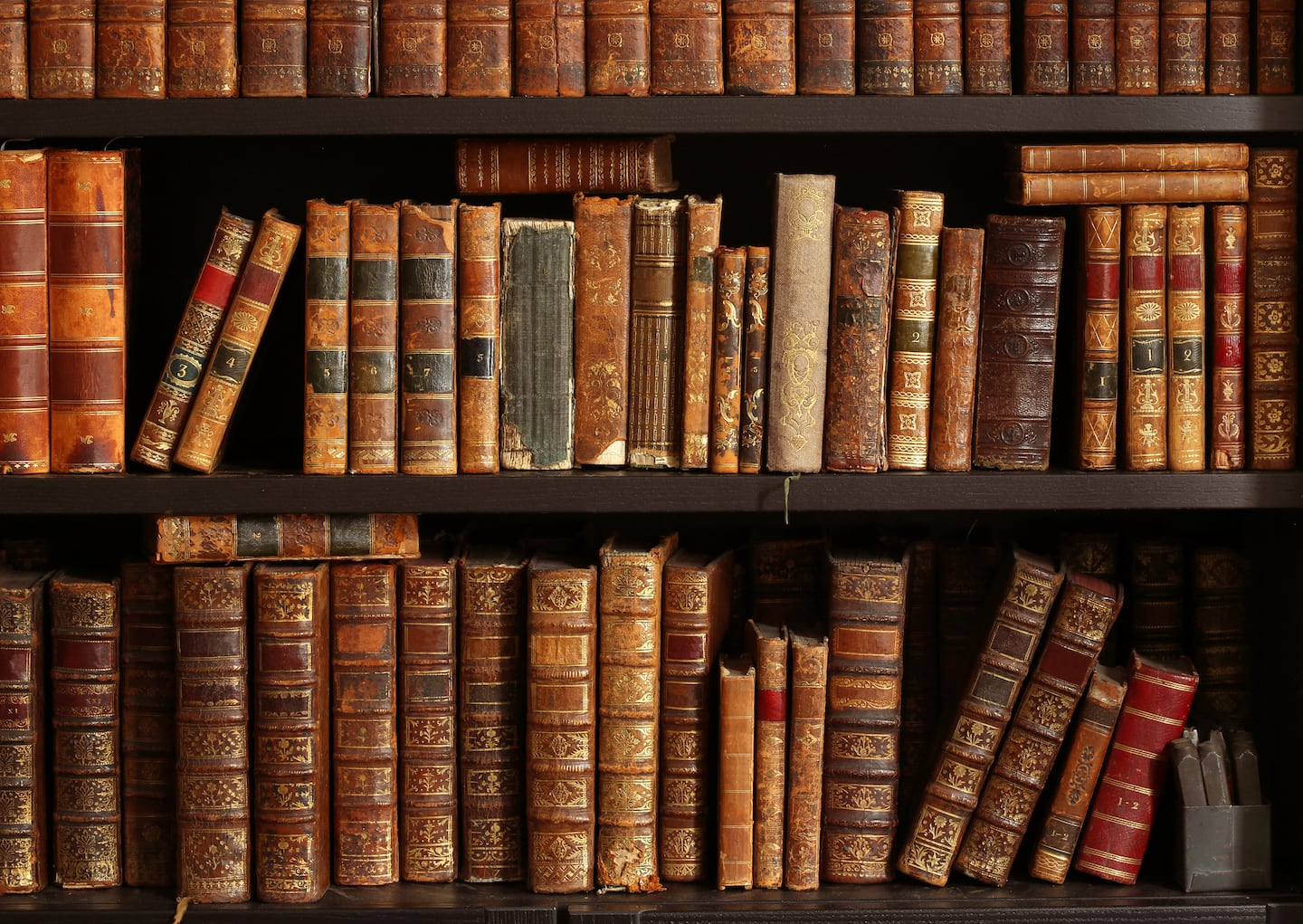
For the moment, digital preservation is considerably less stable than storing physical books and manuscripts, explained Shira Peltzman, associate director of digital preservation strategy at Yale’s Beinecke Rare Book and Manuscript Library. With a rare book, she told me, “you can take something off the shelf and it won’t be degraded. It’s treated with a certain benign neglect. But with digital copies, there are so many different layers of dependencies: It isn’t just the software that was used, but also the hardware and the operating system are factors in longevity.
“Our digital collections represent a constantly shifting window of technology,” she elaborated. “We get floppy disks, now we are receiving email exports, or data that was created on mobile phones. In a digital environment change is a given.”
When I solicited her opinion on WordPress’s ballyhooed 100-year website, she answered diplomatically: “That kind of risk mitigation is easier to accomplish at the institutional level than at the individual level. It’s debatable whether that [hundred-year] claim would hold up with time and scrutiny.”
A curious paradox in the world of physical books is that older books last longer than modern ones. “Books used to be luxury objects that were made to last forever,” Reid-Cunningham said. “The children and grandchildren were intended to use that atlas or dictionary. Now they are cheaper and more disposable — not necessarily a bad thing.”
I mentioned that a friend has a copy of Samuel Johnson’s 1755 dictionary sitting on his library shelf, in excellent condition. “Yes, but it’s probably not as solid as a book made in the 1500s or the 1300s,” Reid-Cunningham said. “Some early codices from the Middle Ages are in great condition.”
When Reid-Cunningham taught book preservation, he would say to students: “We are not actually preserving these books, so much as postponing their inevitable demise.”
The Library of America, devoted to publishing authoritative texts of classic American literature, uses high-quality paper and special binding technology that it says will “last for centuries.” The library’s president, Max Rudin, admitted in an interview that the longevity claim “may be tempting fate, as we have only been in business for 50 years. I do predict that our books will outlive you and me.”
As the Poles say on birthdays: Sto lat! (A hundred years.) I hope Rudin and I will both live to be 100. And that our books last forever.
Alex Beam is a contributing Globe Opinion writer. Follow him @imalexbeamyrnot.