
EUGENE, Ore. (KATU) — A California couple was sentenced after illegally moving wildlife items to and from Oregon.
On Oct. 23, Linh Luu and Kevin Le from Anaheim, Calif., pleaded guilty in federal court in Eugune, Ore. to violating the Lacey Act. The court sentenced them to three years’ probation and a $10,000 fine each for trafficking wildlife between Oregon and Vietnam.
The Lacey Act is the country’s oldest wildlife trafficking statue, and it prohibits the selling or buying of wildlife that was illegally exported or imported.
According to the U.S. Department of Justice (DOJ), Luu and Le admitted to processing over $51,000 in payments to an individual in Vietnam to illegally move wildlife parts in and out of Oregon between September 2019 through May 2021.
READ ALSO | 4 arrested in human sex trafficking case involving minor in Bend/Redmond area
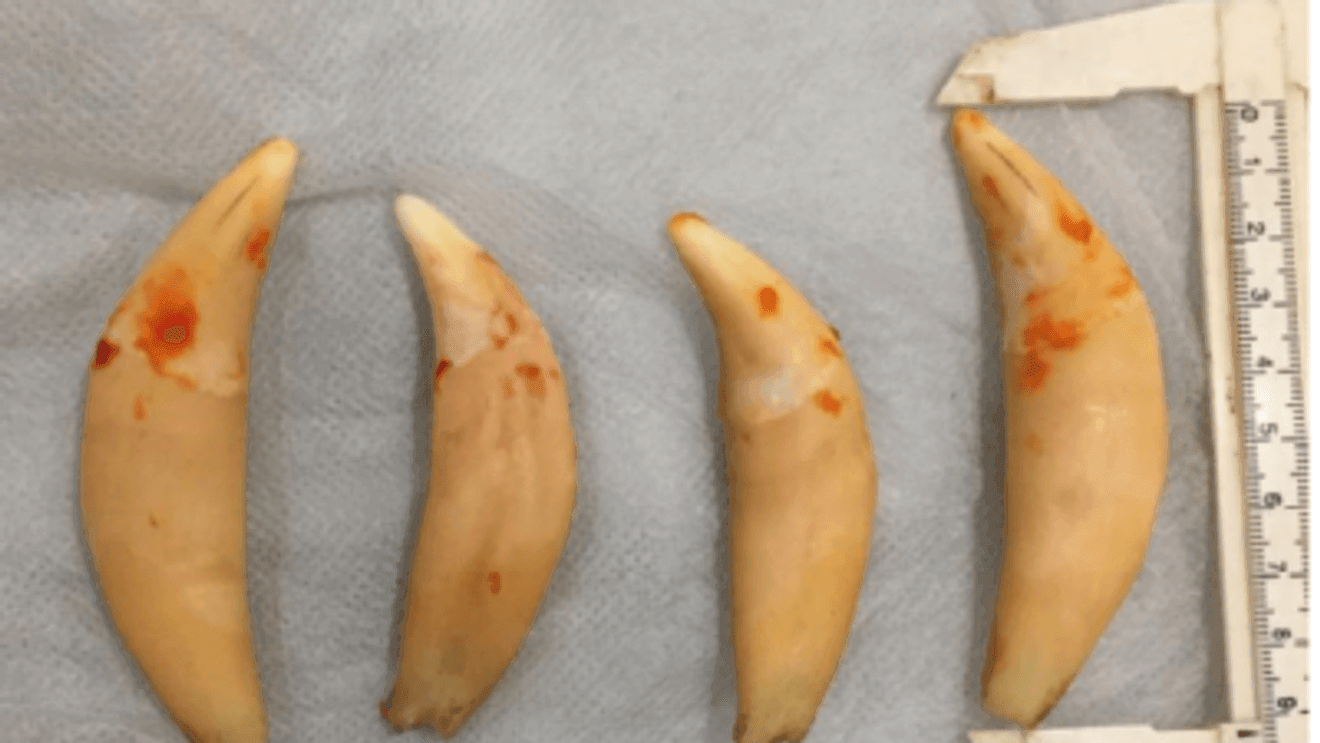
The couple shipped black bear gallbladders and cougar bones to Vietnam, according to the DOJ. They imported lion teeth, a tiger belt and black and white rhinoceros horns to Oregon.
Investigators said the couple would disguise wildlife parts to get through customs. They decorated part of a rhino horn in rhinestones to disguise it as a house good.
An undercover federal agent met up with Luu and Le in a parking lot back in December 2020, investigators said. During that meeting, the couple accepted $12,000 as a cash down payment for part of a rhinoceros horn and spoke about ways to avoid U.S. banking regulations that could detect illegal transactions. They later received roughly $5,000 in electronic payments for the horn segment, which was shipped to Oregon. According to the DOJ, the sale was discussed as a way to build trust for future, larger deals.
Black bears and cougars are native to Oregon and used in traditional Asian medicine, investigators said.
All the wildlife parts trafficked in this case are listed under the Convention on International Trade in Endangered Species of Wild Fauna and Flora treaty, according to the DOJ. Nearly 200 governments signed that treaty to regulate commercial trade on species that are or are close to extinction, including the U.S. and Vietnam.
The U.S. Fish and Wildlife Service’s Office of Law Enforcement investigated the case, alongside Oregon State Police and Homeland Security Investigations.