
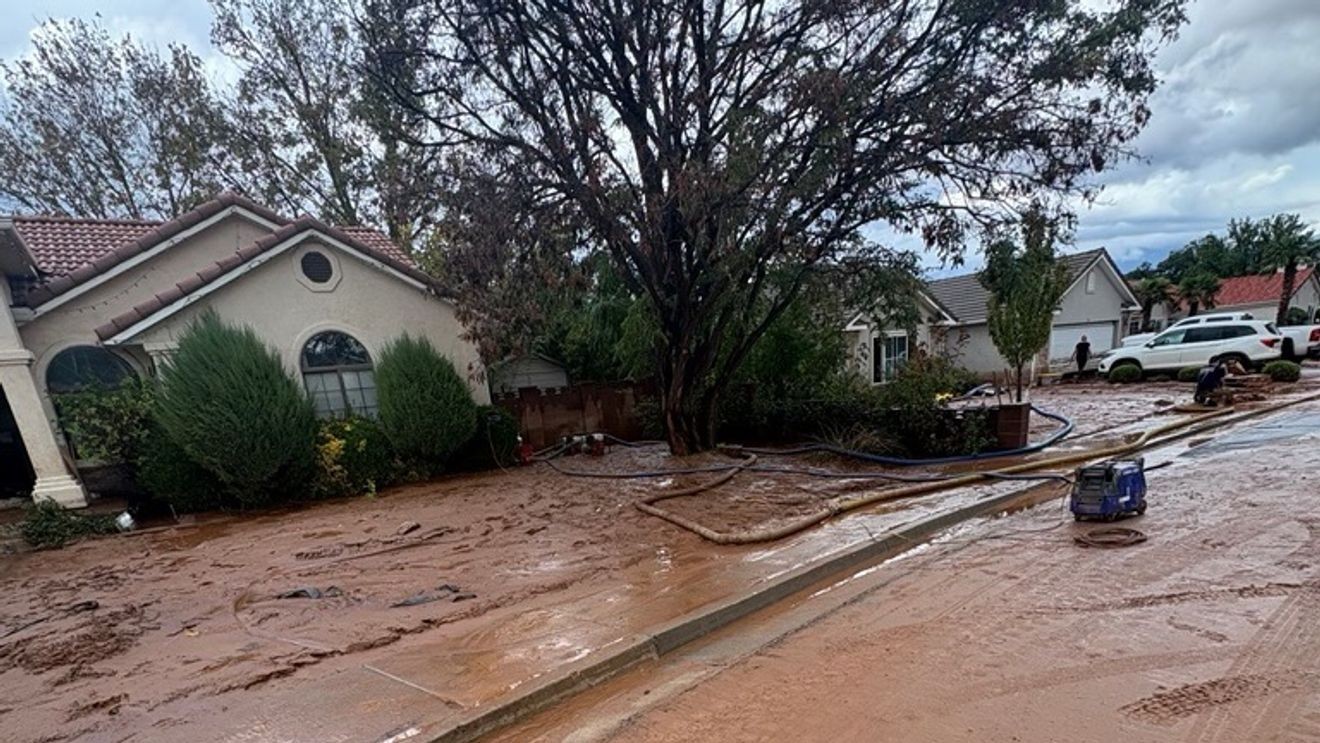
HURRICANE, Utah (KUTV) — Residents in Hurricane have called for answers about the city’s flood prevention efforts after another round of flooding damaged homes and forced families to restart the recovery process.
City officials estimated 130 residential structures sustained damage at one RV park alone, while homeowners in other neighborhoods reported repeated flooding in just two months.
For Mark Tabillos, who lives in the Pecan Townhomes, the latest flooding destroyed months of repairs to his family’s first home.
Tabillos and his wife purchased the home about a year ago, shortly before welcoming a baby. When flooding struck in August, the family was forced to move out while they repaired the damage.
“Having to take care of the baby and also being able to fix the house is a lot, especially the financial funds that we were having problems with,” Tabillos said.
The family has been staying in a friend’s casita while working to repair their home. They spent approximately $15,000 from emergency savings and donations to replace damaged cabinets, flooring, carpet and a bathtub.
With about 90% of the repairs completed, the family planned to move back into their home next week.
Then another flood hit, carrying a large shipping container into their front yard and damaging the home again.
“It’s pretty much done, like 90% of the house was done,” Tabillos said. “Now it’s all in shambles.”
Beyond the financial burden, Tabillos expressed frustration with what he believes was a lack of action by the city following the August flooding.
“In my opinion, I don’t think they did,” Tabillos said when asked whether the city had done enough to prevent additional flooding. “I did not see any changes with the flooding. The wash was still the same. There were still trees that were blocking the water from moving.”
“You would think that it would be better now, we would have less damage, but we didn’t,” he added.
Earlier this month, 2News contacted Hurricane officials about maintenance and flood prevention efforts along Gould Wash.
The city declined an interview but provided a written response stating crews had removed debris from bridge structures and areas where material had accumulated, along with clearing drains near the townhomes.
Officials also indicated they had not anticipated flooding in specific areas and had minimal concerns about debris entering the city from outside its boundaries.
Following the latest flooding, 2News again requested an interview with city officials to determine whether cleanup efforts included sections of Gould Wash near the affected neighborhoods.
The city said officials were unavailable for interviews. When 2News attempted to reach them in person, receptionists said officials were attending meetings related to the flooding.
The city recorder directed additional questions to email, but the city responded by referring 2News to a previously issued news release.
According to that release, Hurricane officials had taken proactive measures ahead of the storm, including monitoring weather conditions, assessing flood risks and preparing critical infrastructure and vulnerable areas such as Gould Wash.
However, the city did not directly address several questions from 2News, including whether crews had cleared portions of the wash near residential neighborhoods and why significant flooding occurred despite the preparations.
Questions about additional financial relief for residents and potential flood prevention improvements also went unanswered.
Those possible improvements included more frequent wash maintenance, higher retention walls and an earlier flood warning system.
City crews have been assisting with road cleanup and removing debris following the latest flooding. Tabillos said the city also covered one month of his utility bills after the August flood.
Still, he and other affected residents want additional financial assistance and a more comprehensive plan to prevent future damage.
Tabillos said he now expects to file for bankruptcy and wants to move away from the neighborhood. However, he worries the repeated flooding has made his home nearly impossible to sell.
“No one really wants to buy a house that has been flooded twice in a row in just a span of like two months,” he said.
For now, Tabillos and his family face another round of repairs with no certainty about whether their home will be protected from the next storm.
_____