
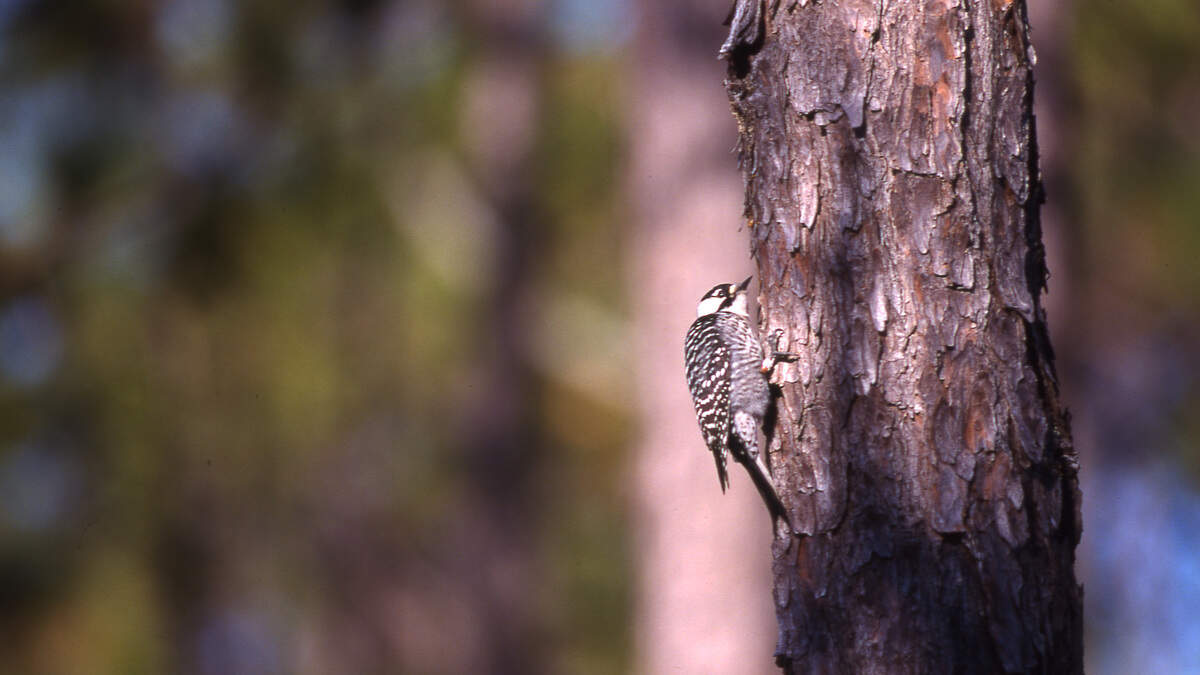
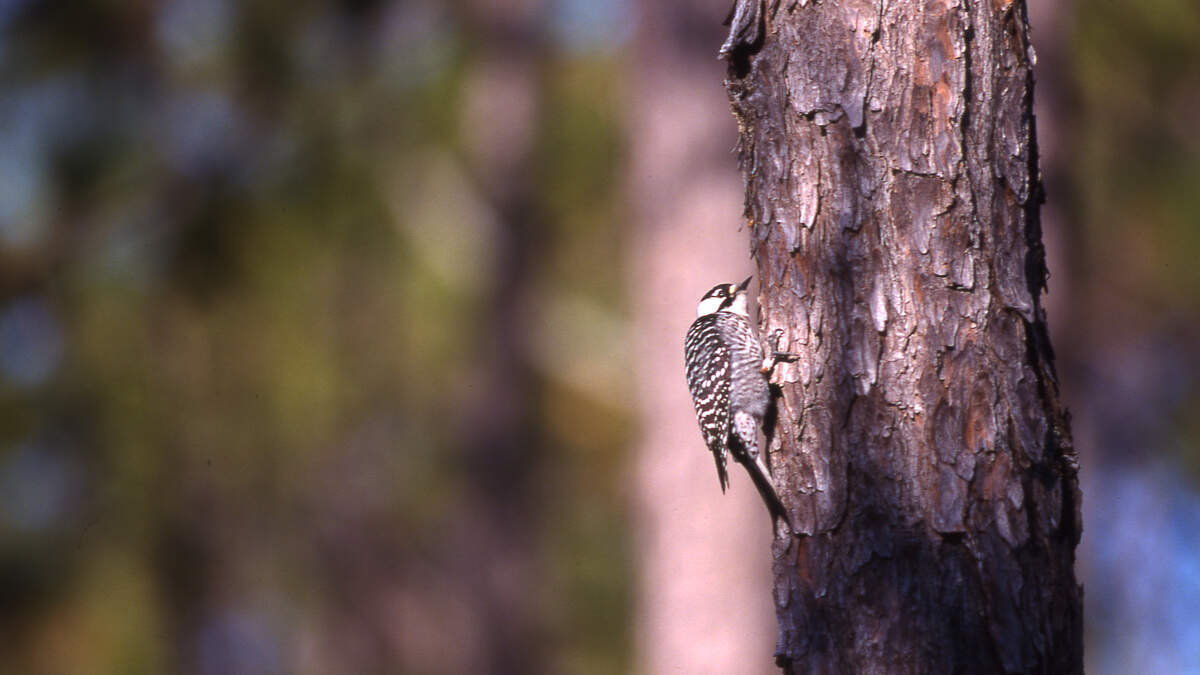
The red-cockaded woodpecker was moved from being listed as ‘endangered’ to ‘threatened’ after decades of work to restore its longleaf pine habitat. Recent changes to the Endangered Species Act could make it harder to protect animals’ habitats from development.
North Carolina Wildlife Resources Commission
From sea turtles to giant salamanders, North Carolina’s waters, mountains and forests are teeming with species found nowhere else in the world.
But after recent cuts to the federal Endangered Species Act, conservation groups worry that the state’s threatened and endangered species will have fewer protections from water pollution and habitat loss — especially as development on the coast and storm damage in the mountains have threatened some of North Carolina’s most famous endangered animals.
Ben Prater, the Southeast program director for the conservation group Defenders of Wildlife, called the changes a “complete erasure” of protections for endangered animals.
“[It’s] a very unforgiving, targeted approach that strips away really any of the regulatory teeth that for 50 years have helped to sustain dedicated efforts to identify when species are in trouble and to act swiftly to ensure that the species themselves aren’t directly impacted, but most importantly, the habitat that these species depend on is not destroyed and impacted,” Prater said.
Enacted in 1973, the Endangered Species Act makes it illegal to kill or harm endangered animals, protects “critical habitat areas” from development, and manages recovery plans.
Over the past three months, the U.S. Fish and Wildlife Service (USFWS) has drastically changed its interpretation of the act. While federal officials say the changes will help lower development costs, opponents argue that the act now has much less power to stop habitat loss.
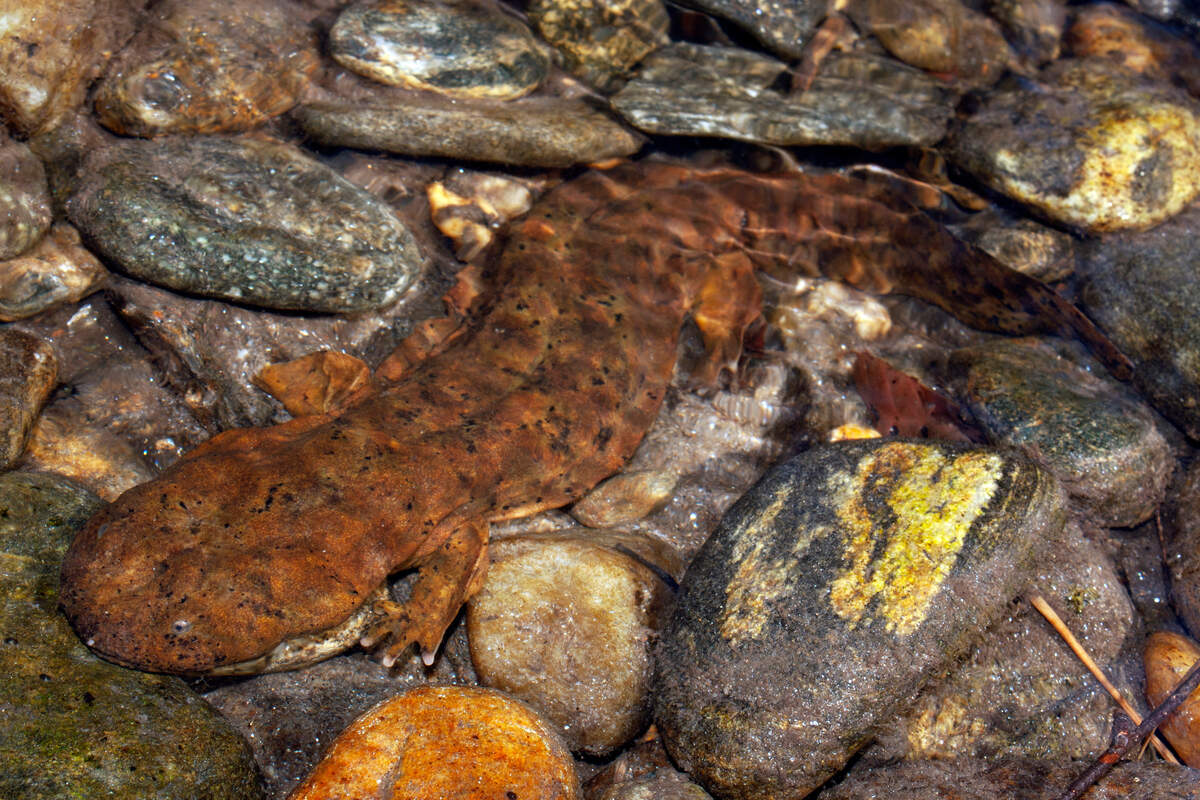 The eastern hellbender, a giant salamander that can grow up to two feet long, is endangered in North Carolina, and the state recently asked to add the species to the federal endangered species list. North Carolina State Parks NC Wildlife Resources Commission opposes changes
The N.C. Wildlife Resources Commission, which monitors endangered species in the state, wrote a letter to USFWS opposing the changes in May 2025, when they were first proposed.
“Listed species are rare, often small, cryptic, and located in habitats that are challenging to survey,” the letter reads. “Therefore, the most effective means of protecting listed species is to protect their habitat.… Eliminating the consideration of habitat impacts from the [Endangered Species Act] will directly impact species’ persistence and recovery.”
Sara Schweitzer, assistant chief of the commission’s wildlife management division, said her team is “still doing that work” to try to restore the habitats of endangered species.
“This has just started, so we don’t really know how it’s going to impact what we do necessarily,” Schweitzer said, “but our agency works so closely with the Fish and Wildlife Service and other federal agencies right now, and I don’t see that changing at all.”
How the Endangered Species Act has changed
In July, USFWS finalized new rules for the Endangered Species Act. The changes eliminated the act’s definition of “harm,” which made it illegal to destroy an endangered species’ habitat. They also rolled back protections for species designated as “threatened,” which had previously been subject to the same protections as endangered species.
And in September, USFWS and the National Marine Fisheries Service announced they’d be changing their interpretation of “take,” or what it means to kill an animal. Essentially, people and businesses now won’t be punished for killing an endangered species if they did so unintentionally, for example by cutting down trees.
In a July news release, U.S. Secretary of the Interior Doug Burgum said the act had “been weaponized to stop almost any new project in America, driving up costs for families, weakening our competitiveness, and undermining our national security.” Under the Endangered Species Act, new construction that overlaps with an endangered species’ habitat can often face extra review.
However, the changes made by USFWS mean that construction and development projects will now face less scrutiny over actions like logging, mining and dredging that could harm endangered species and their habitats.
“As a metaphor, you could suck all the water out of a pond and say, ‘Well, we didn’t kill the fish,’ and that seems to be what the federal government is aiming for now,” said Heather Clarkson, an outreach representative with the conservation group Defenders of Wildlife. “As we remove these provisions, you know, you can pretty much do anything up to the point of actually taking the life of the animal and you’re scot free. That just doesn’t jibe with reality.”
The shifts are facing several legal challenges, including a lawsuit filed Wednesday by Earthjustice and other environmental groups.
North Carolina state law also prevents the state from enacting any policies on endangered animals that are stricter than the federal government’s laws, Schweitzer said. That could mean that endangered species will now have different protections in different states, even though most species’ habitats span several states.
 Wood storks, a bird species that nests along North Carolina’s coast, were recently removed from the federal endangered species list. North Carolina Wildlife Resources Commission In NC, shrinking habitats pose a risk to animals
While not all of North Carolina’s species will face direct consequences from the rollback of the Endangered Species Act, Clarkson and Prater said water-dwelling creatures could face the biggest risk.
Fish, amphibians, reptiles and salamanders are highly sensitive to slight changes in water chemistry, meaning that pollution and runoff from new development can have a major impact on these species.
In the past two years, two North Carolina species have been proposed to be added to the endangered species list — the eastern hellbender, a species of mountain-dwelling salamanders that can grow up to two feet long, and the mimic glass lizard, a tiny, green legless lizard that’s struggled to survive as its longleaf pine habitat rapidly shrinks.
Local to Raleigh, the Neuse River waterdog, a small, brown-speckled salamander that’s only found in the Neuse and Tar Rivers, is a threatened species that has already faced dwindling numbers in the past few years.
The Endangered Species Act has also helped North Carolina biologists recover two species that used to be on the endangered species list — the red-cockaded woodpecker and the wood stork.
Red-cockaded woodpeckers, Schweitzer said, “have been downlisted from endangered to threatened, and a lot of that work that’s been done … has been to recreate that longleaf pine habitat. We lost a lot of longleaf pine in North Carolina, way back when there was logging for various purposes in the use of turpentine.”
The wood stork has been completely removed from the endangered species list.
Along North Carolina’s coastline, construction and shoreline restoration projects could put marine animals at risk. Sea turtles and piping plovers are two endangered species that can often see changes to their habitat during beach renourishment projects along the state’s coast, Schweitzer said.
Even with the new rules, she said, any developers working on projects that overlap with an endangered species’ habitat will have to consult with USFWS biologists.
“When we do work on our coast, it involves [the U.S. Army Corps of Engineers], … so whenever those actions begin, they have to consult and make sure that they are upholding all the provisions.”
This story is available free to all readers thanks to financial support from the Hartfield Foundation and Green South Foundation, in partnership with Journalism Funding Partners, as part of an independent journalism fellowship program. The N&O maintains full editorial control of the work. If you would like to help support local journalism, please consider a digital subscription, which you can get here.
This story was originally published October 24, 2026 at 10:16 AM.

The News & Observer
Lily Carey is the environment and climate change reporter for The News & Observer. She covers environmental issues, extreme weather, the energy industry and more in the Triangle and Eastern North Carolina.