
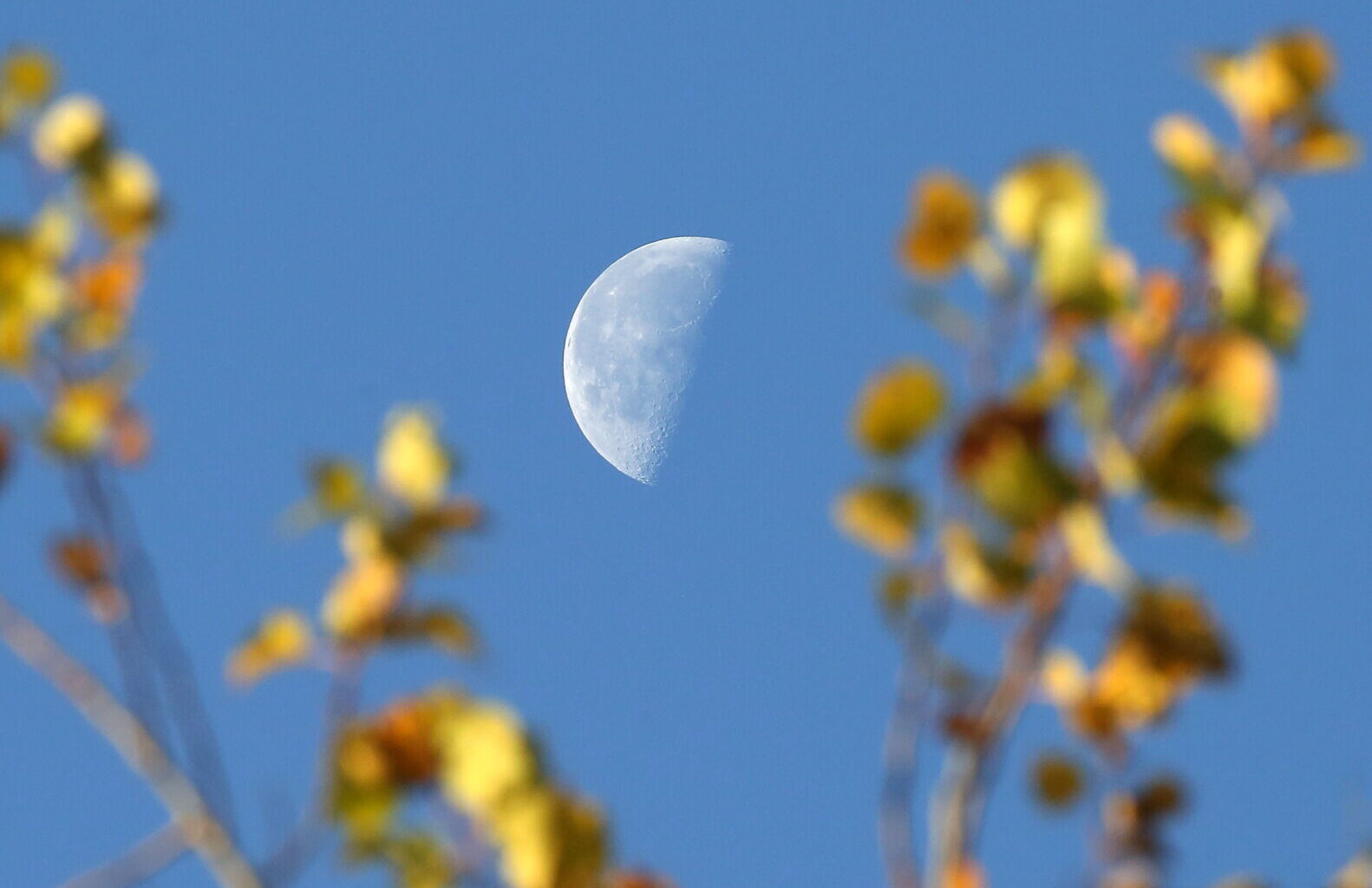
Most of the time we picture the moon in the nighttime sky. But it also spends plenty of time in daylight. Familiarizing yourself with the moon’s daytime persona gives us a big-picture sense of how and in what direction it moves. You’ll also become an ace at finding it both day and night.
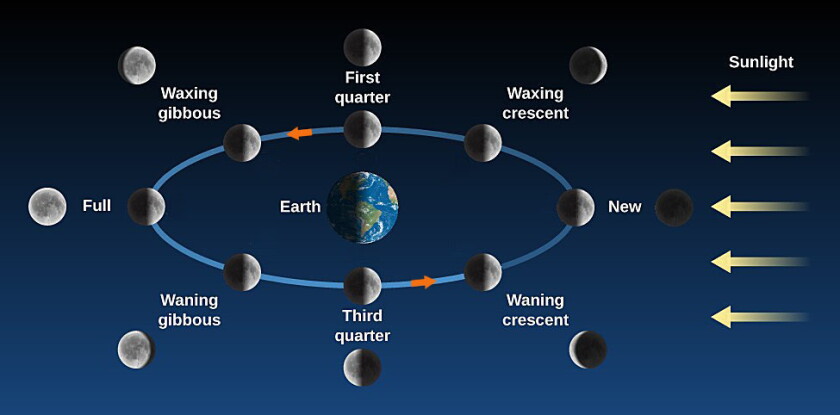
As the moon orbits Earth, its changing angle to the sun creates the different lunar phases. When it’s between Earth and sun in new phase the near side is in darkness and invisible. When it’s opposite the sun we see the entire nearside in sunlight as the full moon. From crescent to full — the top half of this diagram — you can often see the moon in the afternoon sky before sunset. From just after full until it’s a waning crescent, the moon is visible in the morning sky after sunrise.
Contributed / NASA with additions by Bob King
First, let’s consider a couple key facts about the moon. It orbits the Earth, moving eastward a little more than a fist per day. Facing south, that would be to your left. This delays its rising by roughly an hour a day. During its orbital run, the moon’s phase swells from waxing crescent to half (first quarter) to full. A full cycle from one new moon to the next takes 29.5 days.
Prior to full moon, the moon rises before sunset, so it’s visible in the afternoon and early evening before sundown. That said, it’s tricky to see the thin, waxing crescent before sunset because it’s near the sun and often lost in its glare. If you wait until it’s a thick crescent or a half-moon, it’s much easier to spot because the moon is now well to the east (left) of the sun. It rises around noon and by mid-to-late afternoon clears the trees and catches our attention in the eastern sky. The moon looks like a paler version of its nighttime self because its brilliance is diluted by daylight.
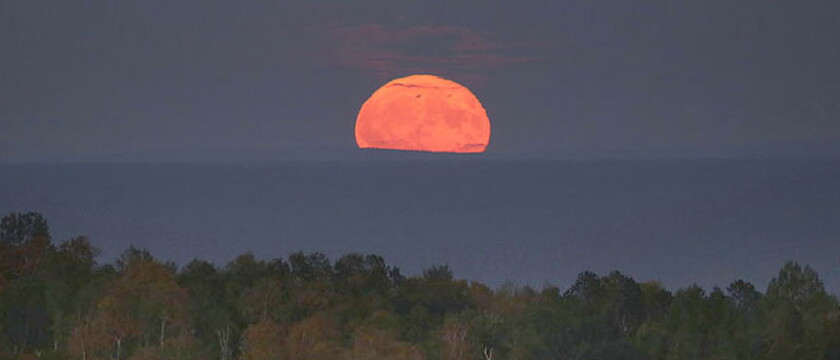
The full moon rises over Lake Superior in Duluth back in October 2017. Watch for the Full Hunter’s Moon rise on Sunday night, Oct. 25.
Contributed / Bob King
At full phase, the moon is directly opposite the sun and rises around sunset. We’re queued up for a full moon this weekend. On Sunday night, Oct. 25, the Hunter’s Moon rises in the northeastern sky at 5:26 p.m., about 36 minutes before sunset.
After full phase the moon wanes. Its phase lessens from full to half to morning crescent — identical to the evening sequence but in reverse. Recall that each successive night the moon rises about an hour later. Just a few nights past full, you might already in bed before the moon clears the trees! In fact, depending on your bedtime you may not see the moon next until it returns more than a week later to the evening sky.
When the moon rises long after sunset it doesn’t have enough time to complete its arc of the sky until late in the morning or even by early afternoon. That means we can often spot it in the morning sky after breakfast. We’ll have that opportunity over about the next 10 days.
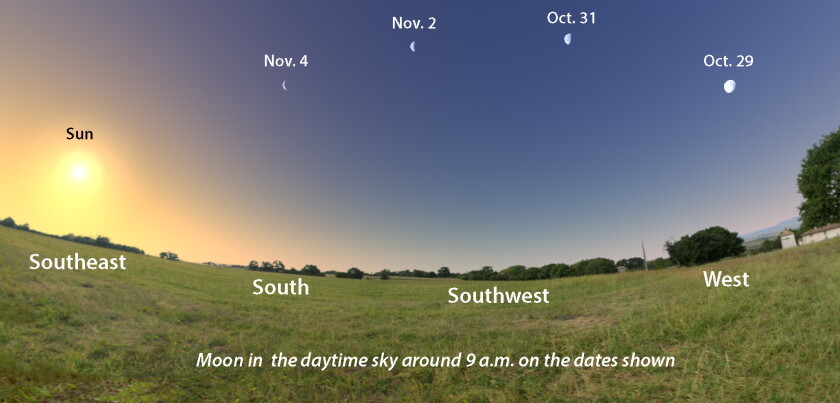
The moon’s phases and approximate positions are shown for Oct. 29 through Nov. 4 when it will be easily visible in the morning sky after sunrise.
Contributed / Stellarium with additions by Bob King
On Oct. 29, the waning gibbous moon shines in the western sky around 9 a.m. In the mornings that follow, it gets higher and higher while slimming in phase. By Nov. 1, it’s a half-moon (last quarter) and high in the southwestern sky. As it wanes to a crescent, the moon moves ever closer to the sun, making Nov. 5 about the last morning it’s easily visible. By keeping tabs on the moon both night and day, you’ll understand how it works in no time. Well, in about a month, weather permitting!

“Astro” Bob King is a freelance writer and retired photographer for the Duluth News Tribune. You can reach him at nightsky55@gmail.com.