
NEED TO KNOW
Researchers say this is the first documented evidence of a raptor feeding on a tyrannosaur
The Albertosaurus was estimated to be 10 or 11 years old when it died
The unhealed tooth marks suggest scavenging, though cannibalism remains a less likely explanation
A small raptor may have taken a bite out of one of the most fearsome predators of its time.
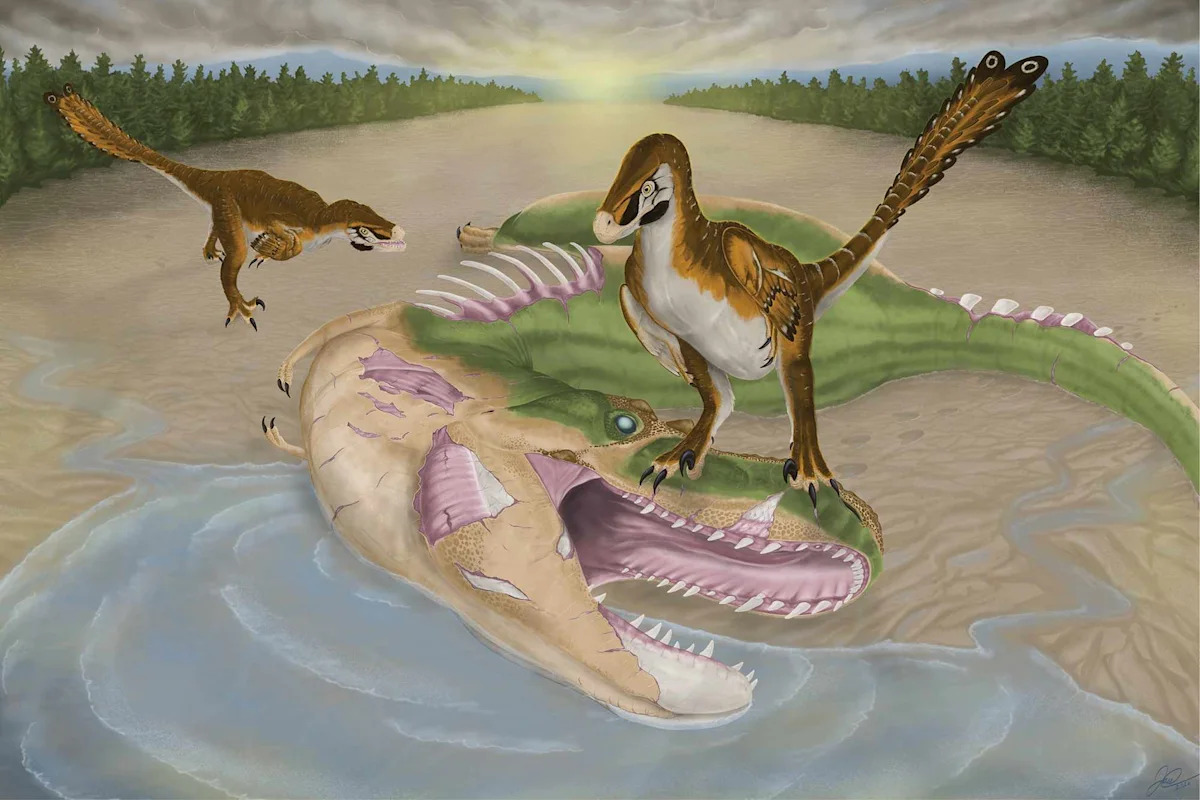
Researchers at the University of Alberta say tooth marks on the jaw of a young Albertosaurus, a relative of Tyrannosaurus rex, were most likely made by a dromaeosaurid, the group of small dinosaurs commonly known as raptors. Their study, published in the Journal of Paleontology, describes it as the first documented evidence of a raptor feeding on a tyrannosaur.
Paleontologist Philip Currie, who supervised the research, said in a university announcement that the finding shows “a very small dinosaur eating a very big, mean, nasty dinosaur.”
According to Earth.com, the Albertosaurus fossil first surfaced in 2022, when Peter Hodgkinson found broken skull bones at the base of a mudstone slope in the Red Deer River valley of Saskatchewan, Canada. He alerted the Royal Tyrrell Museum, and crews collected the bones between 2022 and 2025.
While preparing them, museum technicians noticed grooves that looked like bite marks and sent the specimen to the University of Alberta, where paleontology master’s student Joshua Doyon led the analysis.

Artistic rendering of an Atrociraptor marshalli
Credit: FunkMonk/Wikipedia
According to the university, Albertosaurus, meaning “Alberta lizard,” ruled the region as its top predator between about 73 and 67 million years ago. Growth lines in the specimen’s limb bone suggest the creature was at least 8 years old when it died, though researchers believe it was likely 10 or 11, measuring roughly 20 feet long and weighing around 1,175 pounds.
The marks appear on two lower-jaw bones: three nearly parallel scrapes on the inside, and a small groove near the back that carries about 28 fine lines from a single serrated tooth. By measuring the spacing of those lines and comparing them with the teeth of dinosaurs known from the area, the researchers narrowed down the culprit to a raptor weighing roughly 35 to 40 pounds.
The bite marks also show no signs of healing, meaning they were made around the time of death or after it. Doyon told CTV News the marks sit “in a really awkward spot to be attacking it” while the animal was alive, suggesting the smaller predator scavenged it rather than taking it down itself.
Never miss a story — sign up for PEOPLE’s free daily newsletter to stay up-to-date on the best of what PEOPLE has to offer, from celebrity news to compelling human interest stories.
Researchers also suggest, as an alternative explanation, that if a raptor wasn’t responsible, the marks could have come from a baby Albertosaurus, which would make it a case of cannibalism. However, the team considers that scenario less likely.
The fossil is now part of the Royal Tyrrell Museum’s collections in Drumheller, Alberta.
Read the original article on People