
CHICAGO (WLS) — Chicago hospitals say they are more prepared than ever to respond to a potential Ebola case as a deadly outbreak in Africa continues to expand.
The outbreak in Central Africa is the second largest in history, with nearly 10,000 cases reported since it began six months ago.
ABC7 Chicago is now streaming 24/7. Click here to watch
Health officials have reported cases in the Democratic Republic of Congo, Kenya, Nigeria, Uganda, and France. There have been no reported cases in the United States, and officials say the risk to Americans at home remains low.
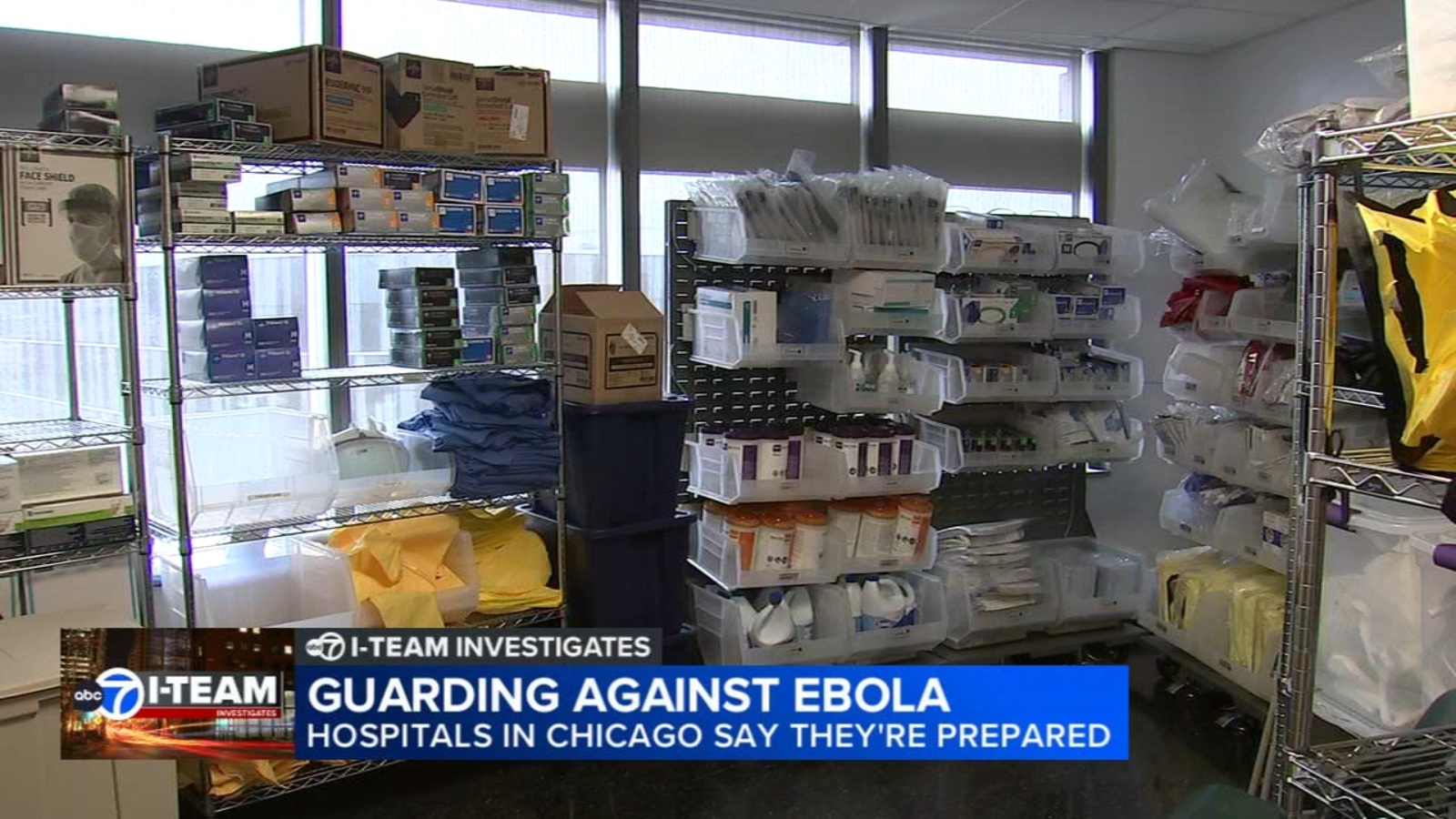
At Rush University Medical Center, members of the hospital’s infectious disease unit recently demonstrated the facility’s capabilities for treating highly infectious diseases, including Ebola.
“We are on the 10th floor in our medical intensive care unit,” said Dr. Brian Stein, Chief Quality Officer at the medical center.
Stein said Rush has specialized infrastructure designed to contain highly infectious dangerous pathogens.
“We have the ability to turn this entire unit to negative pressure,” Stein said.
“The airflow would actually flow into the room and be pulled into the room rather than pushed out into a hallway.”
Hospital officials said those preparations are intended for a worst-case scenario outbreak, sometimes referred to as a “black swan” event. With O’Hare International Airport serving as a major international hub, infectious disease specialists say global travel remains a factor in disease transmission.
“The reality is that someone with Ebola could get on a plane and show up anywhere in the world,” said Dr. Michael Lin, an infectious disease specialist at Rush University Medical Center.
At the same time, Lin said widespread transmission in the United States remains unlikely.
“We don’t think that it has pandemic potential in the United States from the standpoint of spreading widely,” he said.
According to Rush officials, only Rush University Medical Center and Lurie Children’s Hospital in Chicago are designated centers to treat highly infectious diseases such as Ebola.
Rush CEO Dr. Omar Lateef said hospitals made significant changes following the Ebola scare in 2014, when health systems worked to establish facilities capable of handling infectious disease outbreaks.
“When it first happened and patients actually got on U.S. soil with Ebola, we had to make sure we had the right resources set up to care for those patients,” Lateef said.
He said healthcare providers have since gained valuable experience that has strengthened preparedness efforts.
“What’s different now from that is we’ve had a lived experience to be mentally prepared, physically prepared and have the resources,” Lateef said.
Lateef also pointed to lessons learned during the COVID-19 pandemic, saying the experience reshaped how healthcare systems collaborate during public health emergencies.
“We learn how to break apart fragmentation to work together. Many communities stop working in isolation as one health system and other health system,” Lateef said. “Those learned experiences from the past will help us for the future. If it’s about Ebola or the next infectious disease.”
As health officials continue efforts to control the outbreak overseas, Chicago hospitals say they are relying on lessons from past public health crises and specialized facilities to prepare for the possibility of future infectious disease threats.
Copyright © 2026 WLS-TV. All Rights Reserved.