
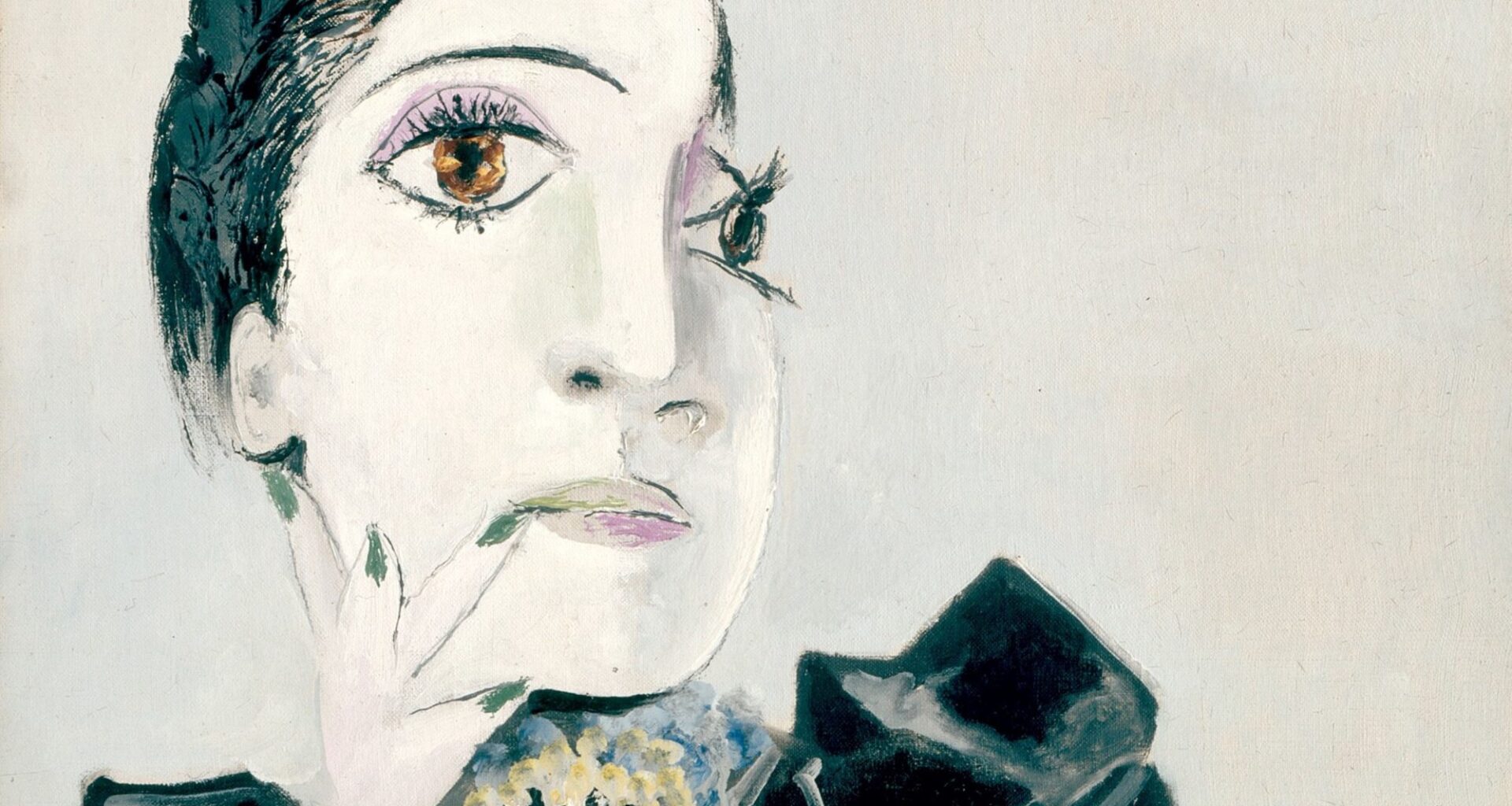
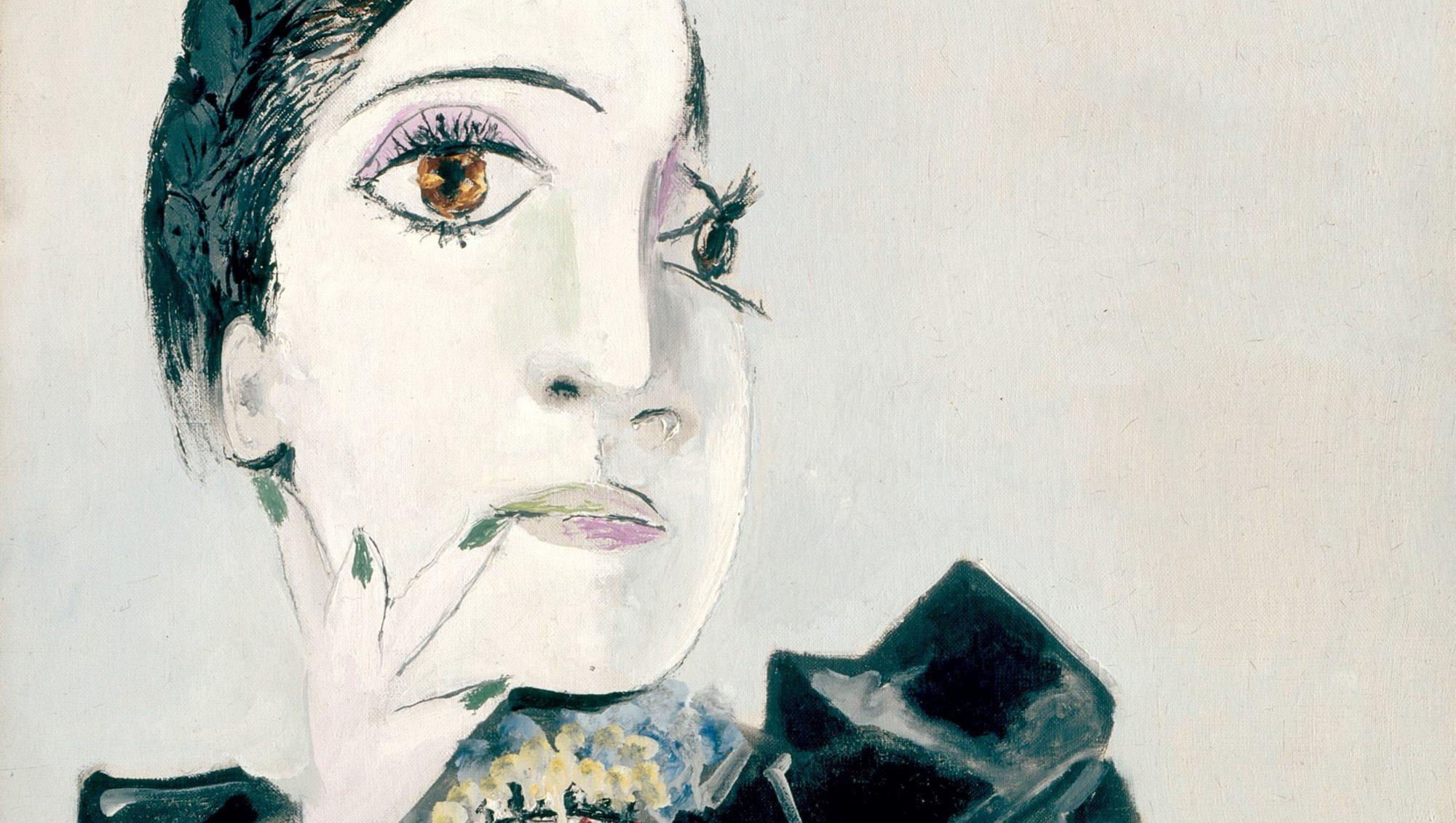
“Picasso-Klee-Matisse” arrives in Miami after stops in Paris, Madrid, Shanghai, Tokyo, Venice and beyond.
Provided by Museum Berggruen, Neue Nationalgalerie, Stiftung Preußischer Kulturbesitz. © 2026 Estate of Pablo Picasso / Artists Rights Society (ARS), New York. Photo by Jens Ziehe.
“Paintings,” the legendary late art collector Heinz Berggruen once said, “want people to look at them and enjoy them; they want to inspire meditation and enhance our life experience.”
None of which, of course, can happen if those works remain cloistered in dark, climate-controlled storage units or personal collections or even, to some degree, in the static gallery show of a single distant museum. Which is why it is so appropriate that almost 100 works of canonical European Modernism from Berlin’s Museum Berggruen and Berggruen family collections will be on display at the Pérez Art Museum Miami (PAMM) beginning Oct. 29. The exhibit, “Picasso-Klee-Matisse: Masterpieces from the Museum Berggruen,” arrives in Miami after much-heralded stops — albeit in different, curator- and location-driven iterations — in Paris, Madrid, Shanghai, Tokyo, and Venice, among other major cities.
Miami-born, Europe-educated PAMM associate curator Maritza M. Lacayo studied art history at the American University of Paris and wrote her master’s thesis at the University of Glasgow on the “poème-objets” assemblages of surrealist André Breton. For her, PAMM’s forthcoming exhibition, which brings “the Museum Berggruen collection into conversation with works from PAMM’s permanent collection,” is not only “an institutional milestone and an opportunity to broaden access to some of the defining works of 20th-century art,” but an avenue to find cross-cultural synergy between the two worlds within which her curatorial career has existed.
“What makes the Berggruen collection so powerful and resonant is that every time it goes to a different city, each new curatorial team is given a huge amount of freedom to contextualize it for their individual audience,” Lacayo, who co-curated the exhibit with Museum Berggruen curator Natalie Zimmer, tells New Times. “So, as it travels, the collection continues to live and breathe and evolve and gain new meaning…We felt a tremendous responsibility to help our audiences connect with these works in a way that honors that vitality and versatility.”
To better tease out the threads that reveal the verdant, sprawling art history tapestry large enough to encompass both the powerhouse marquee artists Berggruen delivers — Pablo Picasso, Paul Klee, Henri Matisse, Paul Cézanne, Alberto Giacometti — and the Latin American modernist masters in the PAMM permanent collection — Diego Rivera, Joaquín Torres-García, Wifredo Lam — Lacayo and company chose to organize the exhibit “thematically around still life, portraiture, interiors, landscape, and the emergence of Cubism” rather than individual artists.
“By embedding artists our traditional PAMM audience will recognize into the Berggruen collection, I think we provide people an easier contextual entryway to appreciate these works and see how their creators influenced one another,” Lacayo says, adding, “We don’t want there to be sections that are too concentrated with one artist. We really want them to play with one another.”
Another compelling perception-shifting twist within the exhibition is rooted in gender. The largely female curatorial team brings much-needed context to a male-dominated collection. “The way I write about Dora Maar, for example, is not focused on her role as Picasso’s sad ex-lover, but on her brilliance as a photographer, artist, and individual,” Lacayo says. “Those seemingly little shifts can often make a tremendous difference. I hope that later, when someone else curates a show with the Museum Berggruen, our scholarship and research will have helped to pivot the conversation in a more interesting, progressive way.”
Even by the lofty standards PAMM has set as one of the most forward-thinking, innovative, and cleverly curated art institutions in the nation — fight us — this is a particularly golden moment in the museum’s history. “Picasso-Klee-Matisse” arrives at a time when PAMM is already doing gangbusters business hosting ten magnificent and imposing pieces from Jean-Michel Basquiat (courtesy of the Kenneth C. Griffin Collection); 40 works of paintings, photography, video, and installation art from conceptual art pioneer John Baldessari (from the Craig Robins collection); “One Becomes Many,” an exhibition featuring 11 Black Brazilian artists; and “This is America,” another Lacayo-led effort drawn from the PAMM collection offering “a multiplicity of perspectives on American history and identity.”
The winding, self-guided journey through the PAMM galleries encourages viewers to balance revisiting what they already love with discovery, between deepening their existing relationship to an artist and being steeped in the context that helps them find their way to a new artist, a new form, a new medium.
Finally, the exhibit also features some of Heinz Berggruen’s own catalog writing; an important inclusion not only because it represents his work as a publisher and a window into his thoughts on the pieces on display, but, more essentially, as a reminder that his life story is, at its essence, a tale of the power of art and what ultimately triumphs and perseveres.
As a young man, Berggruen, a Jew, emigrated to the United States in 1936 to escape from a Nazi Germany then at war with what it derided as “degenerate art.” He worked as an art critic, served in the U.S. Army, served as a curator at the San Francisco Museum of Modern Art, made famous friends in the art world, had an affair with Frida Kahlo (!), and collected art across the world. In 1996, he returned to Berlin to curate a museum bearing his name filled with transcendent art, much of which outlived the men and movements that tried to stamp it out.
If that subtext doesn’t “inspire meditation and enhance our life experience” in times like these, what will?
“Picasso-Klee–Matisse: Masterpieces from the Museum Berggruen.” Opening Thursday, Oct. 29, at Pérez Art Museum Miami, 1103 Biscayne Blvd., Miami; 305-375-3000; pamm.org. Museum admission costs $0 to $18.