
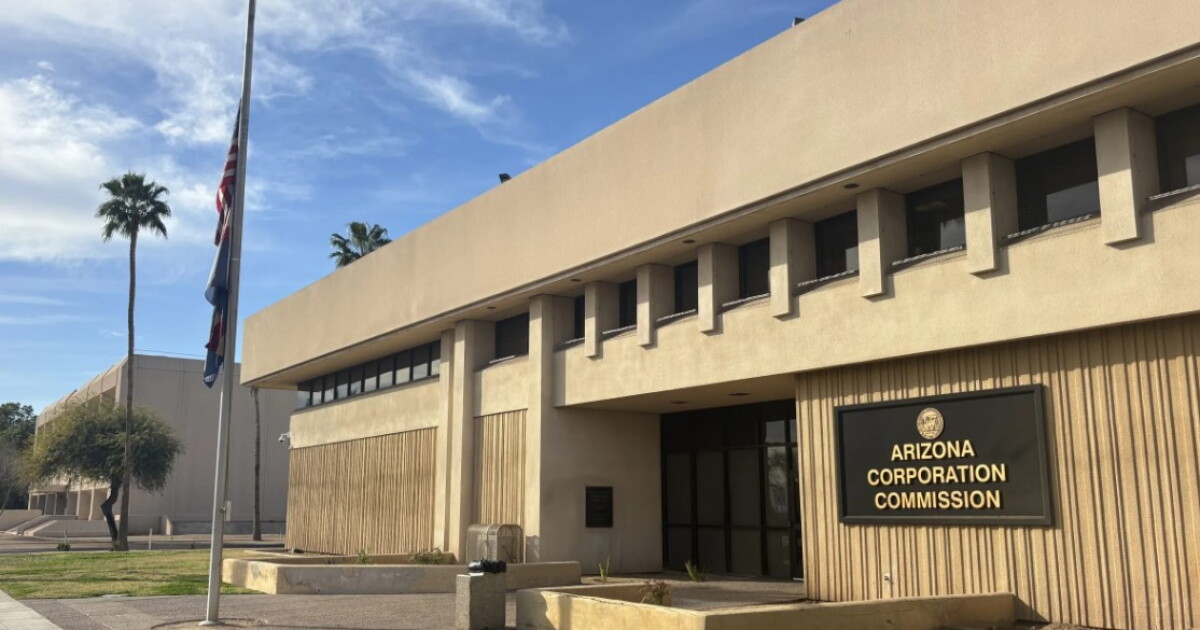
Amid ongoing rate cases for two of the state’s largest electric providers, Arizona’s top utility regulators have spent time embroiled in an internal employment dispute that has spilled into public view.
Earlier this month, Arizona Corporation Commission Executive Director Doug Clark fired a policy adviser who worked for Commissioner Lea Márquez Peterson, leading to allegations Clark overstepped his authority by dismissing an employee who reported directly to an elected official.
The commissioners already voted on hiring an outside attorney at a meeting on Oct. 7.
But they later determined that vote was null and void.
That’s because the agenda for that meeting didn’t explicitly spell out what the commissioners planned to vote on, which could violate a state law requiring elected officials to inform the public about what they plan to discuss in open meetings.
The firing
The dispute centers on Clark’s decision to fire Laurie Woodall, who had worked for Márquez Peterson since early 2023.
In a statement, Márquez Peterson said she wasn’t consulted about the decision and only found out about the firing via an email on Oct. 1.
Woodall was fired for “insubordination to the executive director,” Márquez Peterson told KJZZ.
According to an investigation by an outside attorney, that came after Woodall refused to sit for an interview amid allegations that she violated the state employee code of conduct.
The investigation alleges Woodall repeatedly called for the firing of an attorney hired by General Counsel Tom Van Flein earlier this year, because that attorney was suspended by the State Bar of Arizona between May 2015 and November 2020.
The reason for the suspension is not known, and the attorney in questions’ name is redacted in the investigative report provided to KJZZ under Arizona’s Public Records Law. However, the report does state the employee disclosed he completed a two-year probation and has no remaining conditions on his licensure from the State Bar.
The employee blamed the suspension on a serious illness and disclosed it during the interview process for the commission job, according to the investigation by Michael Zoldan with the firm Shields Petitti Zoldan.
Woodall is accused of lobbying other staff to have the attorney fired. She allegedly told other employees that the attorney was a “bad hire” and said bringing him on was a “bad decision” and “a stain on the commission.”
Zoldan concluded Woodall’s alleged behavior could open up the Commission to legal action under the Americans with Disabilities Act and the Arizona Civil Rights Act.
Woodall declined to sit for an interview after Commission staff declined to provide a copy of the complaint or pay for an attorney to represent her, according to the investigative report.
Zoldan concluded that amounted to insubordination, which is a violation of state rules for employees, justifying “any discipline, up to and including termination.”
Woodall declined to comment.
In public meetings, both Márquez Peterson and Commissioner Rachel Walden disagreed with the report’s other conclusion that Clark had the authority to fire Woodall without Márquez Peterson’s permission.
“So no, the executive director of the Arizona Corporation Commission does not have the authority to unilaterally fire an employee of an elected commissioner,” Márquez Peterson said at a meeting on Oct. 7.
Van Flein and Clark said Zoldan received guidance from the Arizona Department of Administration and Attorney General’s Office about Clark’s power to dismiss policy advisors, though the exact nature of that advice is unclear.
“I never received any written documentation from ADOA,” Clark said. “That was handled by HR and (Administrative Services Director James Cook).”
The Arizona Department of Administration confirmed it reviewed the decision.
“The Human Resources Division of the Arizona Department of Administration has statewide responsibilities for reviewing State Personnel System agency dismissal packages,” spokesman Timothy Tait said. “The Arizona Corporation Commission asked for review of this dismissal package, as required by the relevant rules. Following ADOA’s standard procedure, this dismissal package was reviewed by ADOA.”
Richie Taylor, a spokesman for the Attorney General’s Office, said it advised the Department of Administration.
“We did not advise the ACC directly,” Taylor said.
The infighting
The fight over Woodall’s firing has exposed rifts between certain commissioners and the staff they have hired to run the day-to-day operations of the agency.
“I think we need outside counsel on this,” Márquez Peterson said before the vote to hire an independent attorney on Oct. 22. “This has become very messy. We received mixed information from our own general counsel at the time on this during the staff meeting.”
Van Flein, the commission’s top attorney, disagreed with Márquez Peterson and even accused her of violating ethics rules by misrepresenting the situation.
“It was not messy. It was a clean investigation by the independent counsel, and it’s appropriately done.,” he said, referring to the investigation by Zoldan.
Several commissioners pointed to the need to re-vote on the decisions they made during the Oct. 7 meeting, including hiring the outside counsel and redacting Woodall’s name from the official record.
The commissioners made that decision to scrub the record after consulting with Van Flein about whether that could violate the state’s Open Meeting Law.
“We’re kind of in a gray area here. It’s appropriate if the three of you say it is,” Van Flein said at the Oct. 7 meeting.
Around two weeks later, the commissioners changed their mind as it faces a complaint alleging it violated that law.
During the re-vote on Oct. 22, they voted 5-0 to unredact the record.
“I don’t think we should redact things that were done in an open meeting setting,” Márquez Peterson said.
Walden agreed with Márquez Peterson’s overall characterization of the situation.
“Things have been messy,” Walden said.
She questioned the way Van Flein and Clark have handled the Woodall investigation, including hiring Zoldan to perform an outside investigation without the knowledge or approval from the elected commissioners and failing to provide commissioners with timely information.
Walden also asked Van Flein why he advised them to redact the record earlier this month.
“I am not sure why counsel advised us to redact the meeting,” she said. “(State law) makes it really clear that redacting a public record is a class four felony.”
Van Flein said the commissioners should have moved into a private executive session before discussing personnel issues, and the redaction was a “a belated effort to protect the confidentiality that both the executive session law and the personnel law provides to the person at issue.”
Next steps
Commissioner Nick Myers, the only one who did not vote on the decision to hire an outside attorney, asked Attorney General Kris Mayes to weigh in on the situation.
He filed an official request with the Attorney General to look into whether policy advisors who report directly to elected commissioners are subject to the state’s rule for employees and whether the Commission’s executive director has the power to fire those advisors.
“It’s my understanding that the AG’s opinion trumps everything,” Myers said.
Myers made the request weeks before Mayes asked him to recuse himself from the ongoing Arizona Public Service and Tucson Electric Power rate cases over public comments he has made criticizing her, including calling her dishonest and questioning her legal acumen.