
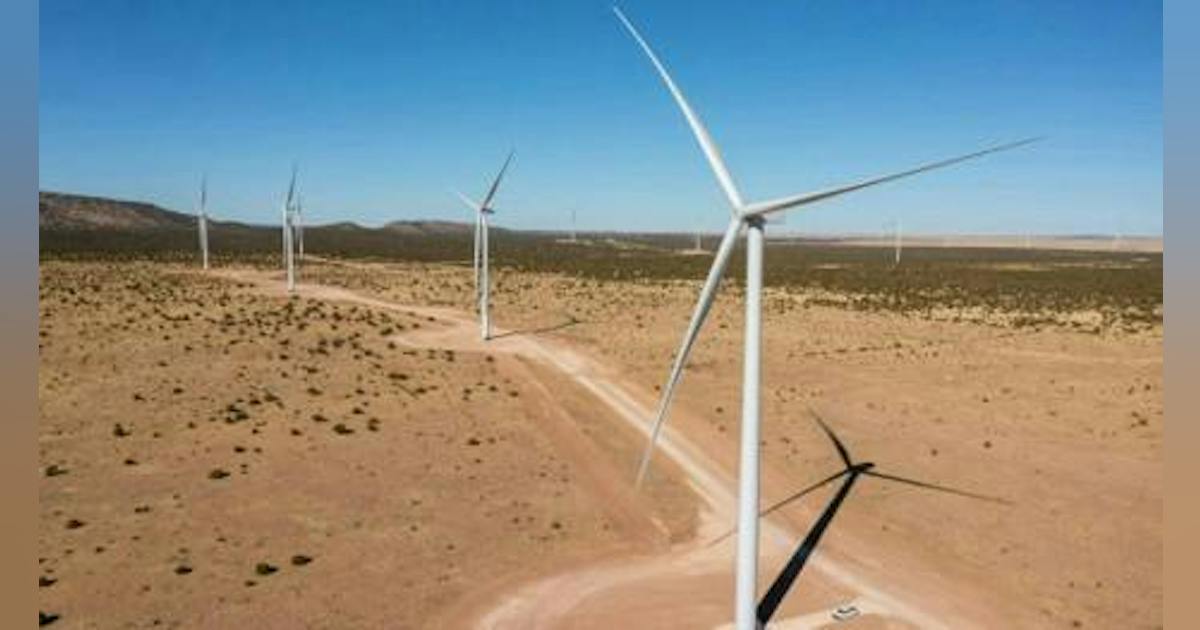
Wind energy turbine orders spun upwards at the highest quarterly pace in three years led by the largest onshore wind project ever built in the United States, according to the latest Wind Energy Monitor report by research firm Wood Mackenzie.
Project developers ordered 2.8 GW in wind turbine capacity in the second quarter, Wood Mackenzie calculated. These included equipment for offshore wind projects which the Trump Administration tried to kill through stop-work orders but were preserved by federal judicial injunctions.
Wind energy enthusiasts in the U.S. also celebrated completion and interconnection of the 3.5-GW SunZia project in New Mexico. Led by Pattern Energy, the $11 billion SunZia effort finally reached the finish line after three years of construction and a decade of planning.
The new report by Wood Mackenzie anticipates that the U.S. wind energy industry will add 39 GW of new-build onshore capacity by 2030. Developers raced to beat the summer 2026 deadline for renewable production tax credits which are being ceased by the One Big Beautiful Bill Act.
“More than half of the project pipeline from 2026 to 2028 is already operating or under construction, limiting near-term risk,” reads the executive summary of the Wood Mackenzie report. “Offshore holds at 5 GW, all of it delivering within the next two years as unfavorable policy limits new developments.”
Connected to a 500-mile transmission line, SunZia generates electricity from more than 900 GE Vernova and Vestas turbines and moving it to customers in Arizona and California. It is touted as the largest renewable project in the Western Hemisphere.
A comparably massive wind energy project under construction is the Chokecherry and Sierra Madre development in Wyoming. This also is being designed for interconnection and delivery to electricity customers in California by 2029.
Installed capacity of utility-scale wind energy totals close to 166 GW in the U.S. and generates at least 10% of the nation’s utility-scale electricity resource mix, according to the federal Energy Information Administration.