
“She was like the sun. She was this force that pulled people in and kept them orbiting around her,” said her studio manager.

October 27, 2026
— 3 min read
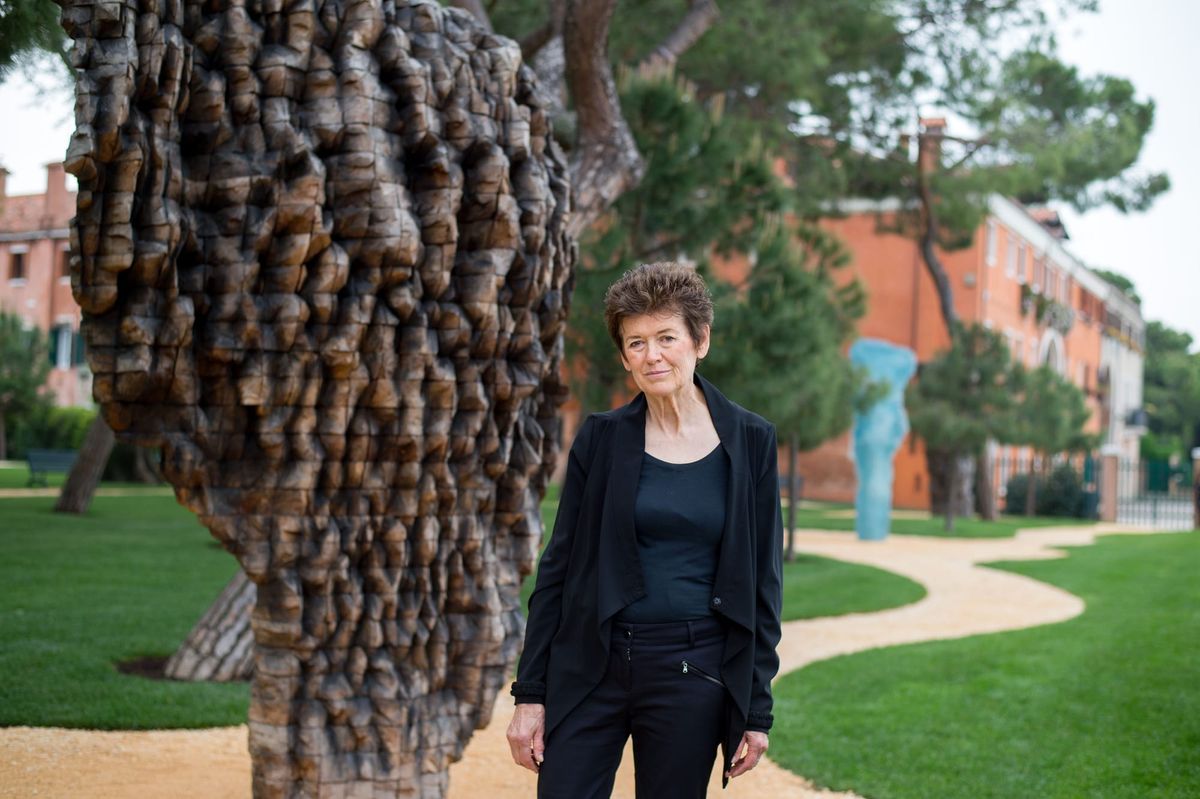
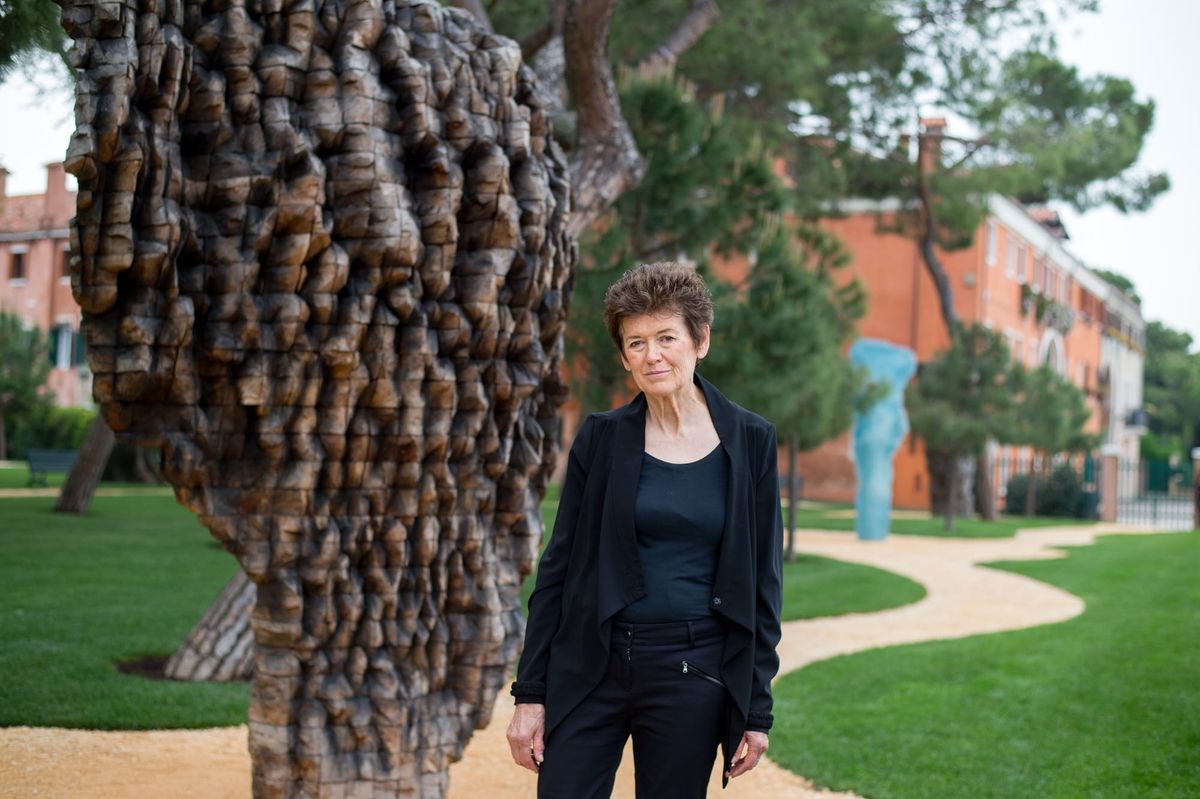
Artist Ursula Von Rydingsvard poses in the Yorkshire Sculpture Park with her works at the Venice Biennale on May 5, 2015. (photo Venturelli/Getty Images)
Ursula von Rydingsvard, a sculptor whose monumental objects were partly inspired by her childhood in post-World War II refugee camps, died in her Manhattan home this morning, October 27, at 84. The artist’s studio manager, Courtney Childress, attributed Von Rydingsvard’s death to Alzheimer’s disease, according to the New York Times.
During her over five-decade career, Von Rydingsvard chipped away at enormous cedar beams to create a menagerie of massive sculptures, from an assembly of cones to a 17-foot-tall tornado-shaped behemoth made from 15,000 pounds of wood. The abstract sculptor worked with an array of other materials, including bronze, textiles, and animal intestines.
“She was like the sun. She was this force that pulled people in and kept them orbiting around her,” Childress told Hyperallergic in a phone interview. “She moved through the studio like her hair was on fire, and could never slow down.”
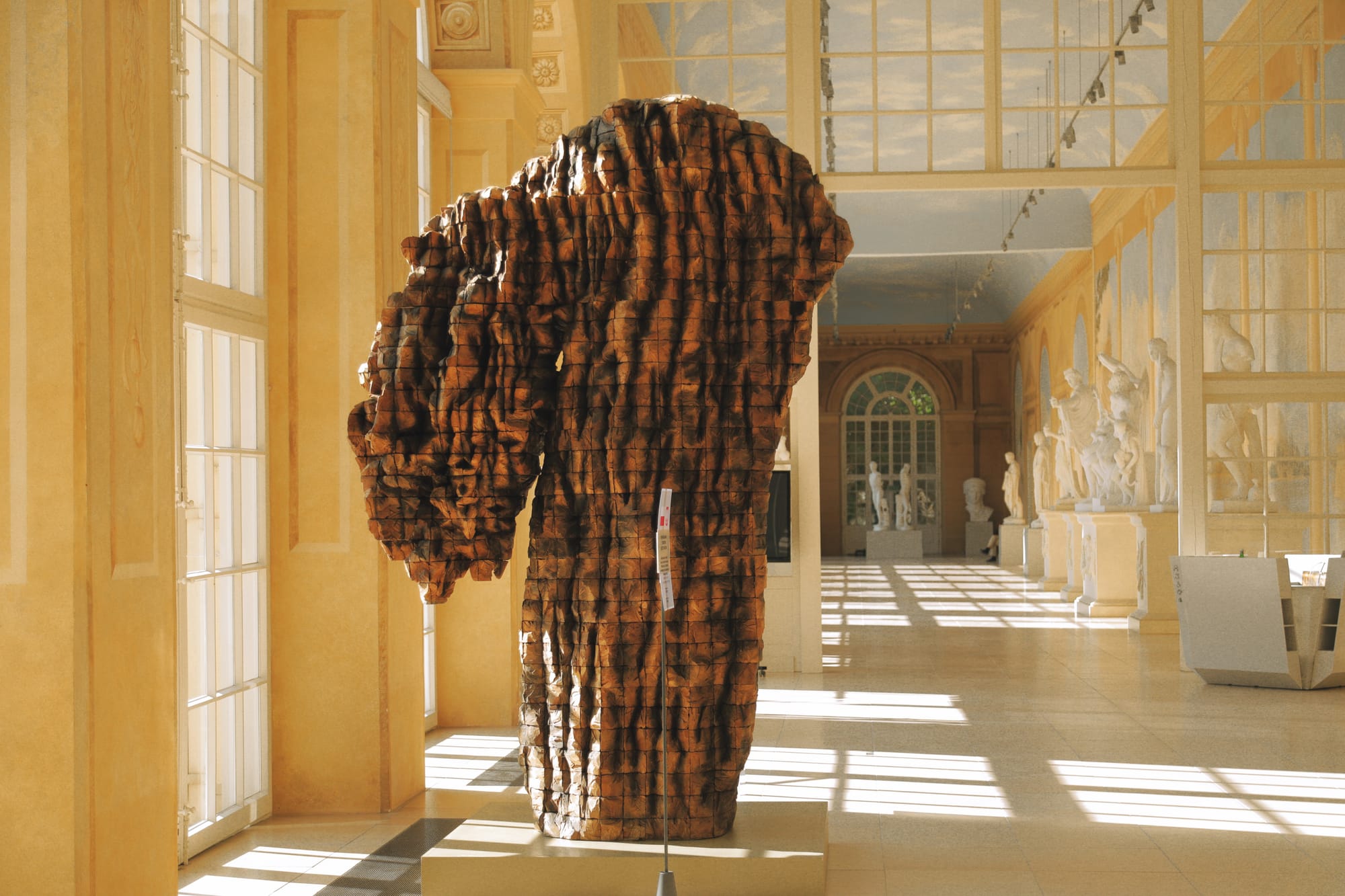 Installation view of Ursula von Rydingsvard’s “For Natasha” (2015) at the Royal Lazienki Museum in Warsaw, Poland (photo Pawel Czarnecki courtesy Galerie Lelong, New York)
Born in 1942 in Deensen, Germany, in the midst of World War II, to a Polish mother and a Ukrainian father, Von Rydingsvard took significant inspiration from her childhood experiences. When the war ended in 1945, her family of nine navigated eight Nazi slave-labor and postwar refugee camps before taking a military ship to the United States in 1950, as she relayed in an interview with Art 21.
While she resisted autobiographical readings of her oeuvre, her observations of the wooden barracks in camps and pre-industrial wooden Polish homes informed her preferred medium of cedar, she continued in the interview. Other memories, from the feeling of a linen nightgown to the sun warming her body, created a reservoir of inspiration for her works.
She went on to obtain a Bachelor of Arts and a Master of Arts from the University of Miami in 1965, and earned a Master of Fine Arts in studio art from Columbia University in 1975.
Recipient of a spate of honors, including the Guggenheim Fellowship, the Joan Mitchell Fellowship, and grants from the National Endowment for the Arts, Von Rydingsvard gained widespread recognition for translating visual cues of human anatomy, the environment, and household vessels into large-scale pieces, departing from the aloof nature of 1970s minimalism. She was the subject of solo exhibitions at the Philadelphia Museum of Art, the National Museum in Krakow, and the Yorkshire Sculpture Park in the United Kingdom, and her work is in the permanent collections of the Metropolitan Museum of Art, the Museum of Modern Art, and the Whitney Museum of American Art in Manhattan.
Keep reading with your email — it’s free
Create a free account to read more articles each month, and get the best of Hyperallergic in your inbox.
Already have an account? Sign in