
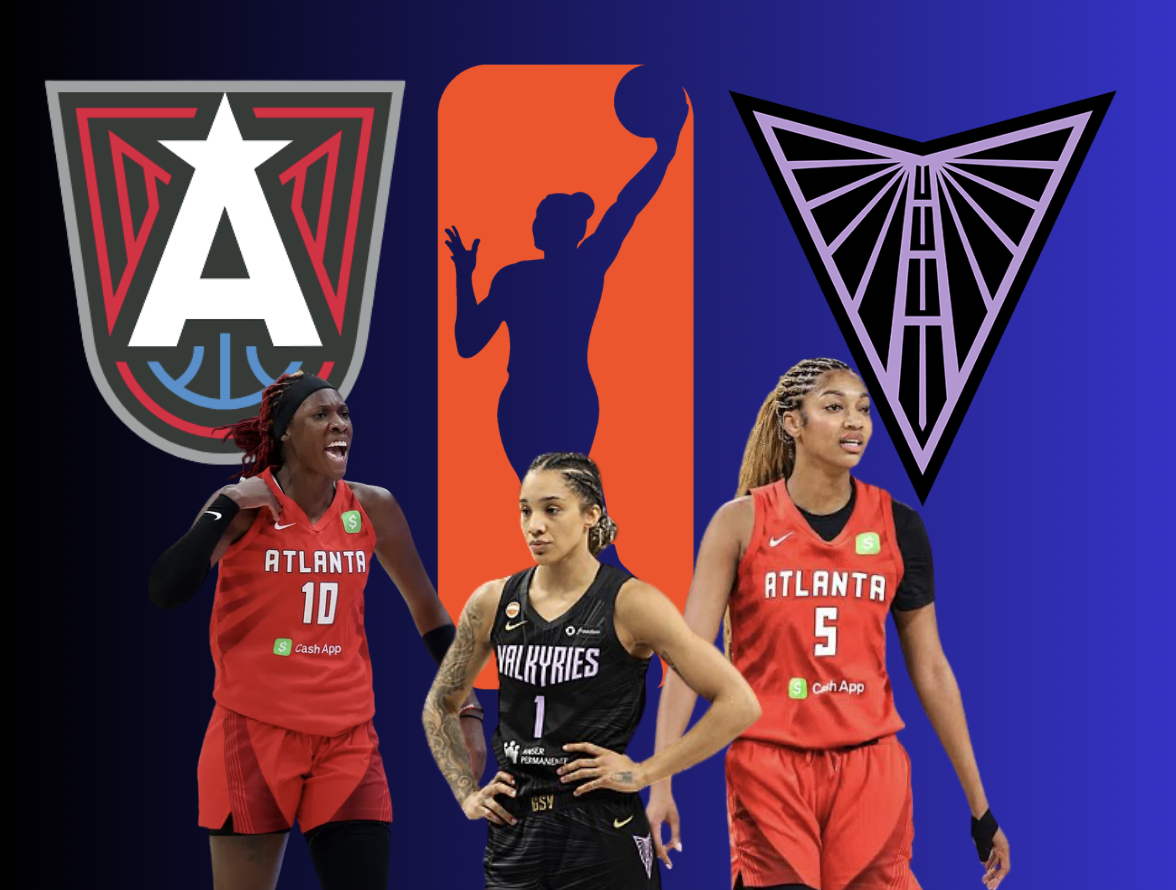
The Golden State Valkyries and Atlanta Dream will face off for Game 6 of the WNBA Finals Thursday to potentially close a season that has garnered record-high viewership for the league.
It’s no secret that the league has experienced a massive boom in popularity over the last handful of seasons.
But in turn, they have been forced to make difficult decisions regarding how they want to capitalize on their newfound attention. Much of this increased notoriety is due to young stars like Caitlin Clark, Paige Bueckers, and Angel Reese;the league’s contemporary marketing seems to match, centering more on the individual players rather than the teams they play on.
So why does the WNBA choose to market itself in this way? Simply put, it’s working: the league’s estimated revenue in 2025 was around $300 million.
Not only is that nearly triple of what they pulled in for the 2019 season, but it is also the first time the WNBA has turned a profit since its start in 1997. Whether or not the true fans like it, focusing on players and social media is what is keeping the league afloat right now.
The WNBA has a fight on its hands simply for existing. As a women’s sports league, they are inherently under pressure to prove themselves to a troublingly large number of sports fans that refuse to take them seriously. While a focus on exciting players and social rivalries may lead to increased online discourse, some fans worry that it can be distracting from what really matters.
The Beacon spoke with several Emerson College students about their thoughts on the league’s recent promotion strategies, and where they think it should go from here.
“I understand why they focus on the individuals, but I think it can take away from the basketball of it all,” said Cam Veal, a senior business of creative enterprises major and Washington Mystics fan.
Senior film, television, and media arts major Raelyn Brummitt — also a Mystics fan — shared a similar sentiment. “I’ve seen several questionable ESPN articles that are just, ‘Caitlin Clark does this or Angel Reese does that,’” she said. “It’s very easy to fall into the interpersonal drama trap and only focus on that.”
Clark and Reese have both been widely cited as catalysts for the league’s uptick in fans, and their latest matchup received the aforementioned historic 2.58 million average views. The two have a ‘rivalry’ some consider to be bigger than any between specific WNBA teams. Yet, this narrative — which all interviewed students agreed is a distraction from gameplay at times—is largely falsified, according to Clark herself.
Brummitt said the discourse surrounding Reese is specifically frustrating, as she felt it had almost nothing to do with Reese’s on-court play.
“There’s always certain team rivals, but it’s never been like [the Boston] Celtics versus [the Los Angeles] Lakers,” said Olivia Holub, a junior sports communications major and Phoenix Mercury fan. Veal echoed a similar thought, saying that the league pushing certain geographic or historical rivalries would be great for the game.
“Eyeballs on the sport is good,” Brummitt said. “But half the time it’s not actually getting people to watch the games. It’s just getting people to weigh in on social media.” She shared further concerns about the league’s marketing mentality, noting that they tend to employ an “any press is good press” strategy.
Perhaps because of this strong focus on the individual, the WNBA has been the target of numerous recent political controversies, none of which actually involve basketball.
“People don’t take the league as seriously as they should right now because of everything that’s going on politically,” said Holub.
While there is certainly a significant population of dedicated WNBA fans who are experts of the sport, some fans are concerned that its current marketing choices are a breeding ground for creating fans who don’t interact with the league in a positive manner.
Because the relatively new league has to fight battles other major sports leagues do not, it is unclear if their marketing presence is sustainable and productive for the future, students said.
“Men’s leagues exist because people want to watch sports,” Veal said. “Women’s leagues exist out of a desperation for women to have a space to be respected.”
In this year’s finals matchup, the WNBA has been presented with an opportunity to shift their marketing strategy. The Valkyries, with a 3-2 lead in the series, can win the finals on Thursday’s 12:30 p.m. Game 6 matchup.
The Golden State squad is a well balanced, defensive-minded team whose biggest player — Gabby Williams — is massively talented, but by no means a household name. If they win, the league will be forced to push even further promotion for a team that is not necessarily driven by star power or social media popularity.
What Golden State does have is three things that actually matter in sports: a skilled roster, a generationally talented coach, and a deeply passionate fan base. This, along with a new league commissioner to come in 2027, has the potential to lead to a massive positive change in how many fans interact with the sport.