
WNBA presidents gather weekly for a call to discuss team and league business, share insights and, more often than not, offer a helping hand where they can.
For Atlanta’s Morgan Shaw Parker and Golden State’s Jess Smith, that mutual respect and support comes even as their franchises sit in very different positions.
The Dream, once the newest team until Golden State was awarded expansion rights in 2023, offer lessons in rebuilding. Following its sale to new owners in 2021, the franchise has had to build a new image and change from the front office to the front court.
The Valkyries, meanwhile, offer an unparalleled trajectory of success, setting attendance, revenue and valuation records in just their second season — milestones that were unthinkable in women’s sports as recently as a few years ago.
And both teams sit on the potential brink of their first championship, with Golden State holding a 3-2 series lead heading into Game 6 on Thursday.
“We support each other. We call each other and we say, ‘How do you do this?’” Shaw Parker said. “And yes, it happens in men’s sports, but we do it all the time. Jess and I are on the phone constantly. We will do anything for each other that we can.”
Added Smith, “Every market has had their own journey in this league because it’s such a young league. Yes, it’s 30 years old, but that’s not that old. And the Dream has been here since 2008. That’s not that long. And so I really view it as they have good leadership over there. I love working with Morgan and what she’s building.”
Far from simply the marks of good sportsmanship or professional respect, their collaboration — and what they can share from their vastly different paths — represents a boon of a learning curve to other WNBA franchises.
Though many might not have had to dig out of the hole of underinvestment and adversarial ownership the Dream have, their rebuild offers lessons to several teams. And with the WNBA continuing to expand – with two new teams this season and three more joining by 2030 — the Valkyries’ meteoric rise serves up plenty worth borrowing.
“What this matchup just shows is the dichotomy of where we are in women’s sports and how there are different paths to success,” Shaw Parker said. “There’s not one right way to build these organizations, and there’s room for all of us.”
Beyond starting over for the Dream
By the summer of 2020, with the COVID pandemic forcing the WNBA season into the “bubble,” Dream co-owner Kelly Loeffler wrote to the WNBA taking issue with its promotion of “Black Lives Matter” on its courts.
It was a campaign issue for Loeffler, then a Republican Senator running for election in Georgia against Raphael Warnock. In a majority-Black league, several players took a stand for a candidate they could support, wearing “Vote Warnock” T-shirts.
Within months of Warnock’s win, Loeffler sold the Dream to a group led by real estate investor Larry Gottesdiener, Northland president Suzanne Abair and former Dream star Renee Montgomery. They inherited a team muddling through chronic underinvestment, with just seven front office staff and players breaking down film in the hallways of Agnes Scott College.
“When our ownership group came in in 2021, the Dream was really an existing franchise with a lot of history and a lot of baggage,” said Shaw Parker, who left Arthur M. Blank Sports & Entertainment to take the role. “We really couldn’t just start over.
“We couldn’t go out and say, ‘Hey, we’re the Dream and here we are and it’s going to be great basketball,’ because it wasn’t,” Shaw Parker said. “Basketball was not good. The infrastructure was not good. They were not supported, even down to employee benefits.”
The rebuild took on all fronts, with the Dream also hiring away GM Dan Padover from the Aces to shape the basketball operations side as Shaw Parker built the business.
That meant growing the front-office staff, which now sits at more than 70, and investing in facilities and wellness for the team’s players. It meant rebuilding a relationship with the family of Martin Luther King Jr., whose “I Have a Dream” speech inspired the team’s name.
And it meant convincing the Atlanta community that had reason to be skeptical. Between 2016 and 2024, the Dream only topped .500 once. And since 2016, it has been last or second to last in attendance, dipping as low as a 1,347 average in 2021.
The Dream leaned into community building and social change, signing sponsors that could have community impact. A deal with CashApp and ForgiveCo last season eliminated $10 million in debt for Atlanta families.
“We really listened to what Atlanta needed,” Shaw Parker said. “Every partner that comes in, we centered the partnership, not around LED screens and all of the in-arena inventory because frankly, we didn’t have it. And so we centered our organization around the impact that we could create in the community.”
That community has grown.
The Dream have called Gateway Center Arena home, with its 3,500 capacity representing the smallest venue in the league. By moving six regular season games to State Farm Arena, their 6,928 attendance this year represents the second highest mark in franchise history.
Since the Dream’s ownership group took over the team, it has had 65 sellouts overall, including eight in State Farm (capacity 17,044) in the past three seasons. In the past five years, it’s seen more than 400% growth in season ticket members. In 2026, the franchises’ partnership revenue grew 60% year-over-year and its retail sales doubled.
Shaw Parker has compared the Dream’s game-day experience to a family barbecue in the cozier confines of Gateway, but it will move to State Farm permanently next year to accommodate its growth.
There it can pack the house. Its 2026 finals games became a star-studded celebration of Black culture in the South, drawing former NFL QB Cam Newton and actress Kerry Washington, with rappers including 2 Chainz, Big Boi, T.I. and many more either performing or sitting courtside.
“We have growth plans. This probably came a little sooner than what we planned on when we were starting out in 2021,” Shaw Parker said.
“When you’re an independent team and when you’re rebuilding an organization, it’s a lot different than starting from scratch.”
The Valks’ masterclass in building
By the time the WNBA granted expansion rights to Golden State, the league, its fans and the Bay Area were ready for something to capture the pent-up demand in growing the league and the booming interest in women’s sports.
Co-owner Joe Lacob made Smith, who had helped build Angel City FC from the ground up, the franchise’s first hire in 2024.
“We felt that the timing was perfect as the quality of players has improved greatly, Caitlin Clark emerged with her great following,” Lacob said. “And the world was just very ready for women’s sports in general. Our business team did a terrific job on execution. Branding. Logos. Game operations. Strategic marketing. All well executed.”
With their successful ownership of the Warriors, a shared venue in the Chase Center and early investment, Lacob and co-owner Peter Gruber laid the foundation for the Valkyries success. The Valkyries front-office staff has grown 40% since last year and currently sits at 88, with some shared service with the Warriors.
“They weren’t doing this to just be like, ‘OK, we’re just going to have a women’s team.’” Smith said. “They were doing this because they wanted to buy another franchise and make it the best at what it was.”
At most every turn, the Valkyries have done that by building their brand and knowing their fans.
Golden State’s unique purple color, Valkyries name and V logo — which incorporates the Golden Gate Bridge in its design — all resonated. Before they played a game, the Valkyries sold merchandise in all 50 states and more than 70 countries.
The franchise invested in understanding its fans, segmenting them into basketball diehards who were hungry for more of the sport; “Bright Believers,” largely Gen Z fans who could buy into a values-based message and identify with the team; and women’s sports fans.
“We need to be able to tell our story, and we need to know what our story is,” Smith said. “There’s actually a ton of data out there around the fandom of women’s sports and female athletes, basketball and otherwise. But how are you actually packaging that to earn that fandom in a way that we felt hadn’t been done before? Everything from our branding, team experience, how we show up in the community, intentionality around everything that we do to match what we know they are as consumers.”
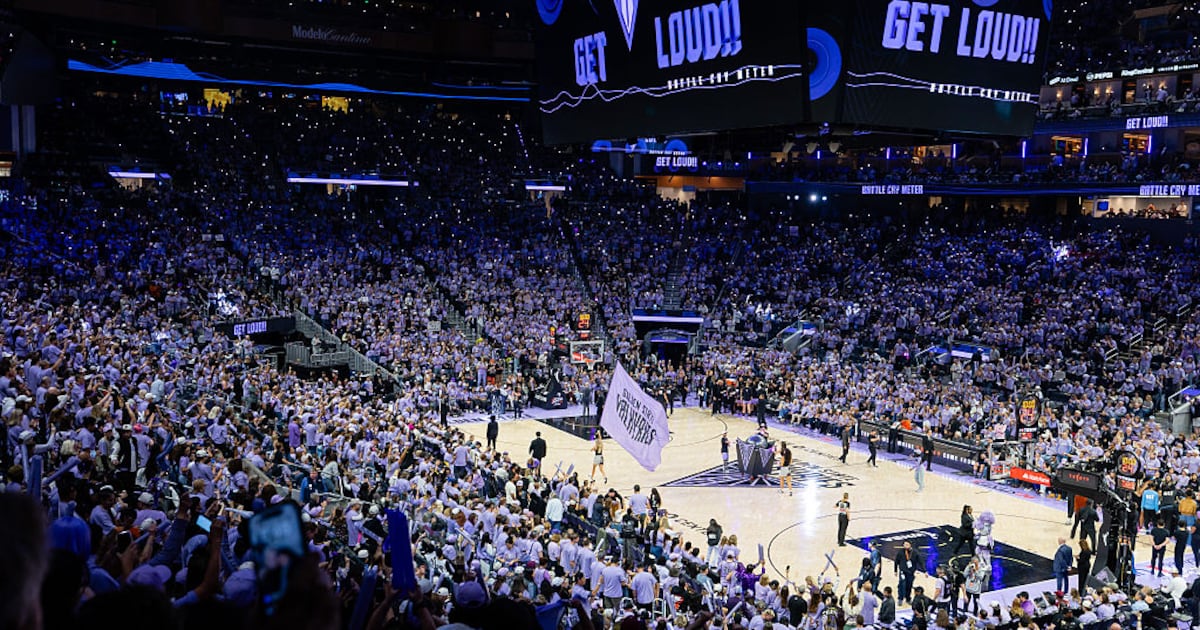
In their first two years, the Valkyries have turned Ballhalla into an electric environment. Golden State has sold out every home game there, averaging a league-best more than 18,000 per game.
“We are in this to win and provide the best possible experience for our fans,” Lacob said. “So, while we expected to create the best sports environment in the world for women’s sports, we have exceeded even our expectations.”
Thus far, they have expanded the market. The Valkyries this season became the first women’s sports franchise to exceed $100 million in revenue and to earn a $1 billion valuation. Golden State’s success has already helped it secure hosting rights to the WNBA All-Star Game next season, and Smith is eyeing how the franchise can better reach more communities in the Bay Area as it builds out its global strategy.
“It’s going to be very fun because even last year to this year, the answer was more,” Smith said. “The foundation that we had was something that we were very proud of, [but] not satisfied.”
With a very different foundation, Shaw Parker might say the same. Soon, either the Dream or Valkyries will end their journey with a championship. And it’ll be another perspective for Shaw Parker and Smith to share on those weekly calls.