
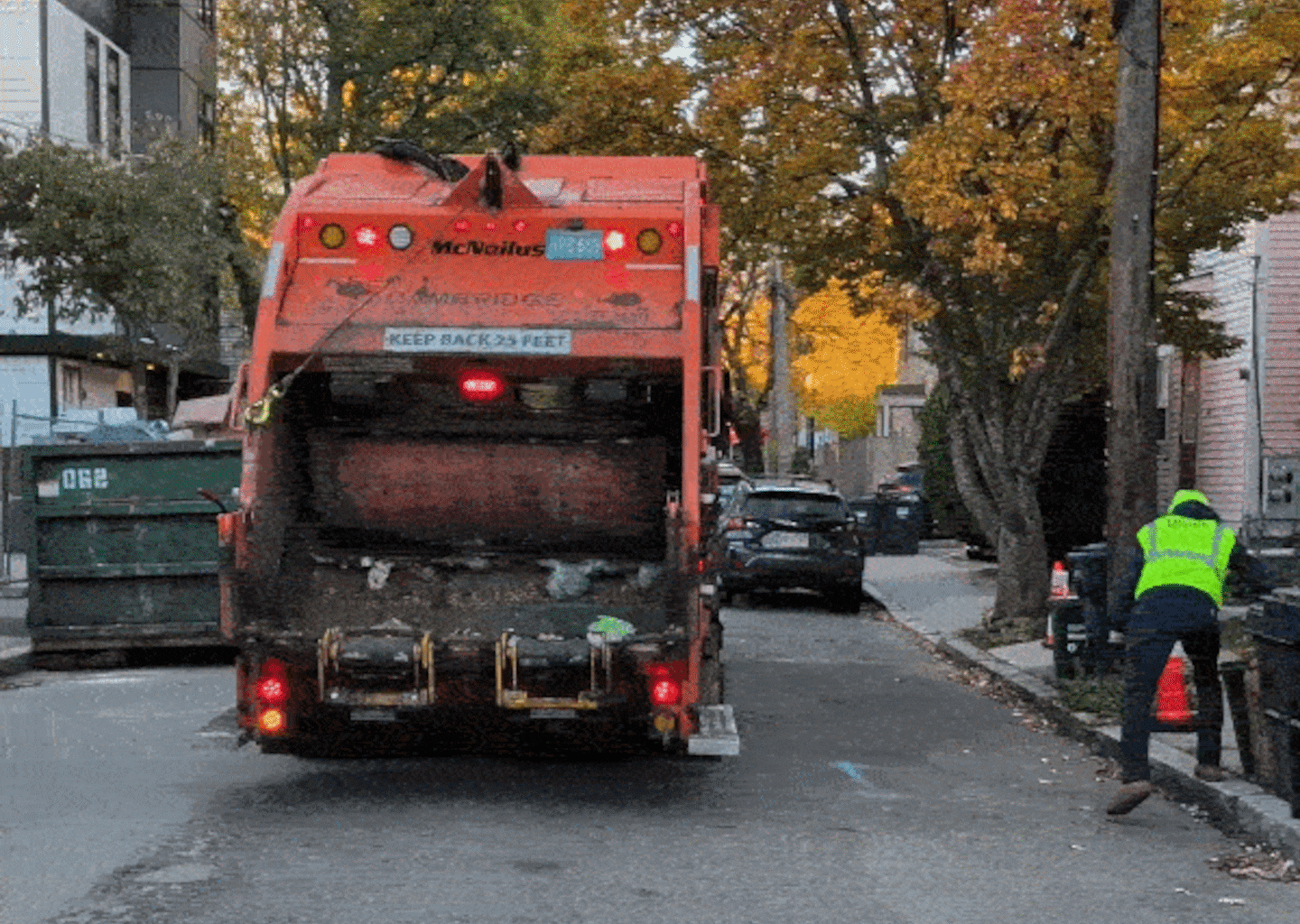
A Thursday to scrape your scraps into a green bin
Even in the crisp fall air, I could smell the pungent rotting food as a city worker hoisted the bin and dumped its contents into a truck before driving down the street to grab another.
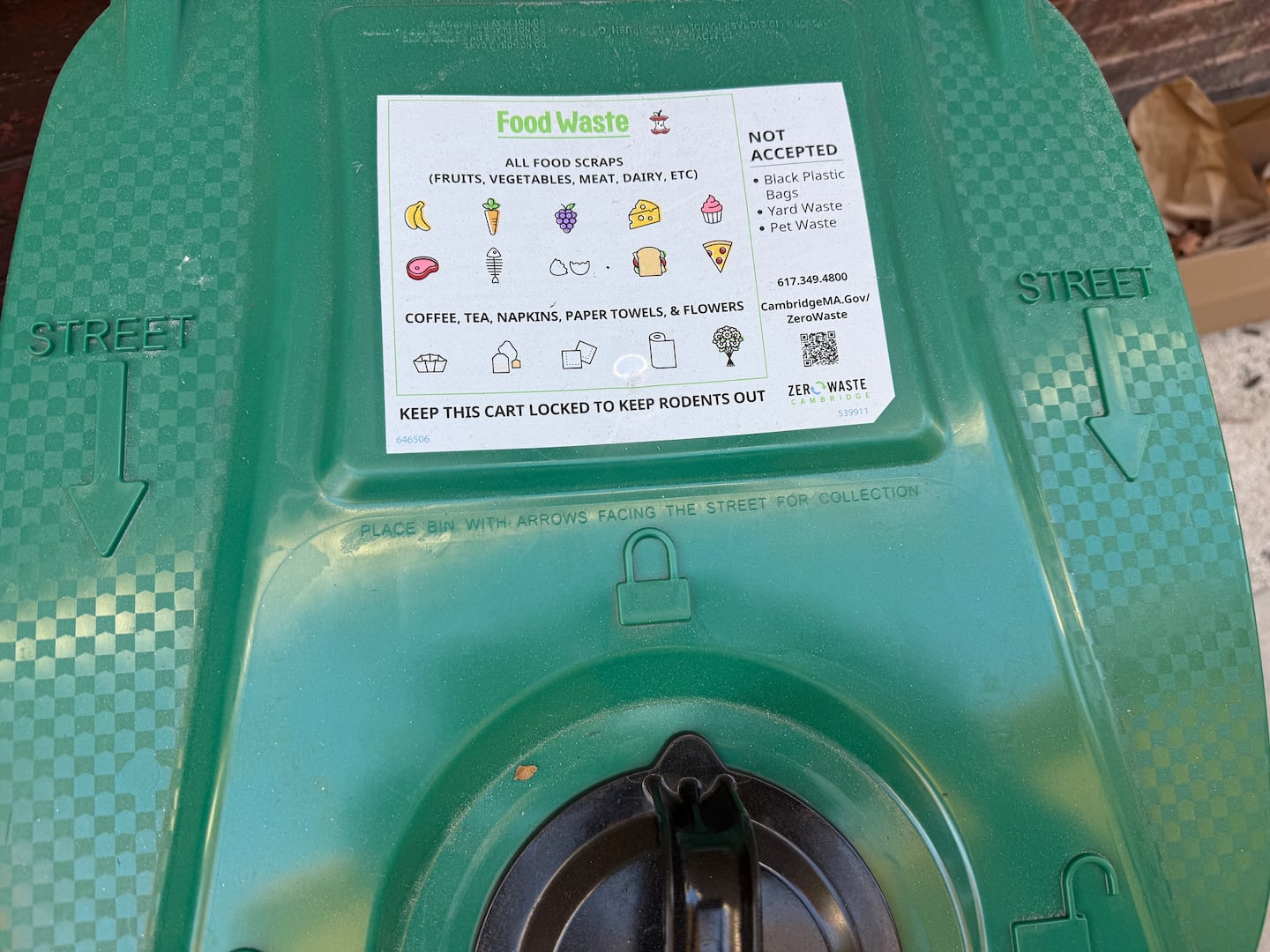
It’s a weekday ritual across Cambridge: The green compost bins go out alongside the trash barrels and blue recycling carts. But watching the parade the other day, a despoiling question popped into my head. Was the curbside compost program a performative, look-how-green-we-are theatrical effort at scale?
Or does taking food waste out of the trash actually do good?
As a pretty fastidious composter myself, I set to find out.
 Joshua Miller
Let’s start with the basics. Out of about 50,000 households in Cambridge, 39,000 have access to the city’s free curbside compost program. But it’s not technically compost. Your apple core and unfinished Cheerios are not going to some love-the-earth soil pile on an idyllic farm. They’re headed to a North Andover sewage plant.
Eventually.
First, the Cambridge public works trucks take the food waste to a facility in Charlestown, where contaminants (say, a foil wrapper) are separated from organic matter (your half-finished sandwich), and the food waste is then turned into a goop known as engineered bioslurry. Officially, WM, the Fortune 500 company that runs the plant, calls it — and this is a registered trademark! — EBS.
It has, according to one Cambridge official, “a milkshake type consistency.” So what does an engineered bioslurry look like? Take a peek (but maybe not if you’re eating your breakfast).
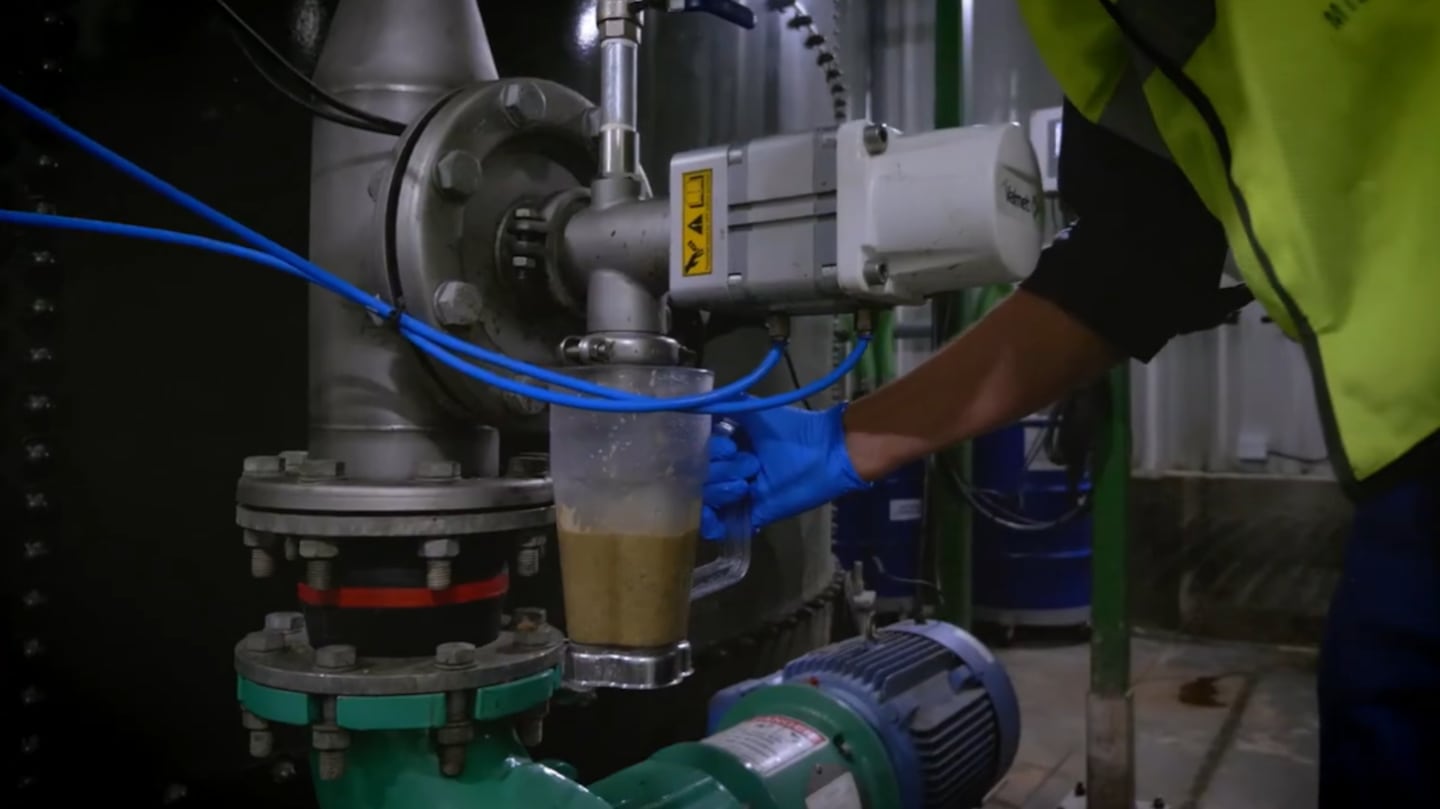 Courtesy WM
The plant in Charlestown receives food waste from all around, so at the end of the day, there is a lot of “milkshake” to transport. The EBS gets pumped into big trucks and driven to the wastewater treatment plant in North Andover, where it’s mixed with semi-treated sewage sludge. This, said John Fitzgerald of the Cambridge DPW, creates a lot of methane gas, which is then used for power and heat at the Greater Lawrence Sanitary District plant. Amazing what uneaten fish sticks and grease-stained paper towels can do.
But is this whole process good?
Let’s start with the environmental impact. There is not a vast body of research on how this kind of food waste disposal might help or harm our planet. But in 2019, the EPA released an assessment of that very North Andover wastewater treatment plant. It’s 194 pages, and I won’t claim to fully understand it. But the analysis found that on just about all counts, food waste turned to a slurry and used at the sewage plant would be better for the environment than food waste going to the landfill or the incinerator.
Done at scale, said Sam Arden, a PhD in environmental engineering who co-authored the analysis, this sort of thing has a real environmental benefit. “These types of practices pencil out,” he told me.
 Cambridge City Hall.David L. Ryan/Globe Staff/David L Ryan, Globe Staff
Now let’s talk dollars and cents.
Right now, Cambridge actually pays less for sending food waste to Charlestown than sending that junk to an incinerator or landfill, data show. The city currently coughs up $110 per ton to dispose of trash and $89 per ton to dispose of food waste.
The economics are complicated — Cambridge pays WM, which pays the Greater Lawrence Sanitary District to take the bioslurry — but if everyone separated their food waste, the city could see real savings. Last year, fully one-third of the trash Cambridge collected was food waste and other compostables, according to a 2025 city audit, during which officials held their noses and weighed the components of curbside garbage. That leaves a lot of room to grow.
So yes, it seems fair to extrapolate that using those green bins is better for the environment, and could save the city some cash. But wait for nightfall to see the most tangible benefit of Cantabrigians separating out their food waste.
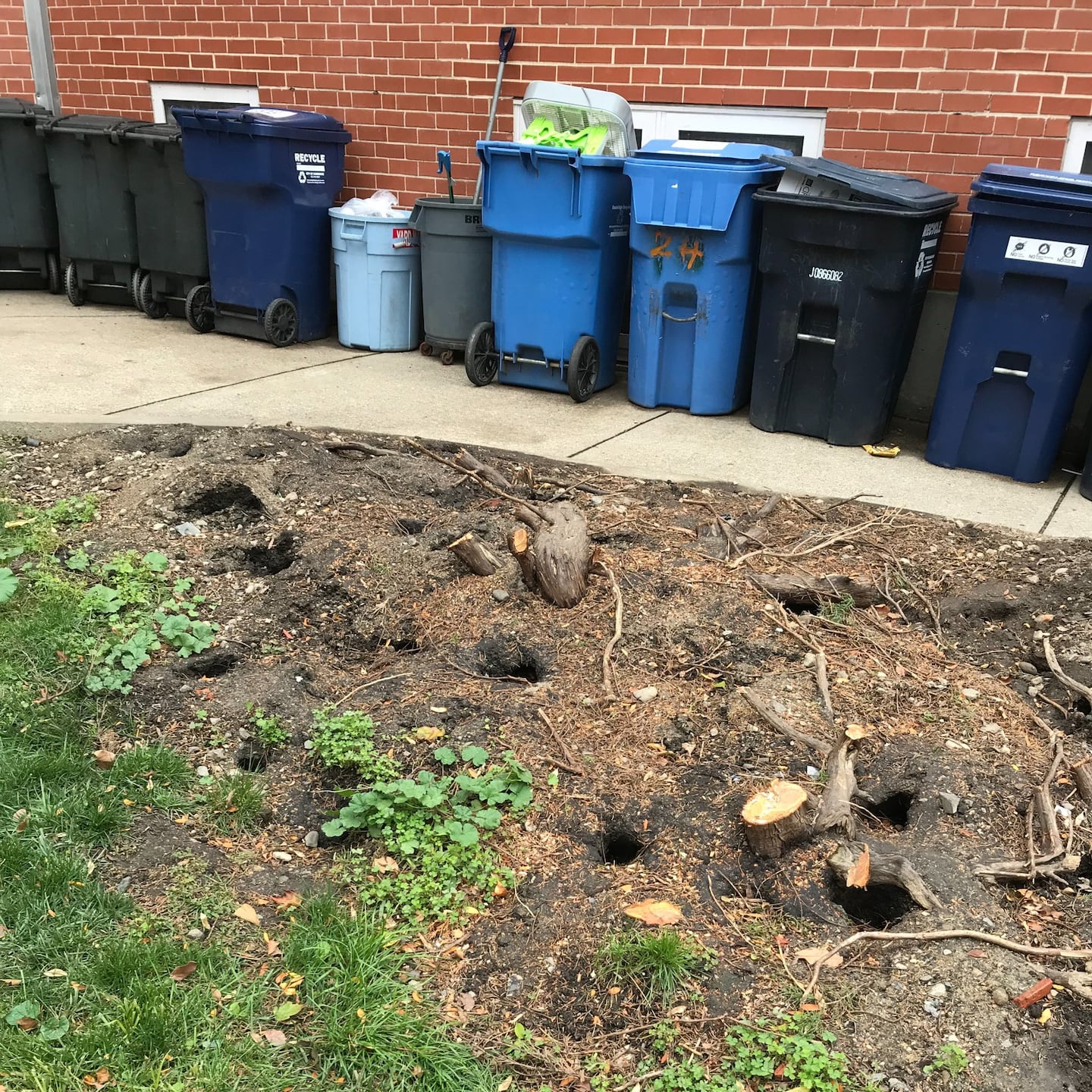 Rat burrows in Cambridge.City of Cambridge
Here is a fact: When Cambridge rolled out standardized trash bins in 2022, they were brand new and none had holes. Now, said Mike Orr, the city’s recycling director and food waste guru, one-fifth have been chewed through by rats. Why? Food in the garbage.
So when people call to replace a rat-destroyed bin, Orr makes a proposal.
“We politely say, ‘Well, would you try the food waste program?’ Because we have found that if you seal the food in a nice, tight green cart with a lock on it, that’s a much better deterrent than any trash cart that we can provide,” he said. “Some people heed the advice, but for those that don’t, we often hear back from them within a day or two that yet another cart has been chewed through.”
It’s anecdotal evidence, but it’s broadly true across neighborhoods and through the years, Orr told me.
I wanted to logic out the purported benefit of curbside compost further, which led me to the city’s rat czar, Dave Power. And what seems slap-your-forehead obvious is true, he said. Food waste draws rats.
“Food would be number one. If there’s no food available, they will move on, or not even establish themselves,” he said. So if you seal all your food waste in the green bins, and if all your neighbors do the same thing, rats are more likely to settle down somewhere else. The compost containers are made of a more durable material and they’re lockable, he said, so rats “can’t just flip that lid up and sneak in there.”
I pressed. There’s no double-blind study or anything, Power said, and green bins alone won’t finally end the scourge of rodents. But it is possible to make sure your yard or stoop isn’t their favorite spot to hang out.
And then my verify-everything journalistic zeal got a bit out of hand. “Rats are bad, why?” I asked.
Power inhaled sharply, as if I had struck him.
They are disease vectors, they are sources of great distress for people, they ruin cookouts and outdoor movie nights, Power said. “Quality of life.”
Climate, cost, and rats are among the reasons the city will actually mandate residential and commercial buildings separate their food waste from trash starting in February.
Still, God bless America, you’re going to do what you want with that half-eaten bagel sandwich. But maybe consider throwing it in the green bin, so we can walk toward greater peace each night.
P.S. Somerville, which doesn’t have city-wide curbside compost, has launched 10 new food waste drop-off bins across the city. Whether you’re in Cambridge or Somerville, do you separate food waste? Does all this gross you out? Send musings and other newsletter ideas my way. I would truly welcome an email.
P.P.S. Speaking of decay, I really enjoyed Camberville reporter Spencer Buell’s piece on Somerville’s surprisingly popular fermentation club, where people break bread over a bacterial buffet.
Joshua Miller can be reached at joshua.miller@globe.com.