
COLUMBIA — Nearly a year and a half after a EF1 tornado destroyed Columbia’s recycling facility, workers are still processing recyclable materials at the damaged site as the city moves forward with plans to rebuild.
The April 20, 2025, tornado destroyed the city’s Material Recovery Facility, leaving Columbia without its primary location for sorting and processing recyclable materials.
While weekly curbside recycling collection resumed in June 2026, the city is still operating with limited processing capabilities. Recycling drop-off centers remain closed, and recycling services for apartment buildings and other multifamily properties remain suspended.
At the damaged facility, workers continue processing recyclable materials using equipment that survived the tornado.
City crews move collected paper and cardboard onto a conveyor belt, where the material is compressed into bales before being shipped to mills for reuse. Other recyclables are transported to Federal Recycling & Waste Solutions in Jefferson City, with some eventually making their way to a processing facility in Illinois.
“The tornado took out a lot of our equipment that we had there, as well as most of the facilities,” Buffaloe said. “But the fact that that baler is still standing is actually pretty remarkable.”
Managing with the current facility
Tom Elliot, Columbia’s material recovery superintendent, said the city has found ways to keep recyclable materials out of the landfill despite losing its processing facility.
However, the temporary system comes with limitations. Because there is no structure to protect the machinery, operations are vulnerable to wind and rain.
Elliot said weather conditions can affect when employees are able to bale recyclable materials at the damaged facility.
The tornado also forced collection crews to change where they unload materials.
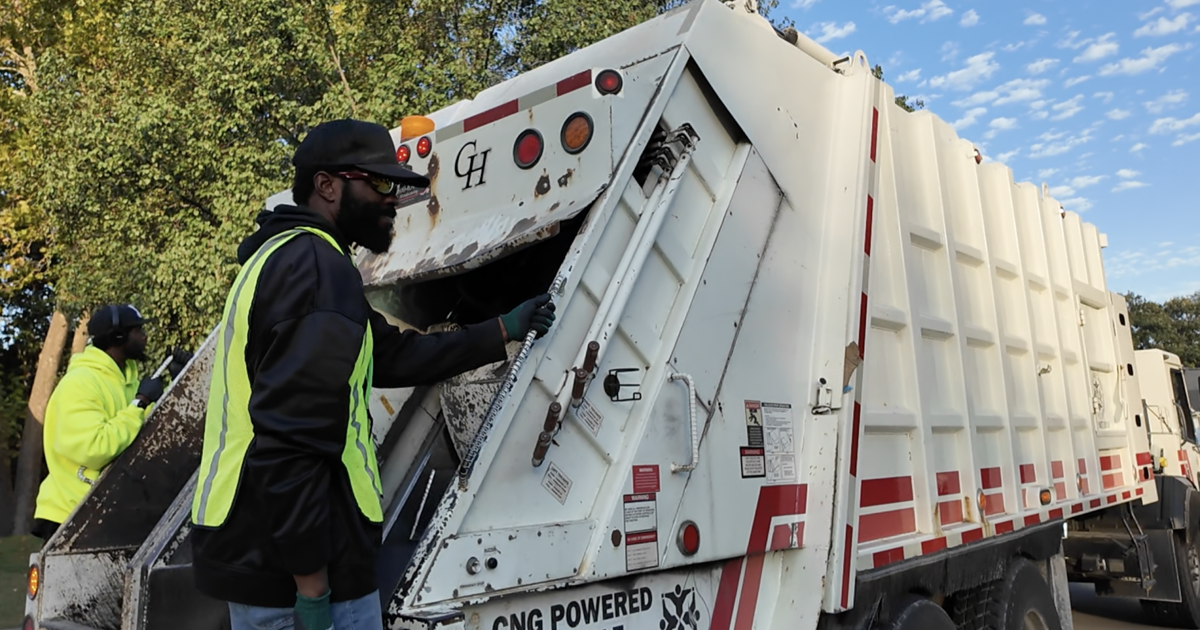
Reginald Harper, Columbia’s residential recycling collection supervisor, said residents often don’t realize how much work goes into the service.
He’s worked for the city for 18 years and oversees five recycling collection routes and the crews responsible for picking up thousands of households’ recyclable materials.
“They just see a truck coming in front of the house and that’s their normal,” Harper said. “They don’t know the logistics, what’s needed, the bodies, the trucks.”
Before the tornado, Harper said crews could unload different types of recyclable materials at one facility. Now, they must unload at two separate locations.
“So it just takes a little bit more time,” Harper said.
Despite those challenges, Columbia expanded its residential recycling collection operations from three routes to five, allowing customers to put out both mixed fibers and recyclable containers every week.
Previously, residents had to alternate between the two types of materials.
Harper said the change has made recycling more convenient for customers, but collection remains physically demanding for employees.
During the summer, Harper said some workers experienced dehydration and needed additional breaks because of the heat. Winter weather can also extend collection routes by more than an hour.
The city provides water coolers on collection trucks, and Harper said supervisors prioritize ensuring employees have adequate water and protective equipment.
Limited recycling services
Although curbside recycling has resumed since the 2025 tornado, residents still face restrictions on what materials they can recycle.
Glass and plastics numbered 3 through 7 are no longer accepted curbside.
Buffaloe said glass recycling might never return to curbside collection because broken glass can contaminate other recyclable materials.
“It breaks, and then it gets into all the other materials,” Buffaloe said.
Instead, the city is collecting glass through purple recycling containers at two locations in partnership with Ripple Glass, a Kansas City-area company.
Buffaloe said the city is also considering staffed recycling drop-off centers as a way to reduce contamination. She said staffed facilities could eventually allow Columbia to collect items such as electronic waste and mattresses.
Elliot said contamination was a significant issue at Columbia’s previous drop-off sites.
“We were running about 34% contamination, which is twice the national average,” Elliot said. “Most of that was coming from the drop-off sites.”
Harper said improperly sorted recycling also creates challenges for collection crews.
Success! An email has been sent to with a link to confirm list signup.
Error! There was an error processing your request.
When workers encounter bags containing prohibited materials, they must leave the bags behind and attach a tag explaining why they were not collected.
Rebuilding a facility that already needed upgrades
In December, the Columbia City Council authorized the city to move forward with seeking proposals for a replacement building at the existing facility.
The project was initially estimated to cost approximately $3.6 million, with funding expected to come from insurance proceeds and Solid Waste Utility capital funds.
Elliot said that estimate just covers the replacement building, not new recycling equipment.
“The $3.6 million estimate is focusing on just rebuilding the building we had in the same location, just as it was before the tornado — not including any upgrades and not including any equipment changes,” Elliot said.
A separate estimate placed the cost of constructing an entirely new recycling facility with updated equipment at approximately $21 million. This proposed building would also be able to take in more recycling than the current facility.
Even before the tornado, Columbia was evaluating the future of its recycling infrastructure.
A city-commissioned study examined the condition of the Material Recovery Facility and potential improvements to the recycling program. The 2025 tornado interrupted the city’s consideration of those recommendations.
“The city was facing a decision on what to do with the equipment — whether that’s to replace it, to upgrade it, to try to maintain it as long as we could,” Elliot said.
The city’s published plans indicate the replacement building would include updated building systems and space to accommodate potential future sorting equipment.
The project must also meet applicable building requirements. City documents indicate the proposed building would include an insulated processing area, fire suppression, heating and restored employee facilities.
Buffaloe said the city is considering a phased approach to rebuilding rather than immediately constructing an entirely new processing facility.
She said the first priority is constructing a building around the equipment currently being used while allowing flexibility for future improvements.
“Our baler is exposed to the elements, which is obviously not good for its efficiency,” Buffaloe said.
Although the city is working toward replacing the damaged building, the rebuilding contract has not yet reached the City Council.
Buffaloe said the proposal is still moving through the city’s administrative process.
“Hopefully by the end of the year, we’ll have that started and we can see some movement,” Buffaloe said.
Elliot previously estimated that constructing the replacement building could take approximately one year once the project moves forward.
Decisions about upgrading or replacing the facility’s sorting equipment could happen while the building is under construction.
Future of Columbia’s recycling
For Buffaloe, who previously served as Columbia’s sustainability manager, the rebuilding process presents an opportunity to improve the city’s recycling program.
“We’re going to have so many opportunities for additional materials that we can collect through our systems,” Buffaloe said.
Buffaloe said the city could also improve working conditions by automating more of the sorting process, an idea that was being considered even before the tornado.
The mayor also emphasized that recycling is not primarily intended to generate revenue for the city.
“For us, it’s just the responsible thing to do as stewards of the land that we have,” Buffaloe said.
Harper said his crews remain focused on serving Columbia residents and keeping recyclable materials out of the landfill.
“I very much enjoy keeping Earth clean,” Harper said. “If we can reuse and keep things out of landfill… I’m all for it.”
Harper said the relationship between recycling workers and residents is something he values.
“People put a lot of time and effort into recycling, so it’s almost like being in a partnership with the community,” he said.