
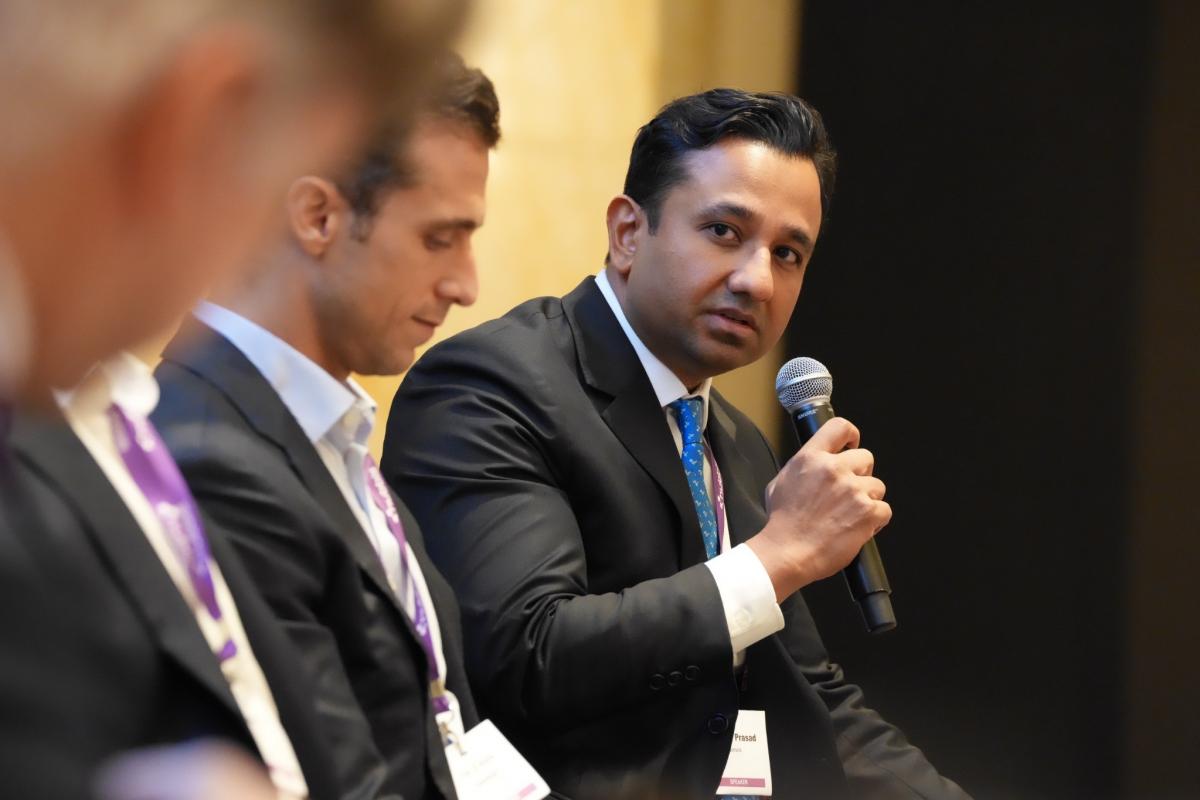
As simple investment execution becomes more efficient, wealth firms need to use human expertise where the decisions are harder. Akshay Prasad argued that differentiation lies in explaining complexity and helping a client decide how much of an investment belongs in their portfolio.
Speaking on the final panel at the Hubbis Digital Wealth Forum Singapore 2026, Prasad, Managing Director and Head of Investment Products & Advisory Solutions at Nomura, discussed the relationship between artificial intelligence (AI), fees and the wider private banking service. His focus was on advice that makes sense to the individual, beyond the calculation alone.
Key Takeaways
More efficient execution creates an opportunity to direct human expertise towards making sense of complexity.
Knowing what to buy is only one part of deciding the right allocation for a particular client.
Automating the next product prompt does not necessarily produce deeper investment insight.
The value of private banking includes planning and broader services that cannot be reduced to an execution fee.
Redeploying Expertise Towards Complexity
Prasad separated a portfolio into its simpler, more execution-oriented elements and the areas requiring more interpretation. Clients have long pressed firms to reduce the cost and friction of straightforward transactions, and institutions have invested heavily in doing so.
The benefit should include freeing expertise for the more difficult work. Alternatives illustrate the distinction: private equity funds and hedge funds differ significantly, and relevant information may sit behind paid access rather than be readily available to a general language model.
“A good adviser unlocks that complexity for clients and contextualises that information,” he said.
For Prasad, that interpretation feeds directly into portfolio construction. It is one reason better access to a model does not remove the need for an adviser who understands the investment and the person considering it.
Answering How Much for This Client
Prasad argued that discussing whether an investment looks attractive is relatively easy compared with deciding how much of it a client should hold. The calculation is one part of that decision, but the explanation must also connect with the individual.
“There is a mathematical answer for it, and then there is an answer for you,” he said.
He believes this is an area where firms should direct more investment. Some of the work requires AI, while much is established mathematics. AI’s contribution can be to help relationship managers deliver a more consistent explanation of why the result matters to the client.
His ambition for digitalisation is therefore personalisation that resonates as advice, a transaction or a portfolio. He said the digital tools already available are sufficient to pursue that objective.
Faster Prompts Are Not Deeper Insight
Prasad observed that clients could analyse or reverse-engineer structured products well before the arrival of current AI tools. Greater transparency alone therefore does not explain every development in fees or demand.
Much of the technology work on flow structured products, in his assessment, accelerates a familiar process: identifying what a client held, noticing a product event and prompting the next conversation.
“You’re just speeding up the heuristic. You’re not developing deep insight,” he said.
He distinguished that automation from the harder work of improving investment understanding, which predates AI and remains an ongoing task. A faster prompt can help delivery without resolving the deeper portfolio question.
Looking Beyond the Execution Charge
Fee discussions remain part of private banking, Prasad said, but they do not define every interaction. A client can challenge the price of executing a bond portfolio while still valuing the wider relationship.
He cited trust solutions and next-generation wealth transfer as examples of the broader service. Those needs are intertwined with investment management and help explain why some clients continue to choose a private bank even when they have other ways to buy straightforward securities.
Prasad’s case was for evaluating the whole service. Efficient execution matters, but so does the expertise needed to connect investments with the client’s more complex financial circumstances.