
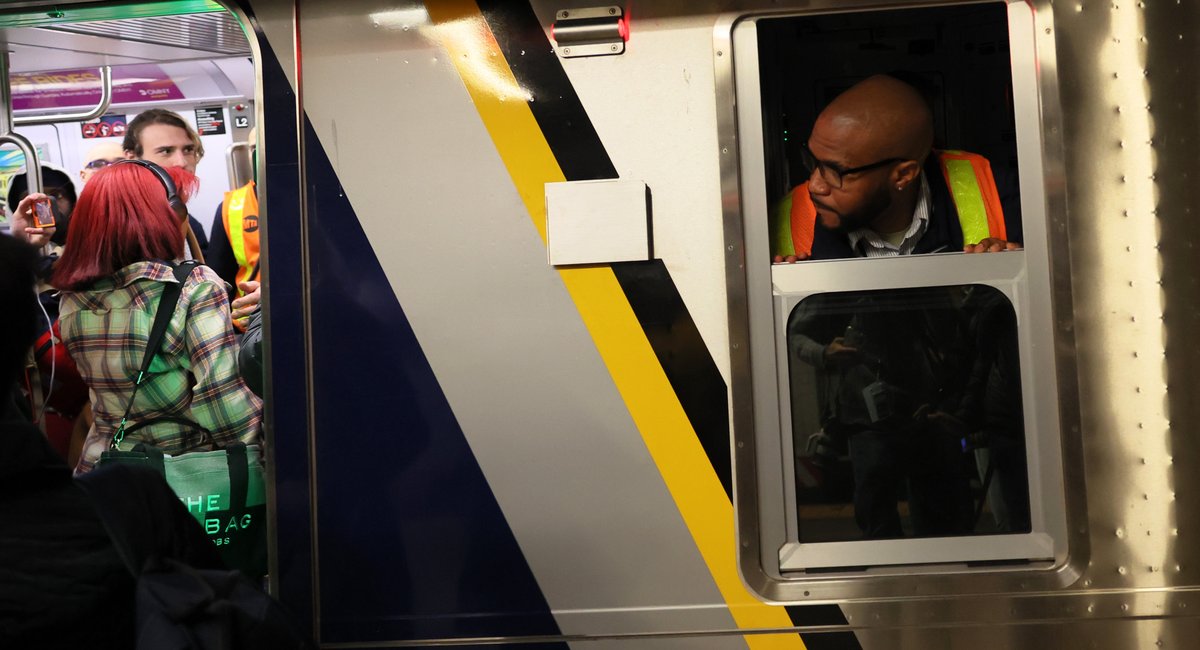
In less than four years, the MTA could be looking at a nearly $900 million funding shortfall as spending outpaces fare revenue, according to a new analysis from the Citizens Budget Commission, which recommends cutting the workforce to close the gap.
The budget watchdog recommends sweeping job cuts to positions that it argues technology has made obsolete. The budget commission suggested the MTA allow its trains to run with just one worker, instead of two.
Train lines that have new computer-based signals, like the L and the 7, are already fully automated, as are the announcements on the trains. While the conductor opens and closes the train doors, the operator has few other duties, which include hitting a button every 20 seconds to signal they are alert. The budget commission cited the operator’s limited responsibilities as a sign the job could be cut with no impact to service.
Eliminating operator jobs on the L and 7 lines could save $36.5 million a year, according to the report. If the agency moved to phase out two people operating trains across the system, it could save $500 million a year.
The agency is in the process of installing new signals on other lines like the A, C, E, F, G, M and R lines. For now, those lines still require two people to run the trains.
The suggestion from the Citizens Budget Commission comes at a sensitive time as Transport Workers Union Local 100 negotiates a contract with the MTA for its 40,000 subway and bus workers. The MTA is expected to release its financial plan for next year in the coming weeks, which will include a 4% fare and toll increase. The board will vote on that plan in December.
“The same recommendations have been coming down for dozens of years, so there’s nothing new about it,” said Transport Workers Union of America President John Samuelsen. “It’s essentially a recommendation to balance alleged deficits that the MTA has off the backs of working people.”
Last year, the state legislature tried to enshrine a requirement of two MTA workers on each train into law, but Gov. Kathy Hochul vetoed the bill, leaving open the possibility that one-person train operations could happen in the future.
“Legislatively mandated staffing prevents the MTA from modernizing — as technology and best practices continue to improve — and realizing the efficiency and financial benefits,” the Citizens Budget Commission’s report argues.
The Citizens Budget Commission acknowledges the MTA has become more efficient in recent years, saving a reported $576 million this year through what the agency calls “operating efficiencies.” But the report argues that without cutting labor and healthcare costs, the MTA faces a $300 million budget gap next year that will grow to $900 million by 2030. The budget commission estimates its recommended reforms could save $2.5 billion annually.
Other recommendations include streamlining fare collection on the commuter railroads by checking tickets prior to boarding, reducing the need for someone to walk through the train. The Citizens Budget Commission argues cutting more than 1,000 jobs on Metro-North and the Long Island Rail Road could save $380 million annually.
The report also recommended MTA retirees pay more in healthcare premiums, which could bring in an additional $315 million a year.
Samuelsen countered that many laborers, ironworkers, track workers, and crane operators in the MTA get paid less than their peers in the private sector, but accept that because of the generous retirement benefits.
“The CBC is right to note that we’ve made extraordinary progress in securing hundreds of millions of dollars in new recurring operational efficiencies,” MTA spokesperson Mitch Schwartz wrote in a statement. He did not address the proposal to eliminate jobs.