

For thousands of Kenyans, retirement is becoming a financial race against time, with pension savings expected to cover decades of living costs after the monthly salary disappears.
The danger is not only retiring with too little money, but exhausting what has been saved before death, as food, rent, healthcare and family demands continue long after employment.
A Retirement Benefits Authority (RBA) survey of 427 recent retirees found that only 41 percent considered their pension benefits sufficient, while 83 percent were supporting dependants, including adult children and grandchildren.
The figures expose a growing pressure on retirement income as savings meant to support one person or a couple are often stretched across wider families, while the cost of living keeps rising.
Anna Manyara, the convener of the Group Life Committee at the Association of Kenya Insurers (AKI), says retirement planning must account for the possibility that people will live much longer than the period their savings were designed to cover.
“If on average you retire at 55, you are likely to live for another 30 years. Whatever you have saved, is it going to last you for those 30 years comfortably, taking into account the rate of inflation in terms of livelihood, you know, the cost of food, the cost of fuel, the cost of school fees and so on?” she poses.
While a pension pot may look substantial on the day an employee leaves work, its value depends on how much is withdrawn, how the balance performs and how long the retiree lives.
The RBA’s 2025 assessment of the sector found that only 32.2 percent of pensioners said their retirement income met their daily needs, while pension income remained the main livelihood for 58.7 percent.
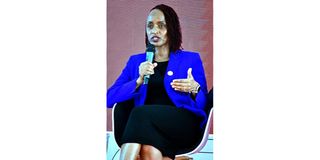
Association of Kenya Insurers (AKI) Convener Group Life Committee Anna Manyara makes her remarks during the Pensions Conference and Expo held at KICC on October 29, 2026.
Photo credit: Francis Nderitu | Nation Media Group
So, how do you ensure your pension serves you until death? Ms Manyara says a worker who earned Sh100,000 a month before retirement should aim for at least Sh80,000 in retirement income. Retirees who continue paying rent, supporting dependants or facing medical bills may need far more than those whose homes are paid for and whose family obligations have eased.
The biggest decision
For many Kenyans, this target becomes harder to sustain as expenses rise.
Once you retire, Ms Manyara says, the biggest decision is how to turn accumulated pension savings into a regular income without draining the fund too quickly.
While many opt for a lump-sum payout, some channel their retirement benefits into businesses they have little or no experience running, venturing into unfamiliar territory after years in formal employment.
Pension experts say an income drawdown allows a retiree to keep the balance invested while withdrawing money at intervals. The remaining funds can continue earning returns, but the retiree bears the risk that investment performance may weaken or withdrawals may be too high.
Drawdown
Ms Manyara warns against drawing down at a rate that matches the investment return, since the balance may then struggle to keep up with inflation and other costs.
“If [your pension] is earning 12 percent and you draw at a rate of 12 percent, you’re likely to outlive that income,” she says, advising retirees to withdraw at a rate slightly below the average investment return.
Kenya’s income drawdown framework sets a regulatory ceiling on withdrawals, with industry reporting on the rules noting a maximum annual withdrawal of 12 percent of the outstanding balance.
But the limit is a guardrail, not a promise that every retiree’s money will last for life.
A retiree who takes the maximum available amount may still face a shortfall if returns fall, prices rise, or retirement lasts longer than expected. A lower withdrawal rate can preserve more capital, but may leave a retiree with less income in the early years.
Annuities
Annuities offer a different trade-off. A retiree converts savings into a regular payment, with lifetime annuities designed to continue paying for as long as the person lives.
“Annuities provide you with an income for life,” Ms Manyara notes, describing them as a way to replace the salary that disappears at retirement.
Ms Manyara adds that retirees should examine how income payments escalate, whether they choose an annuity or drawdown, so that the amount received does not fall behind the cost of living.
The risk begins even before the monthly income is chosen. Many retirees receive part of their benefits as a lump sum, creating a temptation to spend, build or invest large amounts at once.
The RBA survey found that 91 percent of respondents had received benefits through a combination of lump-sum payments and monthly pensions.
Among those who spent their lump sums, 16 percent used the money to build a house and a similar share paid school fees, while 56 percent invested the money in farming, land, bank deposits, shares or businesses.
Failed business
Investing the lump sum can create another source of income, but a failed business or poorly chosen asset can leave a retiree with little to fall back on.
Leah Wakarima, chief operating officer at Invest with Hisa, says savers need to define what they are investing for and when they expect to use the money, noting that the strategy should match the goal.

Invest With Hisa Chief Operating Officer Leah Wakarima makes her remarks during the Pensions Conference and Expo held at KICC on October 29, 2026. Francis Nderitu | Nation
Photo credit: Francis Nderitu | Nation Media Group
She urges investors to spread their money across different assets rather than relying on one company, sector or market.
“Understanding my goal, what my timeline is and what options I have, so that also comes to a question of diversification,” she says.
“Diversification is one of the biggest things, especially not only in the Kenyan market, but also in the US market, and also seeing how you can be able to complement both to be able to suit your portfolio.”
Diversification can limit the damage caused by a single investment falling in value, but it does not eliminate risk.
Old-age insurance
Healthcare is another threat to retirement savings, as a major illness can force retirees to redirect money meant for daily living to treatment, medication or insurance premiums.
The RBA survey found that 32 percent of retirees identified good health as the most important aspect of a positive retirement experience, while the authority has highlighted out-of-pocket medical costs as a burden even for retirees with cover.
Ms Manyara says insurance can help protect one’s income and family obligations in cases of critical illness, disability or death. Life covers and endowment products can also provide financial support for dependants.
According to Patrick Kuria, a partner at PKF Kenya, pension trustees have a fiduciary responsibility to manage scheme assets in members’ interests, while administrators should maintain accurate records and ensure benefits reach the rightful recipients.
“There is a need to safeguard the interest of the members, be it at the scheme level or at the withdrawal level,” notes Mr Kuria.
He urges members to track contributions and investment performance, attend scheme education sessions and read financial statements to understand where their money is held.
Pensions after new job
Poor records can also leave savings unclaimed. Laban Molonko, chief executive of the Unclaimed Financial Assets Authority, says people may lose track of investments when they change jobs, relocate or forget accounts, while assets can remain unclaimed after a person dies.
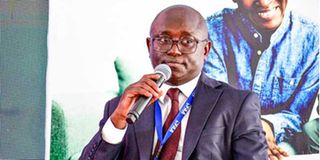
Unclaimed Financial Assets Authority (UFAA) Chief Executive Officer & Managing Trustee CPA Laban Molonko makes his remarks during the Pensions Conference and Expo held at KICC on October 29, 2026. Francis Nderitu | Nation
Photo credit: Francis Nderitu | Nation Media Group
“It happens that people forget things. You have invested in a pension fund, but over time, you forget it. Over time, death also comes along the way. You could also relocate; probably you’re doing a job somewhere in Kenya, then now you relocate to another country,” says Mr Molonko.
The authority holds abandoned financial assets, including cash and shares, and allows individuals and beneficiaries to check whether funds are held in their names.