In Missouri, voters decided whether to repeal a constitutional right to abortion they adopted just two years earlier. In 2024, Missouri voters approved Amendment 3, a citizen-initiated measure that added a right to reproductive freedom, including abortion up to fetal viability, to the state constitution. The 2026 measure – also called Amendment 3 – was placed on the ballot by the Republican-majority legislature. If it had passed, this new measure would have repealed the 2024 constitutional amendment, banning abortion except in cases of medical emergency or fetal anomaly, or in cases of rape or incest up to 12 weeks of pregnancy. The measure would also have allowed the legislature to pass new abortion regulations, including some that a court has blocked after finding they violate the 2024 constitutional amendment protecting the right to abortion.
Additionally, the amendment would have written into the state constitution a prohibition on gender-affirming care for minors, specifically for surgery and prescribing hormones or puberty blockers. Missouri currently restricts this care for minors by statute, but the hormone and drug-related restrictions of that law are set to expire in August 2027.
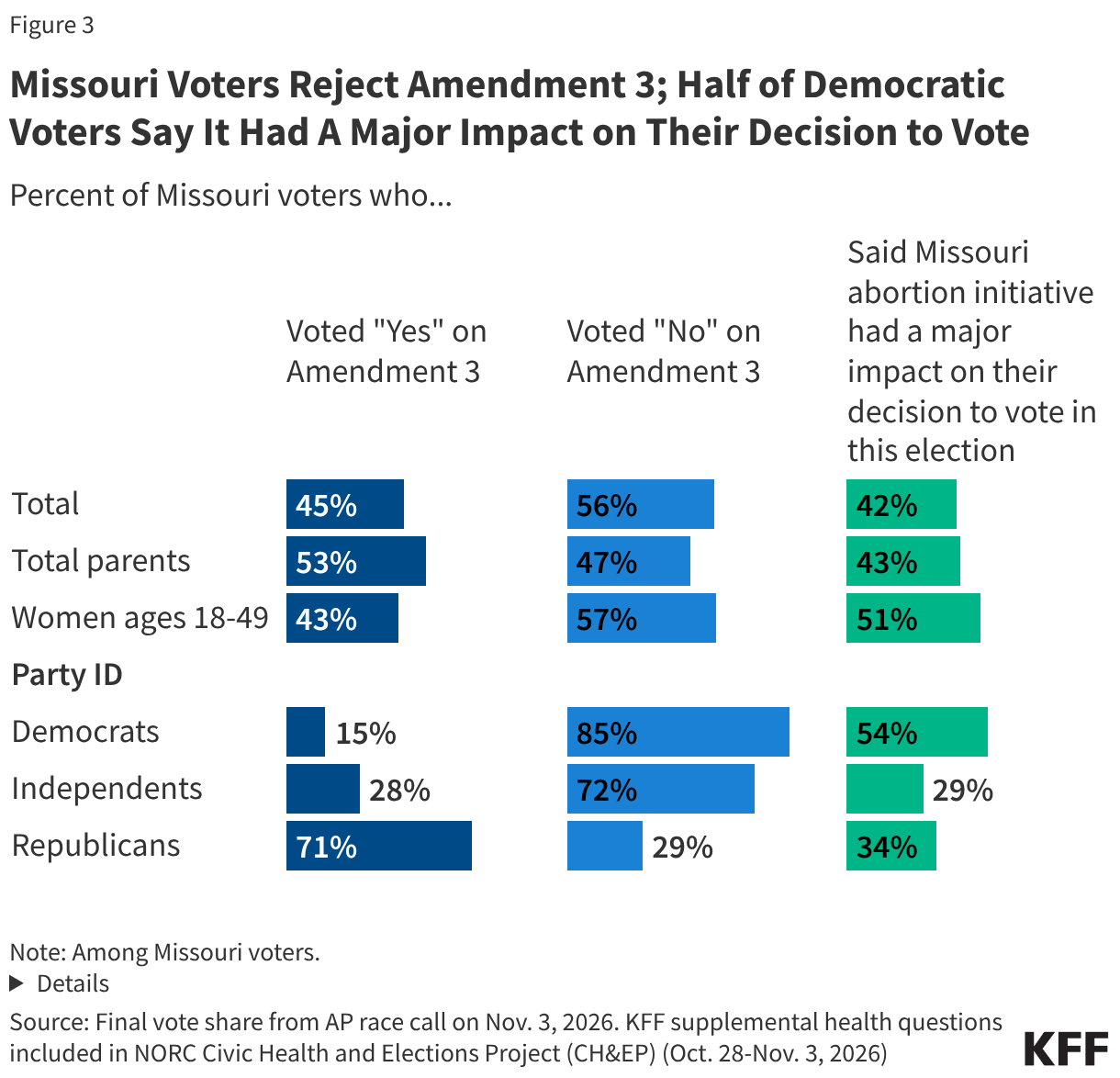
Missouri voters rejected Amendment 3, with 56% voting “no,” keeping in place the constitutional right to abortion voters approved in 2024. About seven in ten Republicans (71%) supported the measure, while most Democrats (85%) and independents (72%) voted “no.” Fewer than half (43%) of women of reproductive age supported the measure that would have reinstated an abortion ban in Missouri.
About four in ten Missouri voters said the measure had a major impact on their decision to vote in this election, including about half of women of reproductive age (51%) and Democratic voters (54%).
Just over half of Missouri parents (53%) voted “yes” on the amendment that would have affected health care for minors in the state, and about four in ten (43%) said the measure had a major impact on their decision to turn out.
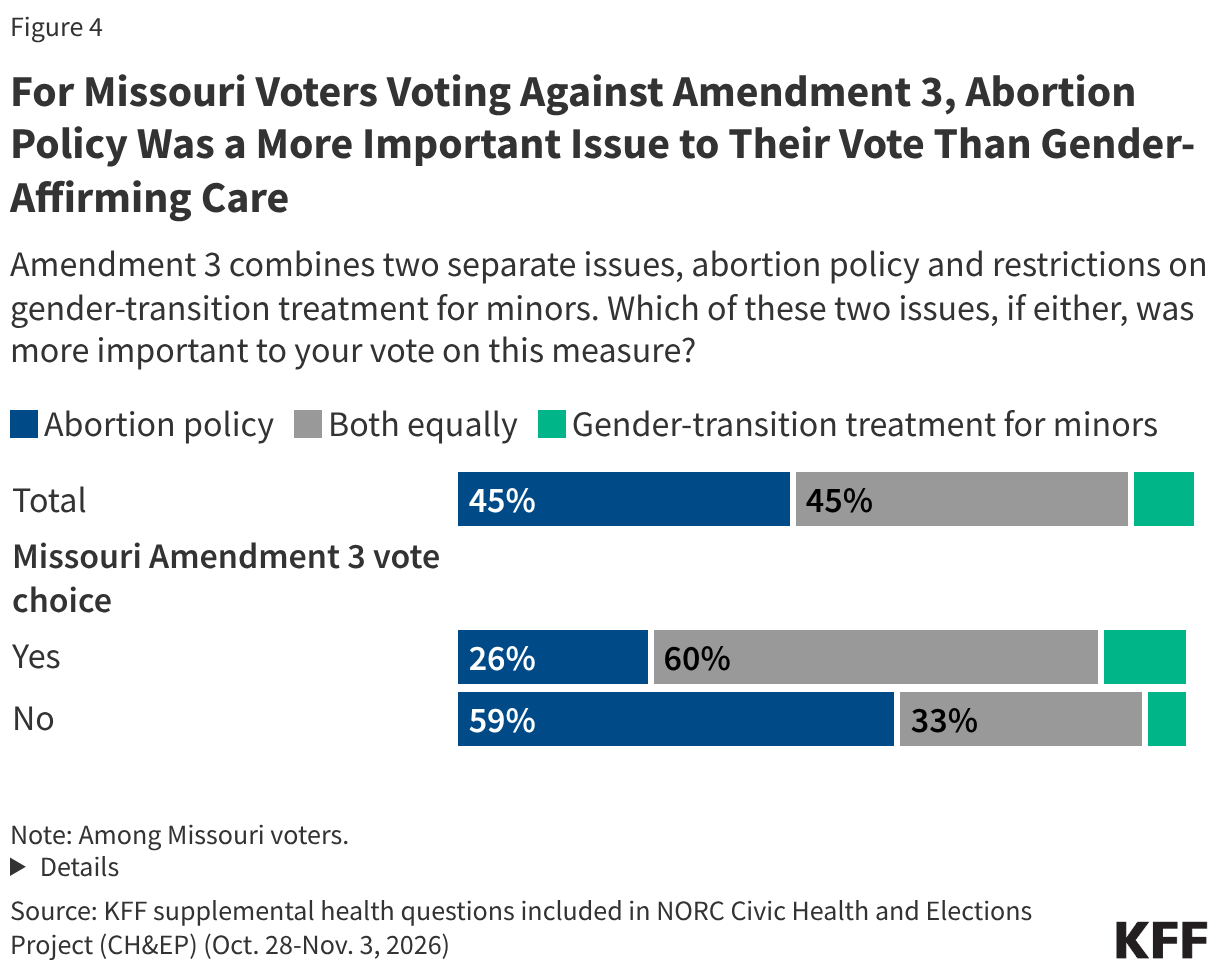
Because Amendment 3 paired the repeal of the 2024 abortion rights amendment with strengthened prohibitions on gender-affirming care for minors, described on the ballot as “gender-transition” treatment, voters had to weigh two separate issues in a single vote.
When asked which part of the amendment was more important to their vote, voters were more than five times as likely to say abortion policy (45%) was the more important issue than to say gender-affirming care for minors (8%). More than four in ten (45%) Missouri voters say both issues were equally important.
For opponents of the measure, abortion policy was a more salient issue than gender-affirming care. Six in ten (59%) voters who voted “no” on the measure said abortion policy was the more important issue to their vote. Six in ten Missouri voters who voted “yes” said both issues were equally important to their vote (60%).
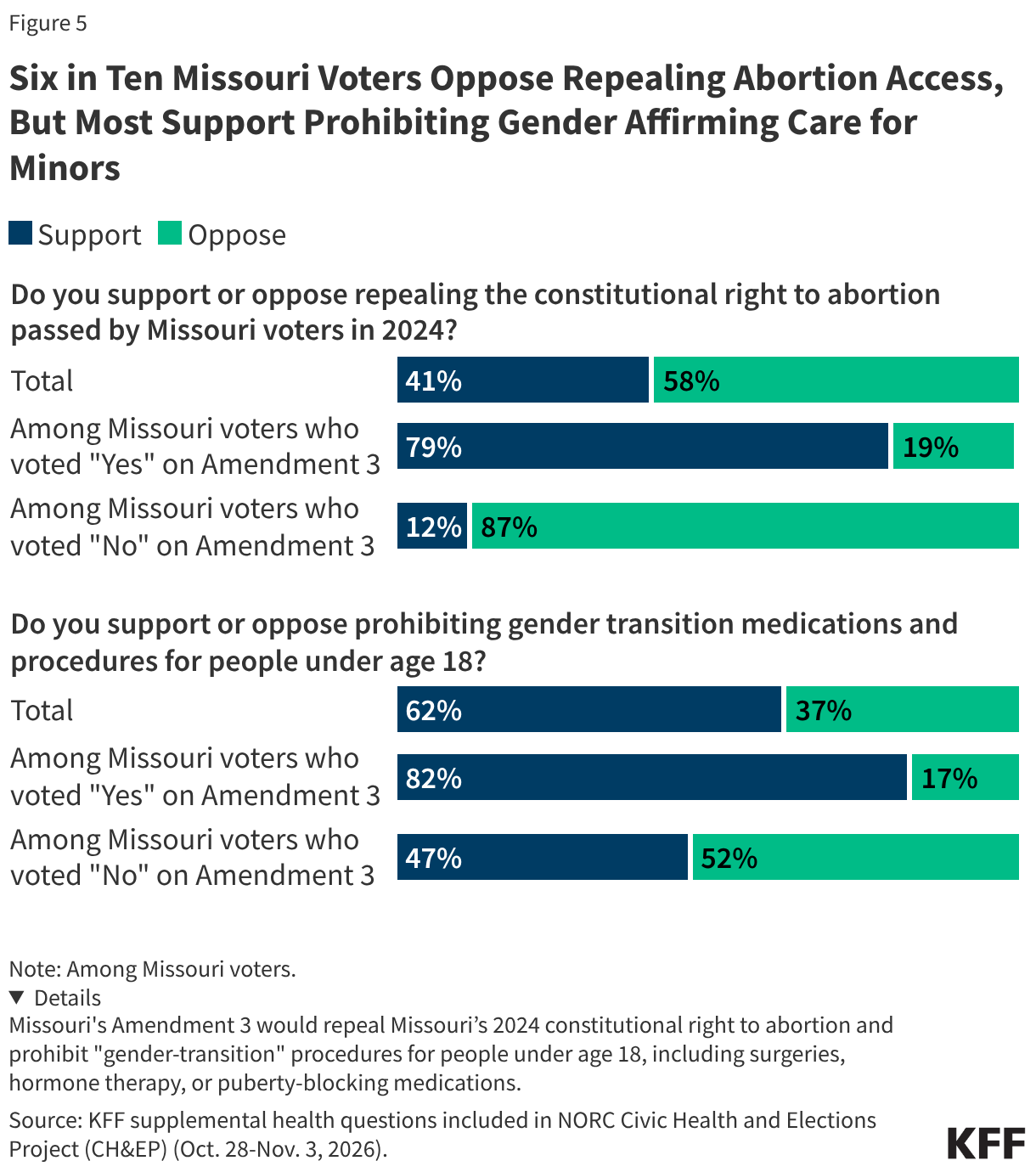
Asked about each part of Amendment 3 separately, a majority of Missouri voters (58%) oppose repealing the constitutional right to abortion passed by voters in 2024, while about six in ten (62%) support prohibiting gender-affirming care for minors, referred to by the ballot as “gender-transition” medications and procedures.
About eight in ten Missouri voters who voted “yes” on Amendment 3 support each of the provisions, while “no” voters are more divided. Few (12%) “no” voters support repealing the right to abortion, but about half (47%) support prohibiting gender-affirming care for minors.
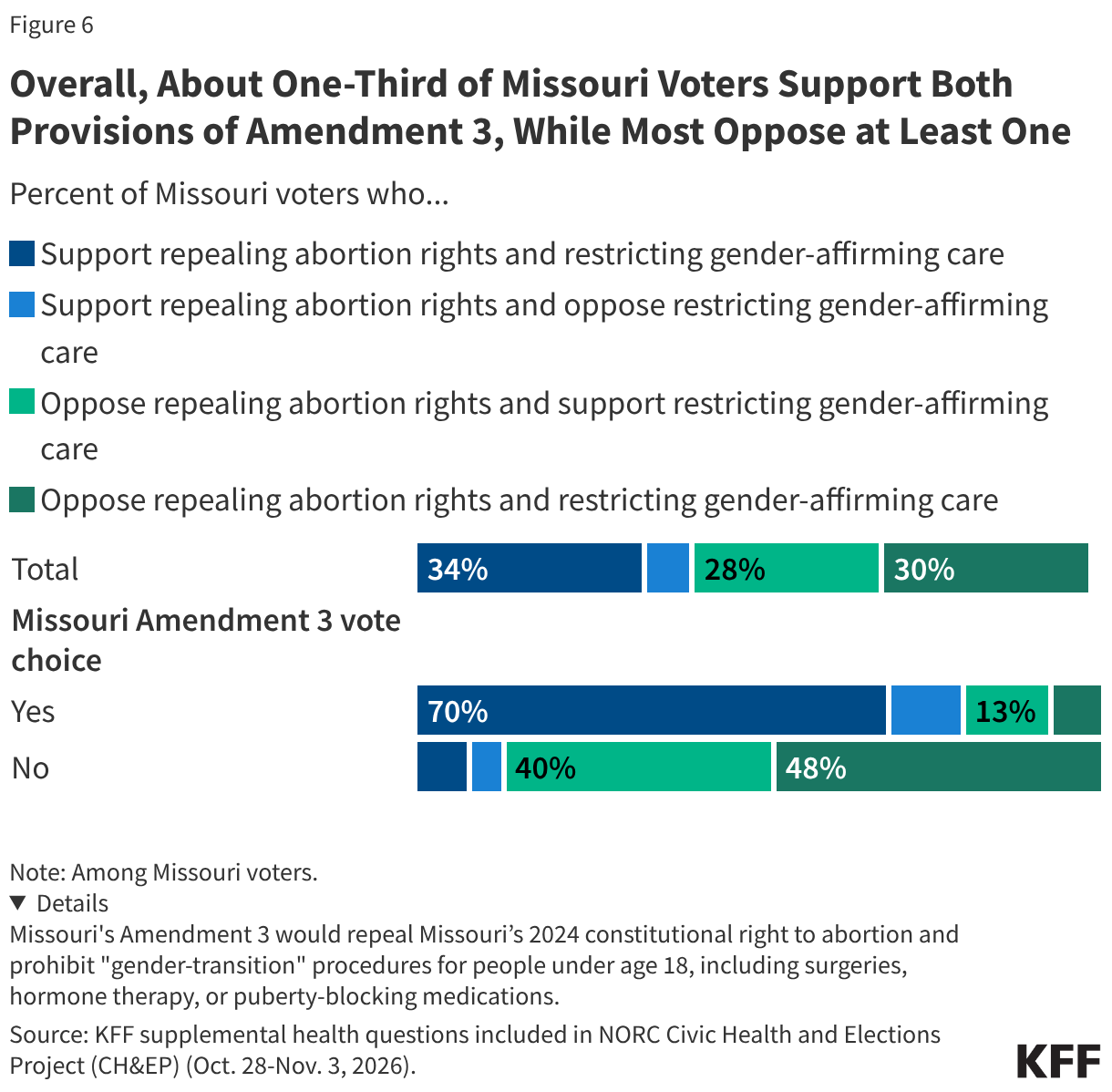
In fact, many Missouri voters held views that did not align with both ballot measure provisions. Nearly three in ten Missouri voters (28%) oppose repealing the right to abortion but support prohibiting gender-affirming care for minors, and 7% support repealing the right to abortion, but oppose prohibiting gender-affirming care for minors. About a third (34%) of voters support both provisions of the ballot measure, and three in ten oppose both provisions.
Among voters who supported the measure, seven in ten say they support both provisions, while about one in eight only support the prohibitions on gender-affirming care, and about one in ten only support repealing the right to abortion.
Among voters who rejected the measure, roughly half (48%) oppose both provisions of the measure, while four in ten oppose repealing abortion rights but support a ban on gender affirming care for minors, indicating that their views on abortion played a stronger role in their vote choice.
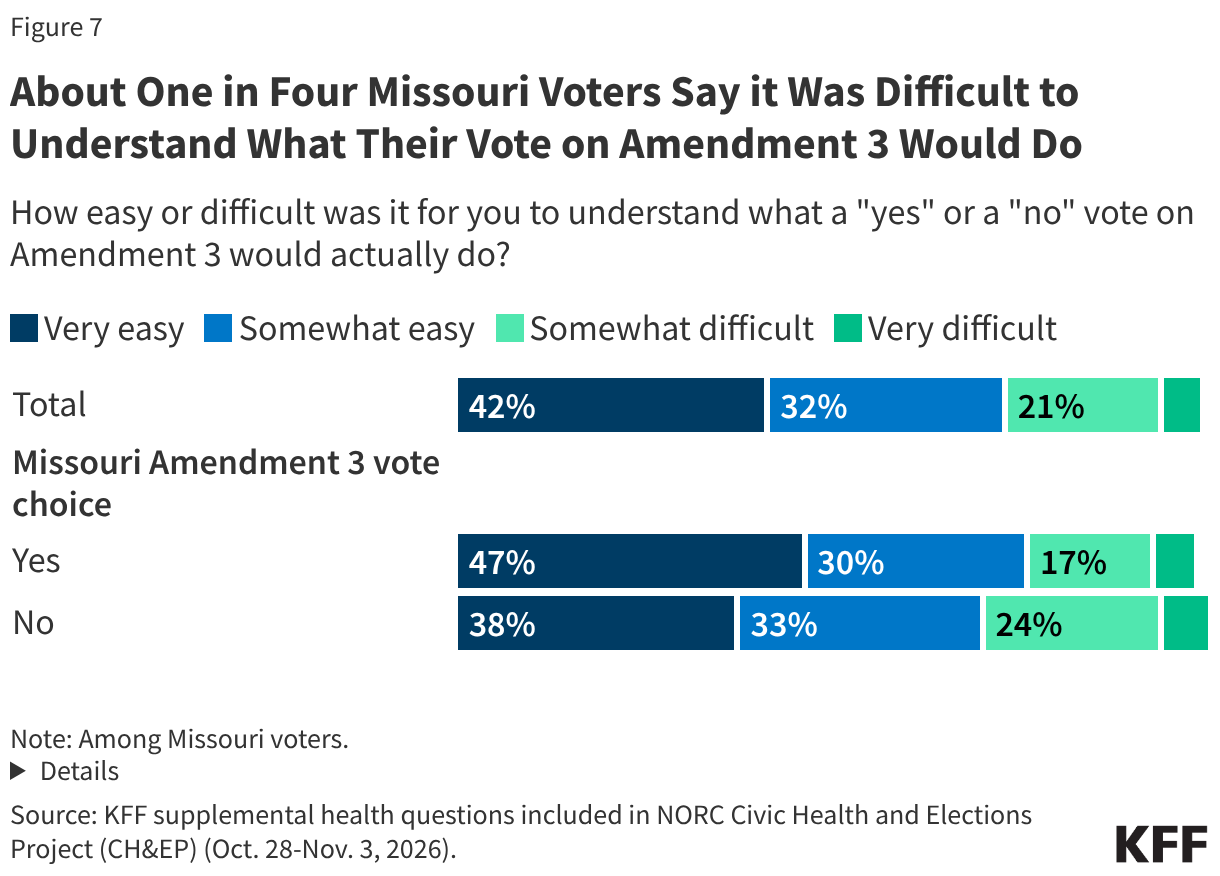
While most (74%) Missouri voters say it was “very” or “somewhat” easy to understand what a “yes” or “no” vote on Amendment 3 would do, about one in four say it was difficult.
About three in ten (29%) voters who voted “no” on the measure say it was difficult to understand what their vote on Amendment 3 would do, compared to about one in five (22%) who voted “yes.”