
A professor from the University of Maine helped determine how old the meteorite is, and a museum in Maine has more of the sample than any other location in the world
 BETHEL, Maine —
A unique piece of Mars is going on display in Maine on Wednesday.
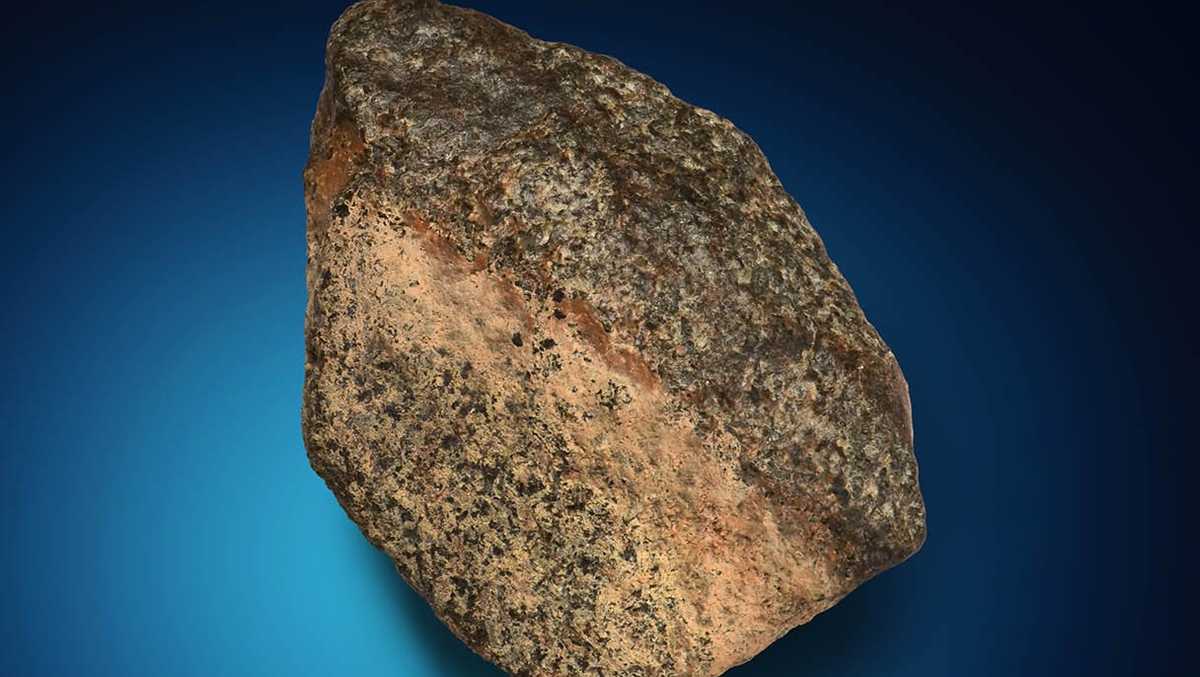
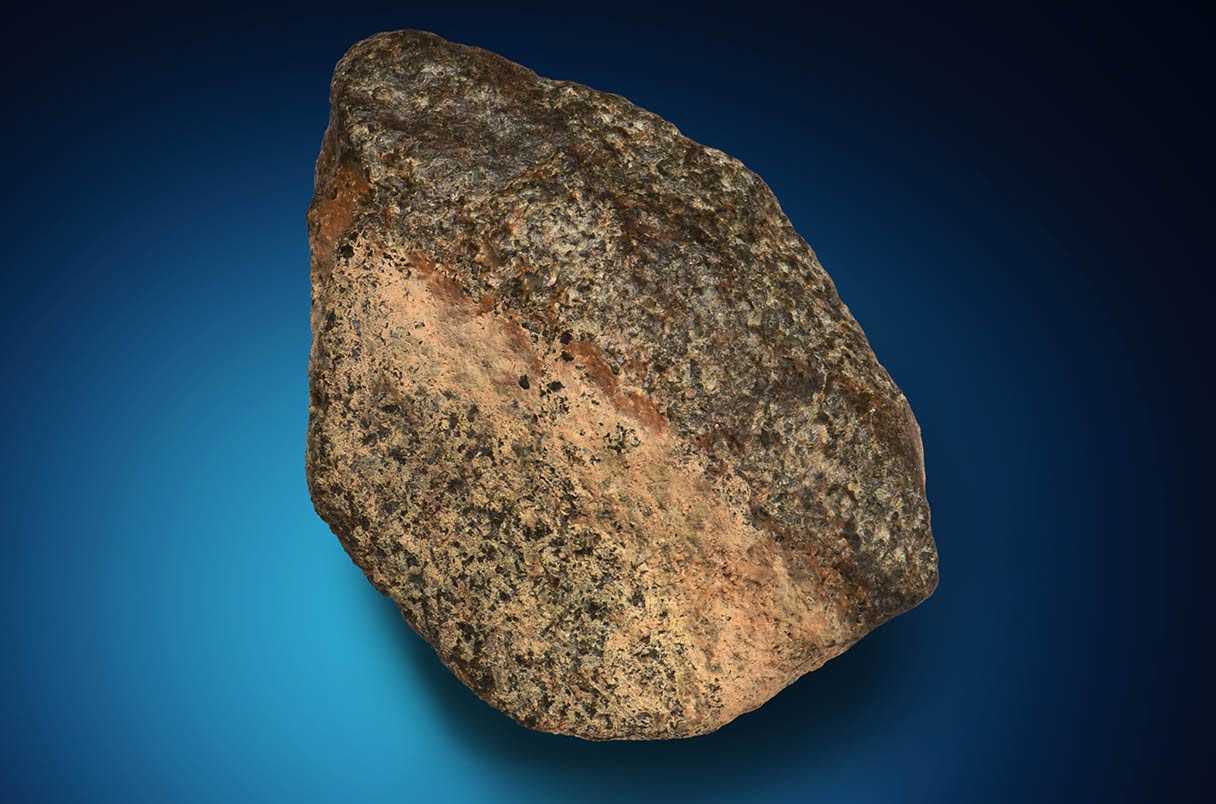
The Maine Mineral & Gem Museum in Bethel acquired most of Teghaza 001 (TEG 001), an extraordinarily rare Martian meteorite that scientists believe offers a glimpse into a much wetter, more Earth-like Mars billions of years ago.
Maine Mineral & Gem Museum
The largest known specimen of the meteorite is now on display at the museum, next to the single largest piece of the Moon on Earth. With a total known weight of just 1.75 pounds worldwide, TEG 001 is the second-oldest known Martian meteorite and comes from a region of Mars that scientists have never sampled before. The Maine Mineral & Gem Museum has multiple pieces of the meteorite.
Only two other known Martian meteorites are older than 4 billion years: Allan Hills 84001 and NWA 7034, also known as Black Beauty.
TEG 001 is mineralogically unique and contains hydrous minerals. Because the water alteration on Mars occurred 4.1 billion years ago, the meteorite itself is likely even older.
Science, one of the world’s foremost scientific journals, recently published an article on the TEG 001 meteorite.
“One of the paper’s reviewers called TEG 001 a Rosetta Stone for Mars … and, indeed, we’ve only begun to scratch the surface,” said Yang Liu, a scientist at NASA’s Jet Propulsion Laboratory in Pasadena, California.
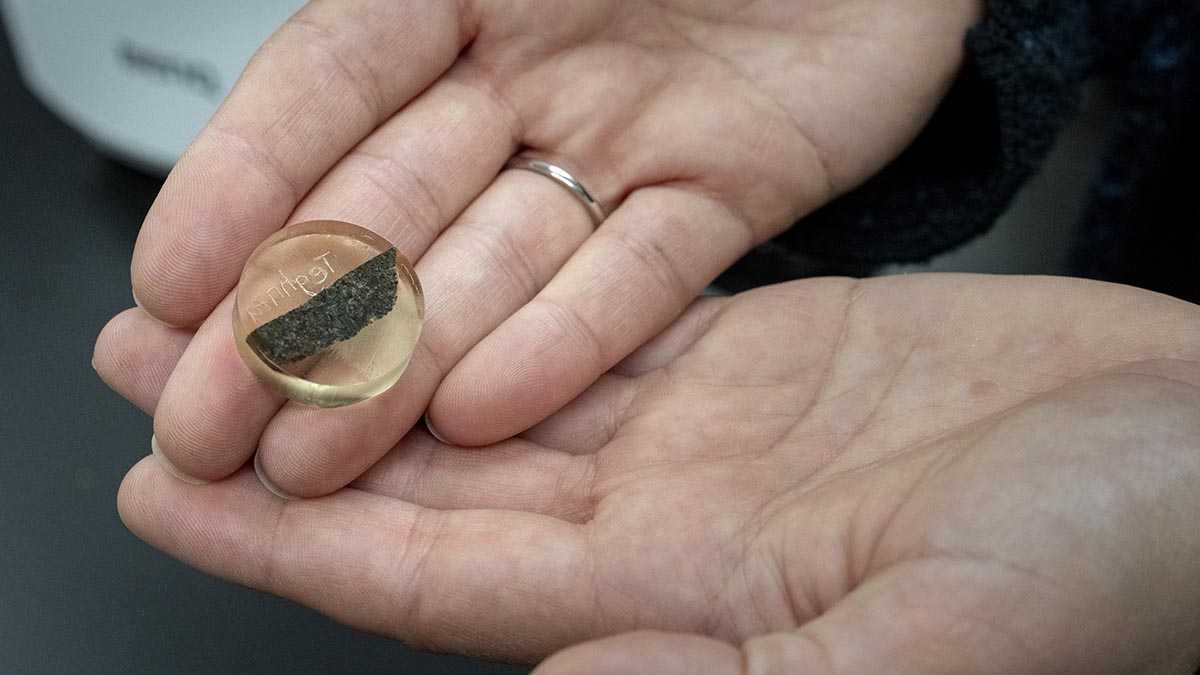
University of Maine professor Alicia Cruz-Uribe and her colleagues were analyzing a box of rock samples from Mars when they confirmed the age of the meteorite.

In a lab at the California Institute of Technology in the summer of 2025, Cruz-Uribe and her colleagues measured isotopes showing that Teghaza 001 is 4.1 billion years old.
“I think we actually jumped up and down; full-on dance party in the lab,” said Cruz-Uribe.
Sahrawi meteorite hunters found TEG 001 in Mali’s Sahara Desert in 2022, near an ancient salt mine that was a major North African source of rock salt until the late 1500s. After learning of the find, MMGM’s Meteorite Chair Darryl Pitt advised MMGM co-founder Lawrence Stifler to acquire TEG 001 for the Museum.
TEG 001 reached Earth after an ancient asteroid struck Mars, launching Martian surface material into space. Some of those fragments entered an Earth-crossing orbit. Martian meteorites are exceedingly rare: together, their documented total weight is less than 500 kilograms (about 1,100 pounds).
“Before sending a sample to Yang Liu, I wondered whether TEG 001 might represent a new type of Martian meteorite,” said Carl Agee, director of the Institute of Meteoritics at the University of New Mexico. “Among the fascinating revelations is evidence of an early Mars that is more Earth-like. The scientific community is fortunate that much of this extraordinary meteorite will be preserved for posterity at the MMGM.”
The Maine Mineral & Gem Museum houses more than 80,000 specimens, features 22 exhibits, a scientific research laboratory, and more of the Moon than all of the natural history museums in the world combined.