
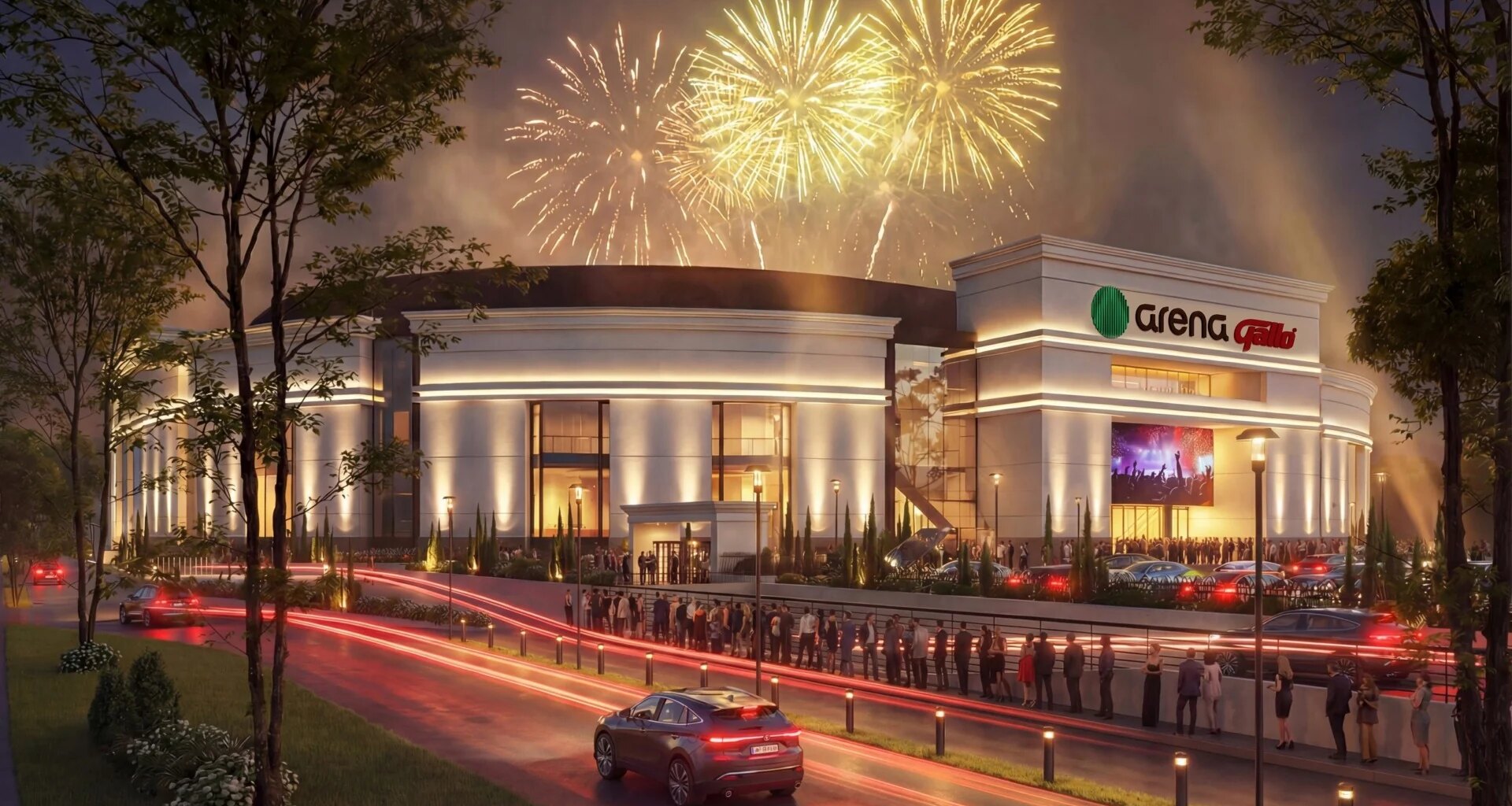
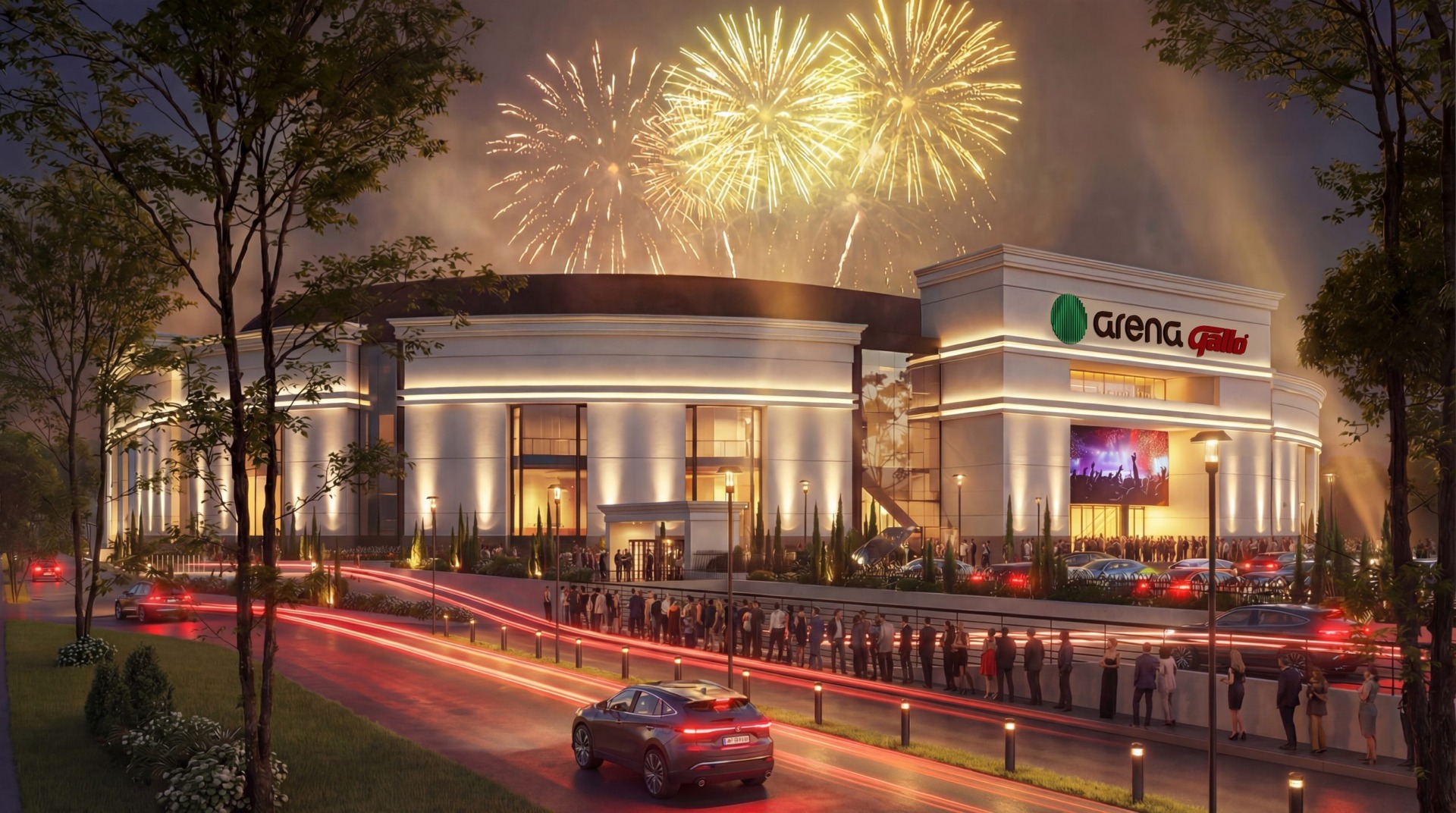
 Arena Gallo (above), a 14,500-cap venue, is in development and slated to open in 2027 in Cayalá, Guatemala. The region has many stadiums and smaller venues but lacks arenas with more than 10,000 seats. (Courtesy Asa Promotions)
Central America isn’t often part of the conversation when discussing the Latin American live music business. Mexico and Brazil tend to steal the headlines because of their massive populations and their influence over the broader music industry.
Though Costa Rica, Guatemala, El Salvador, Panama and the remaining Central American nations may be small, they are mighty in the tourism business, and that’s leading to opportunities and development in other sectors, especially the live entertainment industry.
The World Bank, a group of organizations that provides financial assistance to developing countries, recently reported that Latin America and the Caribbean “is projected to grow 2.2% broadly in line with the rate of 2.4% recorded in 2025,” and though “average regional growth remains modest, diverging country paths show that a stronger performance is possible.”
El Salvador is highlighted as a nation outperforming the regional average with improved security conditions and private investment, and durable policy foundations have helped Panama achieve sustained strong growth.
The economic reports of Central America mirror the assessment of the live industry in the region: modest growth with potential for more. The region is one of the best-kept secrets in LATAM with Latin acts, like Shakira, Bad Bunny and Ricardo Arjona thriving in Central American countries, but international stars, especially those from the rock genre, are starting to catch on.
“It is a new and emerging market that is experiencing growth and the opportunity to enjoy international concerts and productions within the country, without the need to travel,” says Juan Carlos Dominguez, CEO of FTC Live, who was born in Panama.
Guns N’ Roses visited El Salvador and Costa Rica last year, grossing a total of $4,726,975, according to Pollstar Boxoffice, and Ed Sheeran also included the region in his routing. The English singer-songwriter performed in Guatemala and Costa Rica in May and came away with a gross of $4,392,205 across both shows.
“Costa Rica is probably the most mature live entertainment market in Central America today,” says Phil Rodriguez, CEO of Move Concerts, which promotes concerts across the region. “It has a relatively strong economy, a sizable middle and upper-middle class, good consumer purchasing power, strong brand participation and, most importantly, an audience that has developed the habit of buying tickets for major international shows.
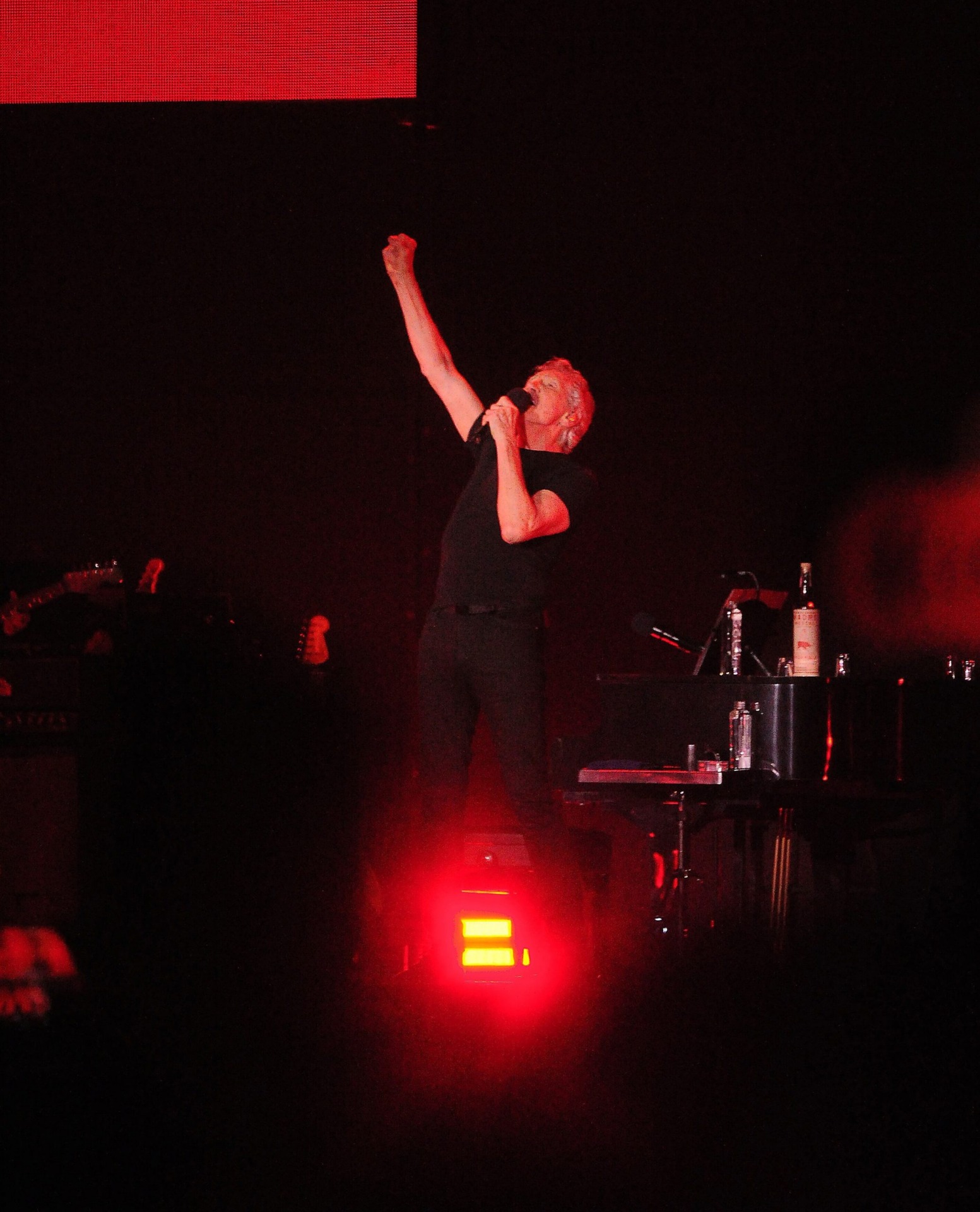 Much like their neighbors in the South, Central America loves its rock stars. Move Concerts promoted a show with Roger Waters (above) at Estadio Nacional in Costa Rica in 2023, moving more than 32,000 tickets and grossing nearly $3 million, according to Pollstar Boxoffice. (Photo by Gerson Campos)
“Costa Rica has also demonstrated that it can support stadium-level business,” Rodriguez adds. “Our two Bad Bunny shows at Estadio Nacional in December 2025 sold approximately 115,000 tickets in less than four hours, generating close to $12 million in gross ticket sales. Those are numbers that would be significant in almost any market in Latin America.”
Shakira also showed what is possible in the region with five concerts at San Salvador’s Estadio Jorge Magico González in February, moving a whopping 129,389 tickets and grossing $15,488,500.
It’s an impressive haul and feat considering her large production, planting a flag for every other international act, regardless of genre, to see, showing them the added stop can be a lucrative one.
“There is a growing market of reliable promoters with real capital, solid ticketing systems, access to more venues, and an understanding of the operations of international touring teams that have allowed more artists the opportunity to successfully add these Central American markets to their routes,” says Jacob Fox, an agent at WME, which represents Shakira.
Shakira’s success and the economic impact of such events also show government officials how the live music industry can positively affect people and local businesses, sparking innovation and creation.
Central America’s potential in the live music business may soon be realized with the development of Arena Gallo, a 14,500-capacity space in Guatemala’s Ciudad Cayalá designed to meet the modern standards of live entertainment.
The reportedly $90 million, 90,000-square-foot arena, spearheaded by live entertainment company Asa Promotions and developers ZACSA Studio and Factor, is an ambitious project inspired by the growth of the Guatemalan economy as well as the growing demand for live entertainment.
The design is inspired by the cultural identity and geography, incorporating some of the volcanoes, lakes and other natural textures Guatemalans take great pride in. Arena Gallo promises to be a world-class venue with stellar acoustic engineering and the modern amenities that fans across the globe have grown accustomed to when it comes to the live experience.
Such features in an indoor venue will entice artists to seriously consider Guatemala because it fills a void shared by all Central American nations.
“The big tours and Anglo artists often ignore Central America,” Javier Arzú, CEO of Asa Promotions, tells Pollstar. “They may include Costa Rica’s Estadio Nacional or a large park. The problem with Guatemala and Central America at large is that we’ve had to improvise when it comes to venues in open spaces, without built-in restrooms, food trucks, etcetera. It’s all been so archaic. But promoters in this region have also been resilient warriors, in a sense, in building this [business] out of nothing. Now will have the opportunity to change that and put Guatemala on the map along with Mexico City and Bogotá.”
Similar to some of their South American neighbors, the seven countries that make up Central America lack infrastructure, which is mostly made up of small venues and soccer stadiums. The lack of options makes it difficult for international acts to consider a stop with rising touring and travel costs, but an arena can change that. Just
look at Santiago, Chile, and Bogotá, Colombia: the Movistar Arena in each market proved to be transformative for not only their cities but their countries and all of South America. It sparked a movement, especially in Colombia, a rapidly growing ecosystem that saw the opening of Vive Claro, a versatile stadium in Bogotá, last year and will soon have DAVIarena in Medellín.
“It’s going to be spectacular because the audience isn’t used to suites, lounges or premium seating,” says Arzú, who has promoted shows all over Central America. “All of that is going to revolutionize the market—and of course, who doesn’t love going to a venue with premium seating and a club lounge where you can grab a drink before and after the show? The experience of a comfortable, air-conditioned, soundproof seat … believe me, we are going to change the history of events in Guatemala.”
Wesley Cullen, managing director of Latin America for Oak View Group (OVG), Pollstar’s parent company, is well aware of the power an arena can wield in a country. She was the first general manager of the Coliseo de Puerto Rico, a venue that transformed the island and became a significant step in a local artist’s career, a stage they aspired to reach. Cullen believes Arena Gallo, like the Coliseo, can be the catalyst for Guatemala and the entire region. It’s why OVG jumped into the project as a consultant.
“Tours need routing, and this will be one great stop,” Cullen tells Pollstar. “There are more artists going and doing shows in the region than we realize already. The fans deserve modern spaces and all the amenities that we enjoy in other regions. With the growth of Colombia and South America, it all comes together. You can have great routing through the region, especially with additional development that’s happening in Mexico.”
Bruno Del Granado, a former Creative Artists Agency agent who now executive produces Ricky Martin’s music, adds, “I remember Colombia when you either played in a stadium or you played some rinky dink venue. Now, Bogotá has multiple arenas thanks to Movistar. Another example is Chile’s Movistar Arena. When they opened over 10, 15 years ago, suddenly you have more avenues to expose your music and then every other country says, ‘Well, now we want an arena.’ Peru wants an arena; Paraguay wants an arena; everybody seems to want an arena. We’re seeing that now, and I think this one in Guatemala will be a catalyst for Central America and also for Latin America, because Latin America still lacks the arena concept that the U.S. has. But the potential is there because Latin fans love live music.”
 Latin stars like Bad Bunny (above) are showing international acts what is possible in Central America and how countries like Costa Rica, Panama and Honduras are capable of large, elaborate productions. (Photo by Sergio Cespedes)
Young fans, especially, love live music, a notion that rings true all over the world as Gen Z and Gen Alpha seek more authentic experiences in a digital world. The median age in most Central American countries is below 30: Guatemala’s and Honduras’ is 24, Nicaragua’s is 26, Belize’s is 27 and El Salvador’s is 28.
“You don’t see that in the world,” Cullen says. “It’s this secret you don’t tell. What I learned when I’ve been visiting is there are indeed companies going and doing great business there because they have education, and a great number of people are bilingual.”
One modern arena is enough to draw an international act, and it’s also enough to entice a booker to consider nearby markets like Costa Rica and El Salvador to make it a worthwhile trip.
“If you’re a Ricky Martin and you don’t want to go to the 4,000-cap venues, but you want to go to something a little bit bigger, and the stadium unfortunately hosts soccer matches and is booked because of the Iron Maidens of the world, it’s going to be hard,” Del Granado says. “You also have the weather to contend with. If you’re in Argentina in the winter, it’s impossible. You could do a stadium show, but it’s too cold. It’s just a pain in the butt, and the same when you get up farther north. For an artist who has a modern arena-style, it is the most perfect setting for them.”
It’s also an extra incentive for tourists to visit the region, which is already one of the top destinations for international visitors. The World Travel & Tourism Council reported in May that Central and South America’s travel and tourism sector is “on track to grow faster than the global average this year, with international spending projected to more than double the worldwide rate—a dynamic that signals significant opportunity for advisors with clients eyeing the region.”
The Council forecasts regional travel and tourism GDP will see an uptick of 4.1% this year, outpacing the global average of 3.2%. In Central America, Guatemala’s travel and tourism GDP is forecast to grow 6.1%, with international visitor spending rising 9.3%. Panama is projected to grow 8.4 %, with international visitor spending up 8.9 %.
“Central and South America continues to emerge as one of the world’s most dynamic travel and tourism regions, with strong domestic demand, rising international spending, and growing traveler confidence supporting growth across many markets,” Gloria Guevara, president and CEO of the WTTC, said in a statement. “Countries such as Ecuador, Bolivia, Guatemala, Panama, Argentina, Colombia, Brazil, and Venezuela are demonstrating the enormous potential of the sector when supported by investment, connectivity, and long-term strategic focus. The region has a real opportunity to strengthen its global competitiveness and secure sustained long-term growth.”
That growth is driven by international investments and the increasing spending power of locals, but every country differs when it comes to how that money is spent. Notable global stars like Taylor Swift or Bad Bunny will have no problem selling tickets just about anywhere—and there’s a demand for popular acts like Bruno Mars, John Mayer, Coldplay and Iron Maiden—but music taste varies in the region.
“Historically, it has been massive commercial names and Latin artists selling tickets in Central America, but more recently you see artists such as Foster the People, Incubus, or even Boy Harsher going to countries like Guatemala and El Salvador and selling out shows similar in size to their business in Mexico or other countries with robust concert markets,” Fox says. “The mid-level international artists with name recognition have viable businesses selling thousands of tickets in these markets right now.”
FTC Live’s Dominguez says that regional Mexican is growing in popularity in some of the countries, especially those closest to Mexico, and there’s a niche electronic music fan base that is growing.
“I always bother my Mexican friends and tell them that Guatemala is practically a Mexican state because everything that hits in Mexico hits in Guatemala, and with the same force. Here, you have El Buki [Marco Antonio Solís], Alejandro Fernández, Grupo Firme, Grupo Frontera and any other similar act putting up the same numbers as in other markets with sold-out shows,” says Arzú, who was born and raised in Guatemala.
Live Nation and AEG Presents via Cárdenas Marketing Network have a large presence in the region, but they also sometimes lean on local promoters like Move Concerts, Asa Promotions, En Vivo Producciones and FTC Live to realize an artist’s vision in the region. Cullen says that every tour stop, regardless of size, within Central America is proving itself to not only artists but also production teams, who greatly benefit from the modernization of venues in the region.
“Little things can lead to big things sometimes, right? I always like to remind people that we not forget the value of everyone working on production,” Cullen says. “We all love the artists. They drive our business along with their fans, but the artists may or may not have a chance to experience a city or country beyond the hotel or venue. But productions will be back. I’d like to think that some of the success of El Coliseo [de Puerto Rico] was because of how well we took care of productions. And they’ll do the same in Guatemala.”
El Salvador is doing its part, as well, in driving the business. The construction of the new Estadio Nacional de El Salvador in the nation’s capital is nearly complete, and it will also be a gamechanger for the region as the most modern and highest-capacity stadium, which can accommodate 50,000 fans.
Arena Gallo and Estadio Nacional de El Salvador are proof that Central America can and will continue to grow and narrow the gap between itself and its American neighbors.
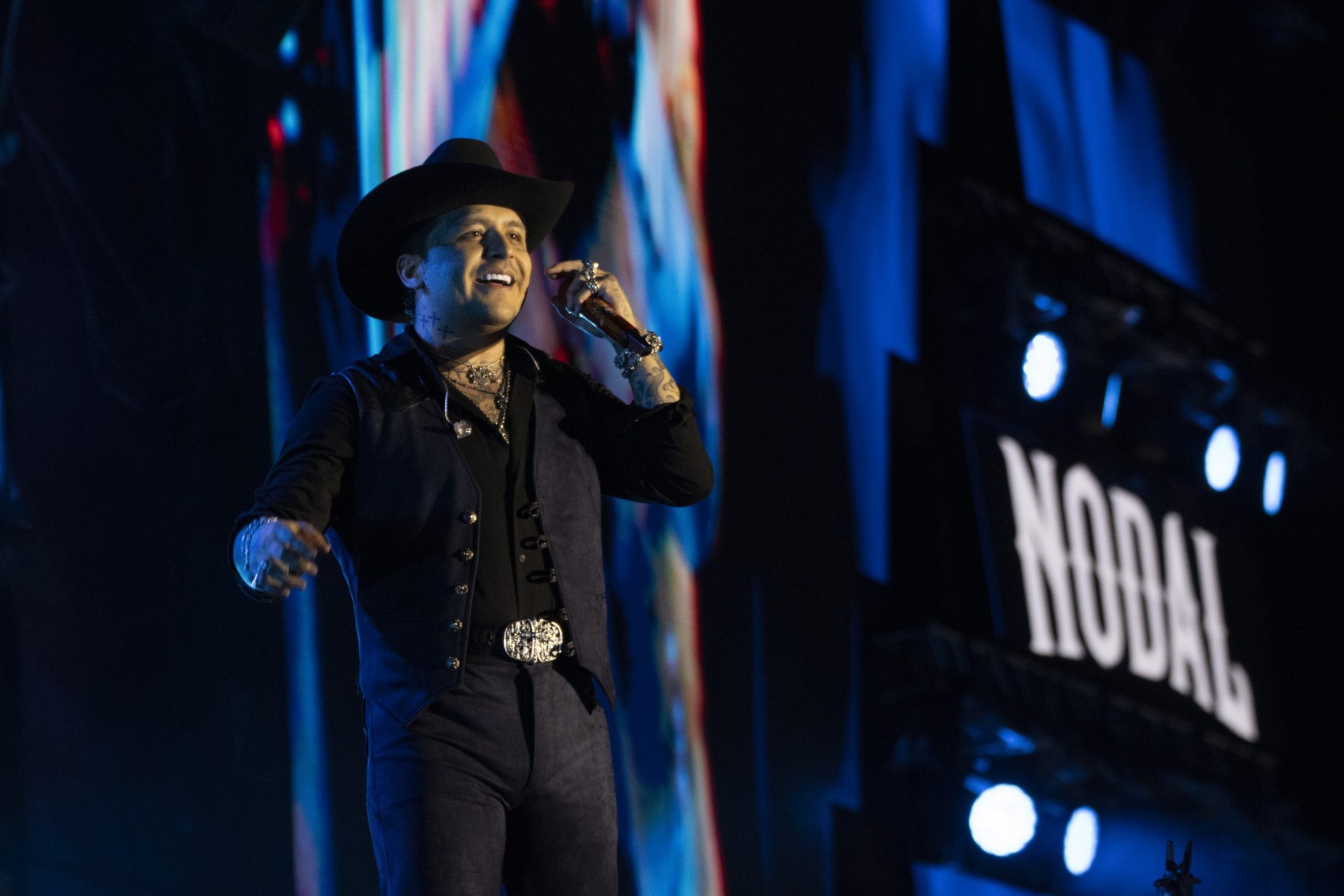 The rise of regional Mexican isn’t exclusive to the U.S. and South America. Artists such as Christian Nodal, pictured performing at Picnic Festival in Heredia, Costa Rica, are adding tour stops in Central American nations like Guatemala and Panama. (Photo by Manuel Arnoldo Robert Batalla / Getty Images)
But artists like Bad Bunny—who not only exhibits Puerto Rican pride but also promotes Latin culture across the globe—are also doing their part to give the countries much-needed visibility, changing everyone’s perception of the entire Americas.
“The best example was the Super Bowl Halftime Show when Bad Bunny at the end said, ‘God bless America,’ and he name-checked every country with millions watching,” Del Granado says. “Those who studied in Spanish-language schools have been taught that America encompasses North, South and Central, of course. That visibility has certainly helped.”
What has also helped is industry people educating themselves about the region and passing that on to others.
“Educating our colleagues and clients of both the successes and challenges in these markets, how they fit into a routing, which artists have market potential, and then ultimately successfully delivering great shows with the right partners,” Fox says about how agents can help develop the region. “Those success stories build momentum. The market demand for more content is there. Agents with hands-on experience in the region are the catalyst to make the shows a reality right now.”
With the growing popularity of Latin music and rising interest in visiting Latin America, Central America is in a prime position for a boom similar to the one its neighbors to the north and south experienced post-COVID. Arzú believes the region is ready and can’t help but take great pride in being a part of the movement.
“It’s everyone’s dream, isn’t it? To help your country. Ultimately, few manage to create jobs and foster development that we can contribute to from our own niche,” Arzú says. “I’m very happy and proud to be able to support that growth.”